
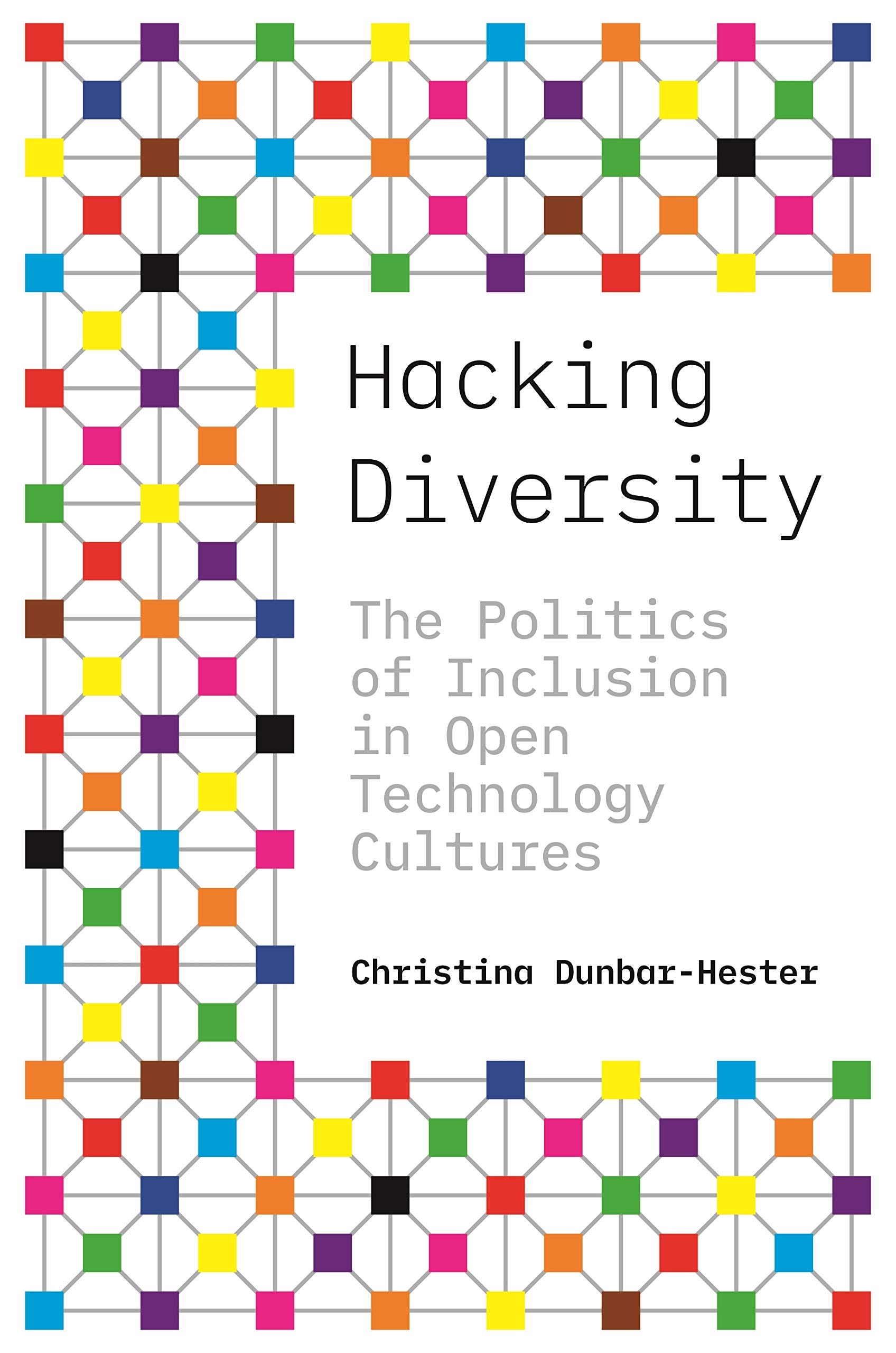
Title
Hacking Diversity: The Politics Of Inclusion In Open Technology Cultures (Princeton Studies In Culture And Technology, 19)
Sold by Ergodebooks, an authorized reseller.
Returns accepted within 30 days | support@ergodebooks.com
Shipping Information
- Free Standard Shipping — United States only
- Processing Time: 3–5 business days
- Estimated Delivery: 6–10 business days after dispatch
- Double-boxed, fully insured & discreetly packaged
- Tracking number sent via email once dispatched
Returns & Refund
Returns accepted within 30 days of delivery.
Damaged or Defective Item
Free return shipping + replacement or full refund
Wrong Item Received
Free return shipping + replacement or full refund
Change of Mind
Return shipping at customer's expense · 25% restocking fee applies
Payment Option

A Firsthand Look At Efforts To Improve Diversity In Software And Hackerspace Communitieshacking, As A Mode Of Technical And Cultural Production, Is Commonly Celebrated For Its Extraordinary Freedoms Of Creation And Circulation. Yet Surprisingly Few Women Participate In It: Rates Of Involvement By Technologically Skilled Women Are Drastically Lower In Hacking Communities Than In Industry And Academia. Hacking Diversity Investigates The Activists Engaged In Free And Opensource Software To Understand Why, Despite Their Efforts, They Fail To Achieve The Diversity That Their Ideals Support.Christina Dunbarhester Shows That Within This Wellmeaning Volunteer World, Beyond The Sway Of Human Resource Departments And Equal Opportunity Legislation, Members Of Underrepresented Groups Face Unique Challenges. She Brings Together More Than Five Years Of Firsthand Research: Attending Software Conferences And Training Events, Working On Message Boards And Listservs, And Frequenting North American Hackerspaces. She Explores Who Participates In Voluntaristic Technology Cultures, To What Ends, And With What Consequences. Digging Deep Into The Fundamental Assumptions Underpinning Stemoriented Societies, Dunbarhester Demonstrates That While The Preferred Solutions Of Tech Enthusiaststheir Hacks Of Projects And Culturescan Ameliorate Some Of The Bugs Within Their Own Communities, These Methods Come Up Short For Issues Of Unequal Social And Economic Power. Distributing Diversity In Technical Production Is Not Equal To Generating Justice.Hacking Diversity Reframes Questions Of Diversity Advocacy To Consider What Interventions Might Appropriately Broaden Inclusion And Participation In The Hacking World And Beyond.
⚠️ WARNING (California Proposition 65):
This product may contain chemicals known to the State of California to cause cancer, birth defects, or other reproductive harm.
For more information, please visit www.P65Warnings.ca.gov.
- Q: How many pages does the book contain? A: The book contains two hundred eighty-eight pages. This comprehensive length allows for an in-depth exploration of diversity in technology cultures.
- Q: What is the size of the book? A: The book measures six point twenty-six inches in length, zero point seventy-five inches in width, and nine point twenty-five inches in height. This size makes it convenient for reading and carrying.
- Q: What type of binding does the book have? A: The book has a paperback binding. This binding style is lightweight and flexible, making it easy to read.
- Q: Who is the author of this book? A: The author of the book is Christina Dunbar-Hester. She brings extensive research on inclusion in technology communities.
- Q: What is the main topic of the book? A: The book explores diversity and inclusion in hacking and technology cultures. It investigates the unique challenges faced by underrepresented groups.
- Q: Is this book suitable for beginners? A: Yes, this book is suitable for beginners. It offers insights into the complexities of diversity within technology without requiring prior knowledge.
- Q: How does the author approach the topic of diversity? A: The author uses firsthand research and interviews to analyze diversity advocacy. She discusses the barriers and challenges faced by women in hacking communities.
- Q: What interventions does the book suggest for improving inclusion? A: The book suggests reframing diversity advocacy to broaden participation. It emphasizes the need for systemic changes in tech cultures.
- Q: Is there a specific audience the book targets? A: Yes, the book targets activists, educators, and anyone interested in technology and diversity. It appeals to readers invested in social justice.
- Q: What should I do to take care of this book? A: To care for the book, keep it in a dry environment and avoid exposure to direct sunlight. This will help preserve its condition.
- Q: Can I return the book if I am not satisfied? A: Yes, you can return the book if you are not satisfied. Check the return policy for specifics on timeframes and conditions.
- Q: What if the book arrives damaged? A: If the book arrives damaged, contact customer support for assistance. They will guide you through the return or replacement process.
- Q: Does this book include any references or citations? A: Yes, the book includes references and citations to support the research presented. This adds credibility to the author's arguments.
- Q: Is this book part of a series? A: Yes, this book is part of the Princeton Studies in Culture and Technology series. It adds to the discourse on culture and technology.
- Q: Does the book discuss real-world examples? A: Yes, the book discusses real-world examples from software conferences and hackerspaces. This provides practical insights into the issues of diversity.
- Q: Are there any illustrations or graphics in the book? A: No, the book does not contain illustrations or graphics. It focuses on text-based analysis and research findings.