If you have any questions, you are always welcome to contact us. We'll get back to you as soon as possible, withing 24 hours on weekdays.
Customer service
All questions about your order, return and delivery must be sent to our customer service team by e-mail at yourstore@yourdomain.com
Sale & Press
If you are interested in selling our products, need more information about our brand or wish to make a collaboration, please contact us at press@yourdomain.com
Help
If you have any questions, you are always welcome to contact us. We'll get back to you as soon as possible, withing 24 hours on weekdays.
Customer service
All questions about your order, return and delivery must be sent to our customer service team by e-mail at yourstore@yourdomain.com
Sale & Press
If you are interested in selling our products, need more information about our brand or wish to make a collaboration, please contact us at press@yourdomain.com
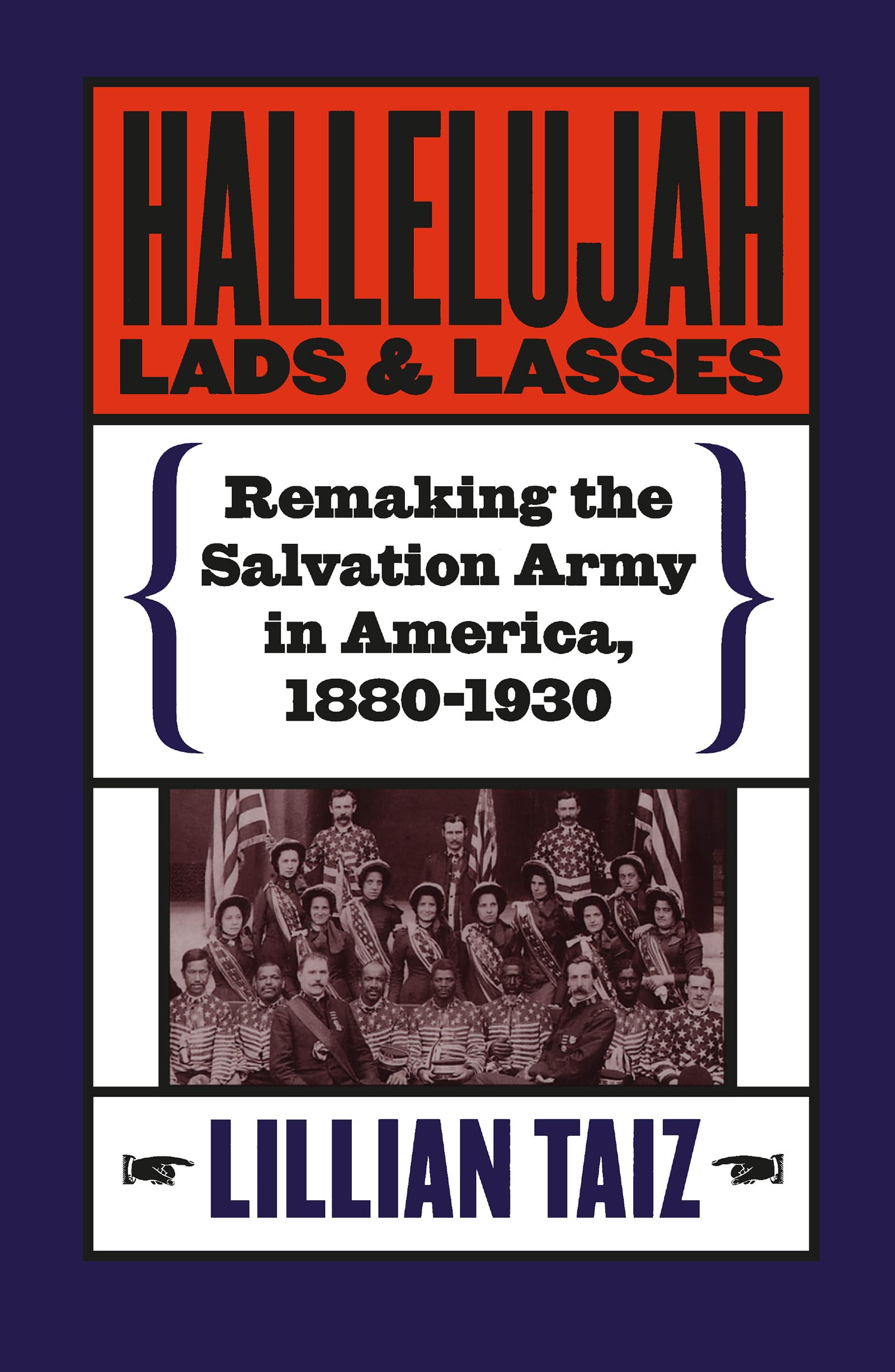
So strongly associated is the Salvation Army with its modern mission of service that its colorful history as a religious movement is often overlooked. In telling the story of the organization in America, Lillian Taiz traces its evolution from a workingclass, evangelical religion to a movement that emphasized service as the path to salvation.When the Salvation Army crossed the Atlantic from Britain in 1879, it immediately began to adapt its religious culture to its new American setting. The group found its constituency among young, workingclass men and women who were attracted to its intensely experiential religious culture, which combined a frontiercampmeeting style with workingclass forms of popular culture modeled on the saloon and theater. In the hands of these new recruits, the Salvation Army developed a remarkably democratic internal culture. By the turn of the century, though, as the Army increasingly attempted to attract souls by addressing the physical needs of the masses, the group began to turn away from boisterous religious expression toward a more 'refined' religious culture and a more centrally controlled bureaucratic structure.Placing her focus on the membership of the Salvation Army and its transformation as an organization within the broader context of literature on class, labor, and women's history, Taiz sheds new light on the character of American workingclass culture and religion in the late nineteenth and early twentieth centuries.
⚠️ WARNING (California Proposition 65):
This product may contain chemicals known to the State of California to cause cancer,
birth defects, or other reproductive harm.
For MAP (Minimum Advertised Price) violations and Intellectual Property (IP) or Trademark concerns, please contact:
support@ergodebooks.com
⚠️ California Proposition 65 Warning: Some products sold on this website may expose you to chemicals known to the State of California to cause cancer, birth defects, or other reproductive harm. For more information, visit www.P65Warnings.ca.gov.