
Title
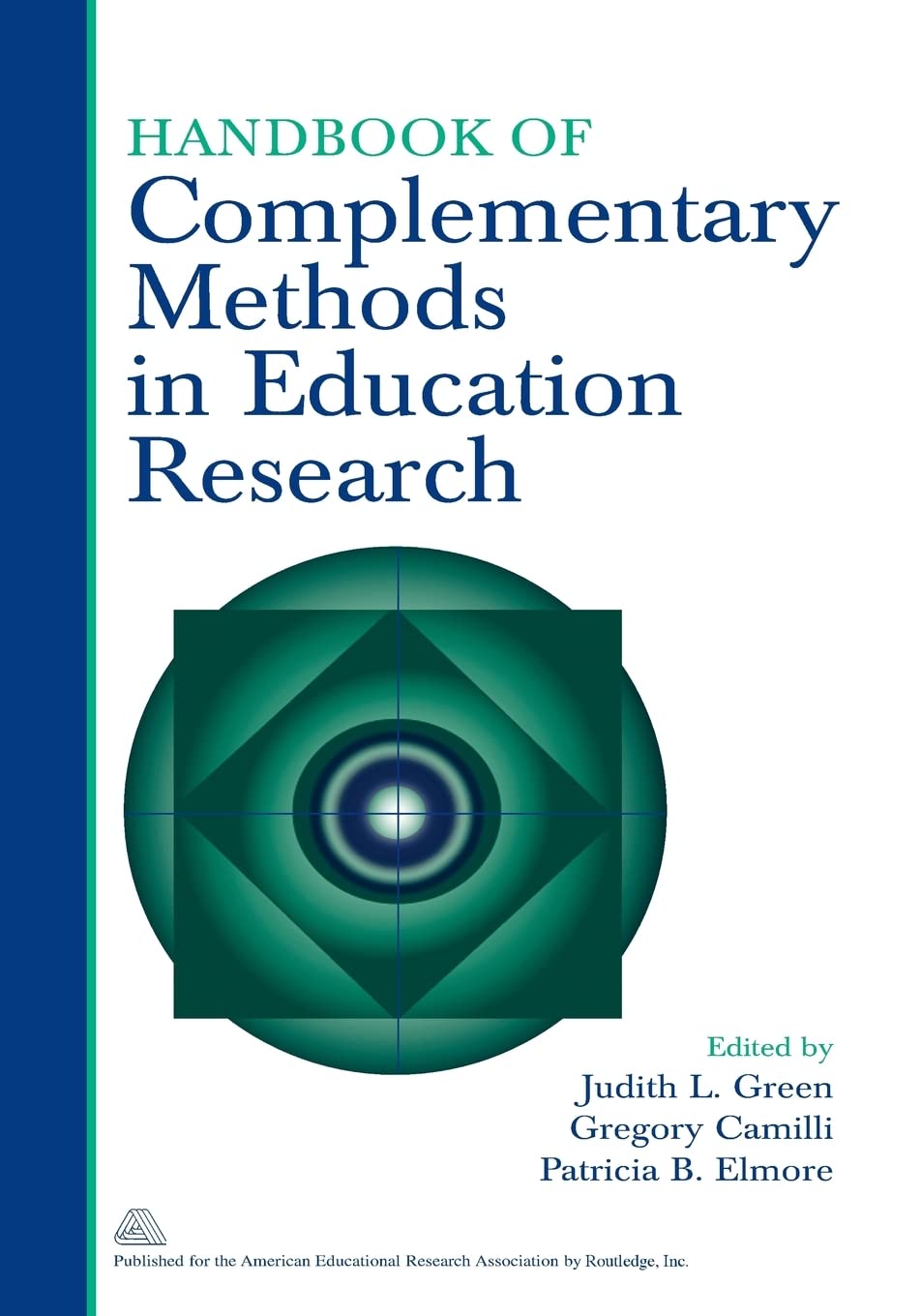
Handbook of Complementary Methods in Education Research,New
Sold by Ergodebooks, an authorized reseller.
Returns accepted within 30 days | support@ergodebooks.com
Shipping Information
- Free Standard Shipping — United States only
- Processing Time: 3–5 business days
- Estimated Delivery: 6–10 business days after dispatch
- Double-boxed, fully insured & discreetly packaged
- Tracking number sent via email once dispatched
Returns & Refund
Returns accepted within 30 days of delivery.
Damaged or Defective Item
Free return shipping + replacement or full refund
Wrong Item Received
Free return shipping + replacement or full refund
Change of Mind
Return shipping at customer's expense · 25% restocking fee applies
Payment Option

Published for the American Educational Research Association by Routledge.The Handbook of Complementary Methods in Education Research is a successor volume to AERA's earlier and highly acclaimed editions of Complementary Methods for Research in Education. More than any book to date (including its predecessors), this new volume brings together the wide range of research methods used to study education and makes the logic of inquiry for each method clear and accessible. Each method is described in detail, including its history, its research design, the questions that it addresses, ways of using the method, and ways of analyzing and reporting outcomes. Key features of this indispensable book include the following: Foundations SectionPart I is unique among research books. Its three chapters examine common philosophical, epistemological, and ethical issues facing researchers from all traditions, and frames ways of understanding the similarities and differences among traditions. Together they provide a tripartite lens through which to view and compare all research methods. Comprehensive CoveragePart II (the heart of the book) presents 35 chapters on research design and analysis. Each chapter includes a brief historical overview of the research tradition, examines the questions that it addresses, and presents an example of how the approach can be used. Programs of ResearchPart III examines how research programs connected to eight specific lines of inquiry have evolved over time. These chapters examine phenomena such as classroom interaction; language research; issues of race, culture, and difference; policy analysis; program evaluation; student learning; and teacher education. Complementary MethodsAs the title suggests, a central mission of this book is to explore the compatibility of different research methods. Which methods can be productively brought together and for what purposes? How and on what scale can they be made compatible and what phenomena are they best suited to explore? FlexibilityThe chapters in Parts II and III are largely independent. Therefore, selected portions of the book can be used in courses devoted to specific research methods and perspectives or to particular areas of education. Likewise, established researchers interested in acquiring new techniques or greater expertise in a given methodology will find this an indispensable reference volume. This handbook is appropriate for any of the following audiences: faculty teaching and graduate students studying education research, education researchers and other scholars seeking an accessible overview of stateoftheart knowledge about specific methods, policy analysts and other professionals needing to better understand research methods, and academic and research libraries serving these audiences.
⚠️ WARNING (California Proposition 65):
This product may contain chemicals known to the State of California to cause cancer, birth defects, or other reproductive harm.
For more information, please visit www.P65Warnings.ca.gov.