
Title
Handbook Of Field Methods For Monitoring Landbirds,Used
Sold by Ergodebooks, an authorized reseller.
Returns accepted within 30 days | support@ergodebooks.com
Shipping Information
- Free Standard Shipping — United States only
- Processing Time: 3–5 business days
- Estimated Delivery: 6–10 business days after dispatch
- Double-boxed, fully insured & discreetly packaged
- Tracking number sent via email once dispatched
Returns & Refund
Returns accepted within 30 days of delivery.
Damaged or Defective Item
Free return shipping + replacement or full refund
Wrong Item Received
Free return shipping + replacement or full refund
Change of Mind
Return shipping at customer's expense · 25% restocking fee applies
Payment Option

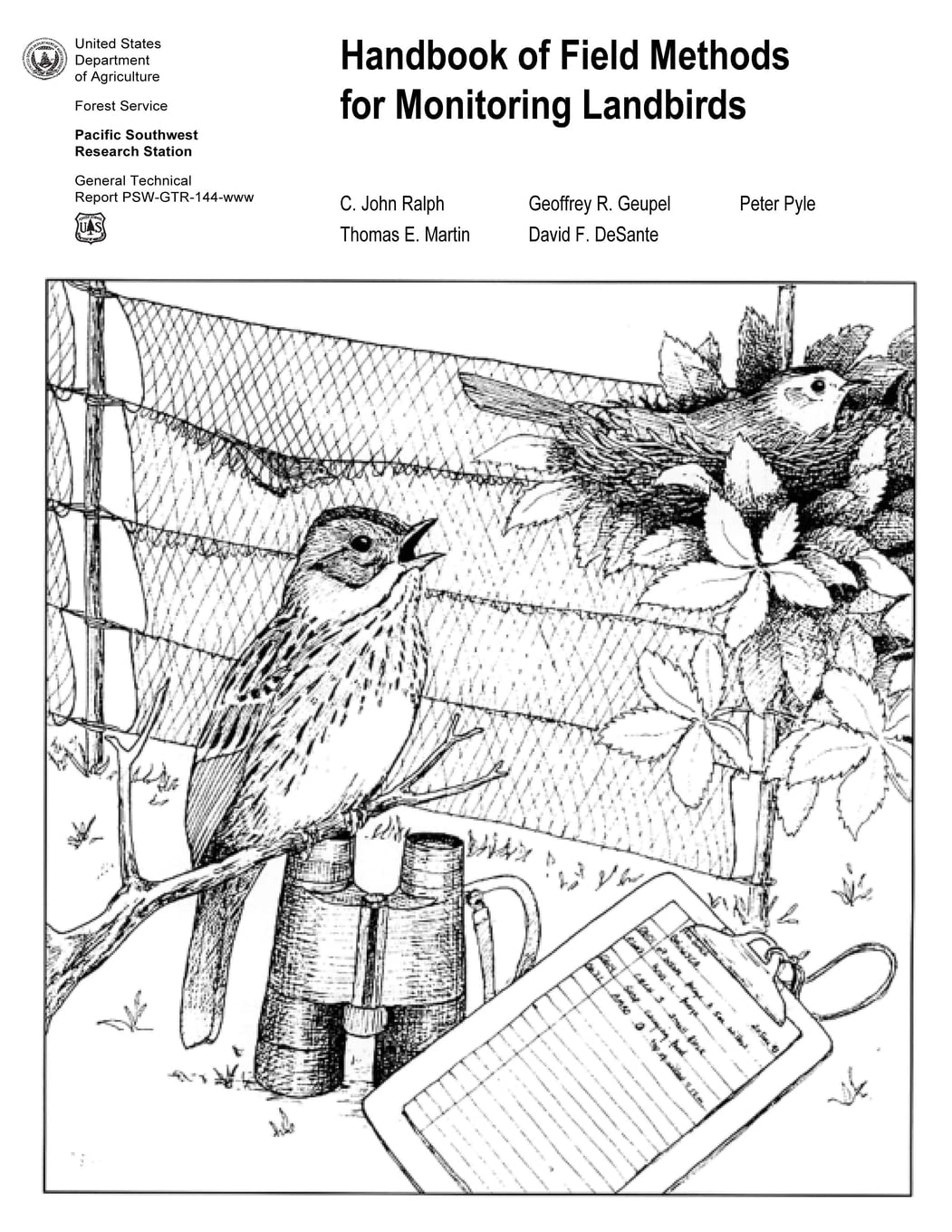
The increased attention devoted to the status and possible declines of populations of smaller species of terrestrial birds, known collectively as landbirds, has resulted in an immediate need for specific methodology for monitoring their populations. This handbook is derived from several sources and is based on the authors collective experiences in operating monitoring stations. Presented here are a compilation of methods that can be used to assay population size, demographics, and status of virtually all species of landbirds in a wide variety of habitats, from grassland and tundra to temperate and tropical rain forests. Rare species, or those with unusual habits, will require some modifications. The handbook will prove useful to field biologists, managers, and scientists anywhere in the New World. The handbook first suggests priorities for selecting a monitoring method and determining station locations. Then, general tasks that determine which species can be monitored, and methods of establishing and maintaining a study plot, journal keeping, and training of personnel are presented. Two demographic methods are described, one involving mist nets, and the other finding nests during the breeding season. Detailed suggestions are given for both methods which should allow a trained person to successfully operate a station. Both methods involve monitoring at a station at regular intervals during the breeding season. The handbook also includes descriptions of four types of censuses for determining population size and trends: spot mapping of territories, area searches of specific sites, strip transects along predetermined routes, and point counts. The latter method has been accepted as the standard method, is treated in most detail, and involves a person standing in one spot for 3 to 10 minutes and recording all birds seen or heard. In addition, methods are suggested for measuring habitat, recording weather, and colorbanding individuals to determine specific demographic parameters. Throughout the handbook, sources of materials are given that are needed for each method, as well as specific references to published works.
⚠️ WARNING (California Proposition 65):
This product may contain chemicals known to the State of California to cause cancer, birth defects, or other reproductive harm.
For more information, please visit www.P65Warnings.ca.gov.