If you have any questions, you are always welcome to contact us. We'll get back to you as soon as possible, withing 24 hours on weekdays.
Customer service
All questions about your order, return and delivery must be sent to our customer service team by e-mail at yourstore@yourdomain.com
Sale & Press
If you are interested in selling our products, need more information about our brand or wish to make a collaboration, please contact us at press@yourdomain.com
Help
If you have any questions, you are always welcome to contact us. We'll get back to you as soon as possible, withing 24 hours on weekdays.
Customer service
All questions about your order, return and delivery must be sent to our customer service team by e-mail at yourstore@yourdomain.com
Sale & Press
If you are interested in selling our products, need more information about our brand or wish to make a collaboration, please contact us at press@yourdomain.com
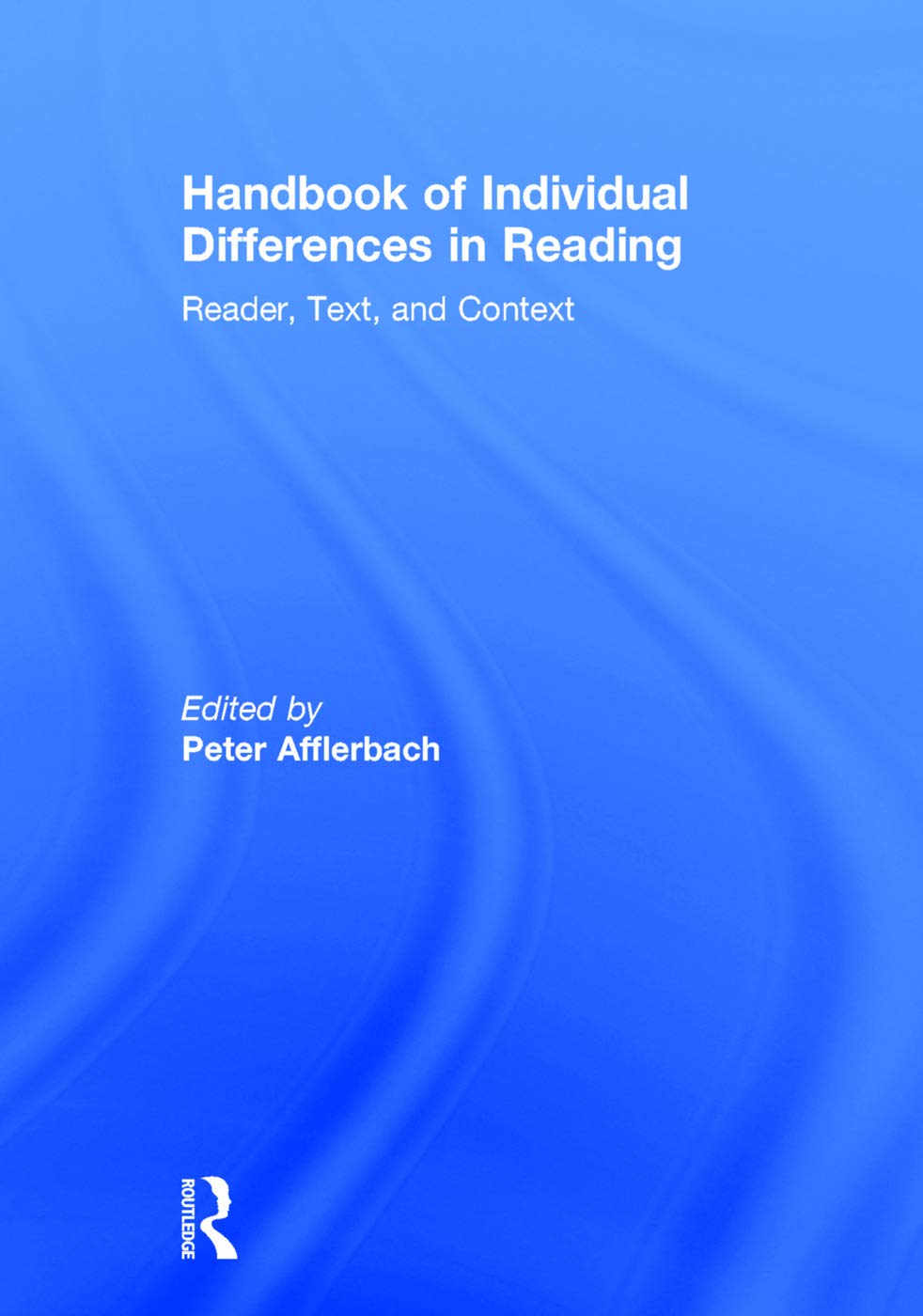
The central unifying theme of this stateoftheart contribution to research on literacy is its rethinking and reconceptualization of individual differences in reading. Previous research, focused on cognitive components of reading, signaled the need for ongoing work to identify relevant individual differences in reading, to determine the relationship(s) of individual differences to reading development, and to account for interactions among individual differences. Addressing developments in each of these areas, this volume also describes affective individual differences, and the environments in which individual differences in reading may emerge, operate, interact, and change.The scant comprehensive accounting of individual differences in reading is reflected in the nature of reading instruction programs today, the outcomes that are expected from successful teaching and learning, and the manner in which reading development is assessed. An important contribution of this volume is to provide prima facie evidence of the benefits of broad conceptualization of the ways in which readers differ. The Handbook of Individual Differences in Reading moves the field forward by encompassing cognitive, noncognitive, contextual, and methodological concerns. Its breadth of coverage serves as both a useful summary of the current state of knowledge and a guide for future work in this area.
⚠️ WARNING (California Proposition 65):
This product may contain chemicals known to the State of California to cause cancer,
birth defects, or other reproductive harm.
For MAP (Minimum Advertised Price) violations and Intellectual Property (IP) or Trademark concerns, please contact:
support@ergodebooks.com
⚠️ California Proposition 65 Warning: Some products sold on this website may expose you to chemicals known to the State of California to cause cancer, birth defects, or other reproductive harm. For more information, visit www.P65Warnings.ca.gov.