If you have any questions, you are always welcome to contact us. We'll get back to you as soon as possible, withing 24 hours on weekdays.
Customer service
All questions about your order, return and delivery must be sent to our customer service team by e-mail at yourstore@yourdomain.com
Sale & Press
If you are interested in selling our products, need more information about our brand or wish to make a collaboration, please contact us at press@yourdomain.com
Help
If you have any questions, you are always welcome to contact us. We'll get back to you as soon as possible, withing 24 hours on weekdays.
Customer service
All questions about your order, return and delivery must be sent to our customer service team by e-mail at yourstore@yourdomain.com
Sale & Press
If you are interested in selling our products, need more information about our brand or wish to make a collaboration, please contact us at press@yourdomain.com
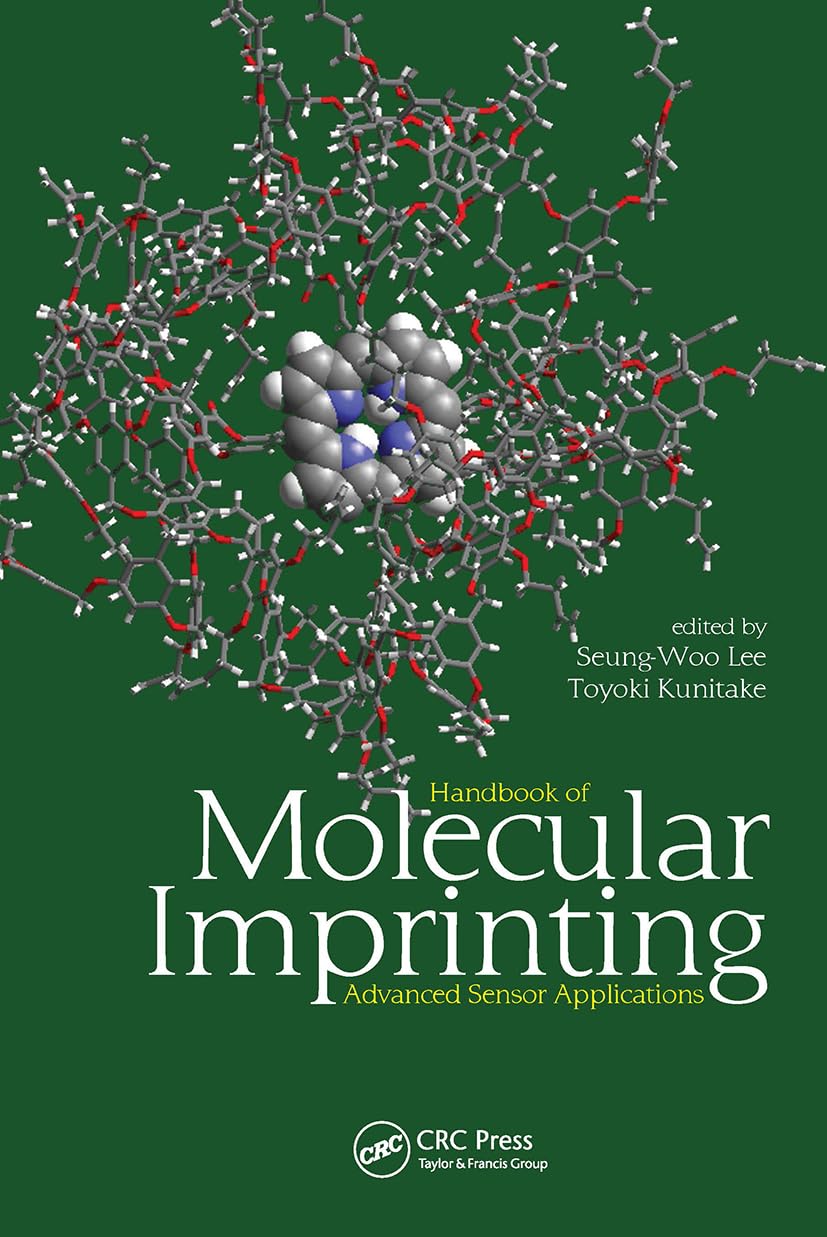
Molecular imprinting focuses on the fabrication of an artificial receptor with perfect molecular recognition abilities. It has attracted a great deal of scientific attention because of the enormous opportunities it opens in the fields of separation, catalysis, and analysis. The advantages of the molecular imprinting enable to target a wide class of substances ranging from small molecules to big conglomerates, such as proteins or even cells. In recent years, sensor applications based on molecular imprinting have started to attract greater attention because of the easy creation of robust receptor sites with high specificity and sensitivity toward a target compound.A collection of contributions from distinguised experts, Handbook of Molecular Imprinting: Advanced Sensor Applications provides a comprehensive overview on the specific challenges of molecular imprinting in sensor applications. It covers various molecular imprinting approaches. As a result, a perspective of future device ensembles for sensing is acquired. The text lays particular emphasis on fundamental aspects as well as novel ideas in the context of sensor applications. It also highlights the operation principles of various sensor transducers that are generally employed in combination with molecular imprinting recognition elements.
⚠️ WARNING (California Proposition 65):
This product may contain chemicals known to the State of California to cause cancer,
birth defects, or other reproductive harm.
For MAP (Minimum Advertised Price) violations and Intellectual Property (IP) or Trademark concerns, please contact:
support@ergodebooks.com
⚠️ California Proposition 65 Warning: Some products sold on this website may expose you to chemicals known to the State of California to cause cancer, birth defects, or other reproductive harm. For more information, visit www.P65Warnings.ca.gov.