
Title
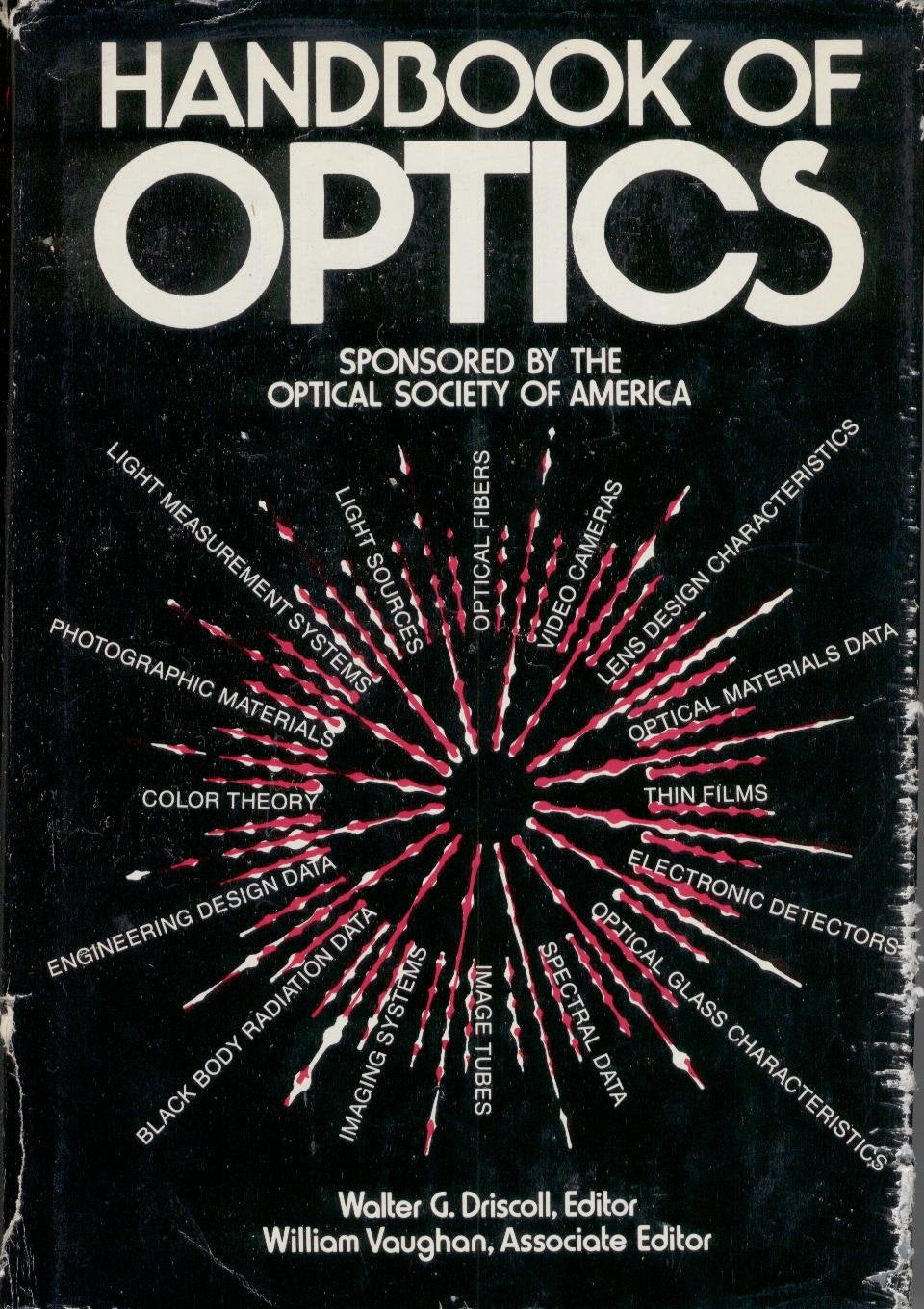
Handbook of optics,Used
Sold by Ergodebooks, an authorized reseller.
Returns accepted within 30 days | support@ergodebooks.com
Shipping Information
- Free Standard Shipping — United States only
- Processing Time: 3–5 business days
- Estimated Delivery: 6–10 business days after dispatch
- Double-boxed, fully insured & discreetly packaged
- Tracking number sent via email once dispatched
Returns & Refund
Returns accepted within 30 days of delivery.
Damaged or Defective Item
Free return shipping + replacement or full refund
Wrong Item Received
Free return shipping + replacement or full refund
Change of Mind
Return shipping at customer's expense · 25% restocking fee applies
Payment Option

This is an authoritative collection of data on the characteristics of materials and components of optical systems.
⚠️ WARNING (California Proposition 65):
This product may contain chemicals known to the State of California to cause cancer, birth defects, or other reproductive harm.
For more information, please visit www.P65Warnings.ca.gov.
- Q: What is the page count of the Handbook of Optics? A: The Handbook of Optics has one thousand one hundred seventy-two pages. This extensive collection covers various aspects of optical systems.
- Q: What type of binding does the Handbook of Optics use? A: The Handbook of Optics is bound in hardcover. This binding type ensures durability and protection for the content inside.
- Q: Who are the authors of the Handbook of Optics? A: The Handbook of Optics is authored by Walter G. Driscoll and William Vaughan. Both authors are noted experts in the field of optics.
- Q: What is the main topic covered in the Handbook of Optics? A: The Handbook of Optics focuses on the characteristics of materials and components used in optical systems. It serves as an authoritative resource for professionals.
- Q: Which publisher released the Handbook of Optics? A: The Handbook of Optics was published by McGraw-Hill Education. This publisher is recognized for its contributions to educational materials.
- Q: Is the Handbook of Optics suitable for beginners? A: Yes, the Handbook of Optics is suitable for both beginners and advanced readers. It provides foundational knowledge as well as in-depth analysis of optical systems.
- Q: How can I use the Handbook of Optics effectively? A: To use the Handbook of Optics effectively, refer to the index for specific topics you want to explore. It’s also beneficial for academic research and professional reference.
- Q: What level of expertise is required to understand the Handbook of Optics? A: A basic understanding of optics is helpful but not necessary. The Handbook provides detailed explanations that can aid in grasping complex concepts.
- Q: How do I care for the Handbook of Optics? A: To care for the Handbook of Optics, store it in a cool, dry place and avoid exposure to direct sunlight. This will help preserve the binding and pages.
- Q: Can I clean the Handbook of Optics? A: Yes, you can gently wipe the cover of the Handbook of Optics with a soft, dry cloth. Avoid using water or cleaning solutions on the pages.
- Q: What if my Handbook of Optics arrives damaged? A: If your Handbook of Optics arrives damaged, contact the retailer for a return or replacement. Most sellers have policies in place for damaged items.
- Q: Is there a warranty for the Handbook of Optics? A: Typically, the Handbook of Optics does not come with a warranty. However, check with the seller for any specific return policies or guarantees.
- Q: How does the Handbook of Optics compare to other optical books? A: The Handbook of Optics is comprehensive and authoritative compared to many other optical books. It covers a wide range of topics in great detail.
- Q: Is the Handbook of Optics recommended for professionals? A: Yes, the Handbook of Optics is highly recommended for professionals in the field of optics. It serves as a vital reference for ongoing research and development.
- Q: Does the Handbook of Optics include illustrations or diagrams? A: Yes, the Handbook of Optics includes illustrations and diagrams. These visual aids help clarify complex concepts and enhance understanding.