
Title
Handbook of Organised Crime and Politics (Elgar Handbooks in Political Science),Used
Sold by Ergodebooks, an authorized reseller.
Returns accepted within 30 days | support@ergodebooks.com
Shipping Information
- Free Standard Shipping — United States only
- Processing Time: 3–5 business days
- Estimated Delivery: 6–10 business days after dispatch
- Double-boxed, fully insured & discreetly packaged
- Tracking number sent via email once dispatched
Returns & Refund
Returns accepted within 30 days of delivery.
Damaged or Defective Item
Free return shipping + replacement or full refund
Wrong Item Received
Free return shipping + replacement or full refund
Change of Mind
Return shipping at customer's expense · 25% restocking fee applies
Payment Option

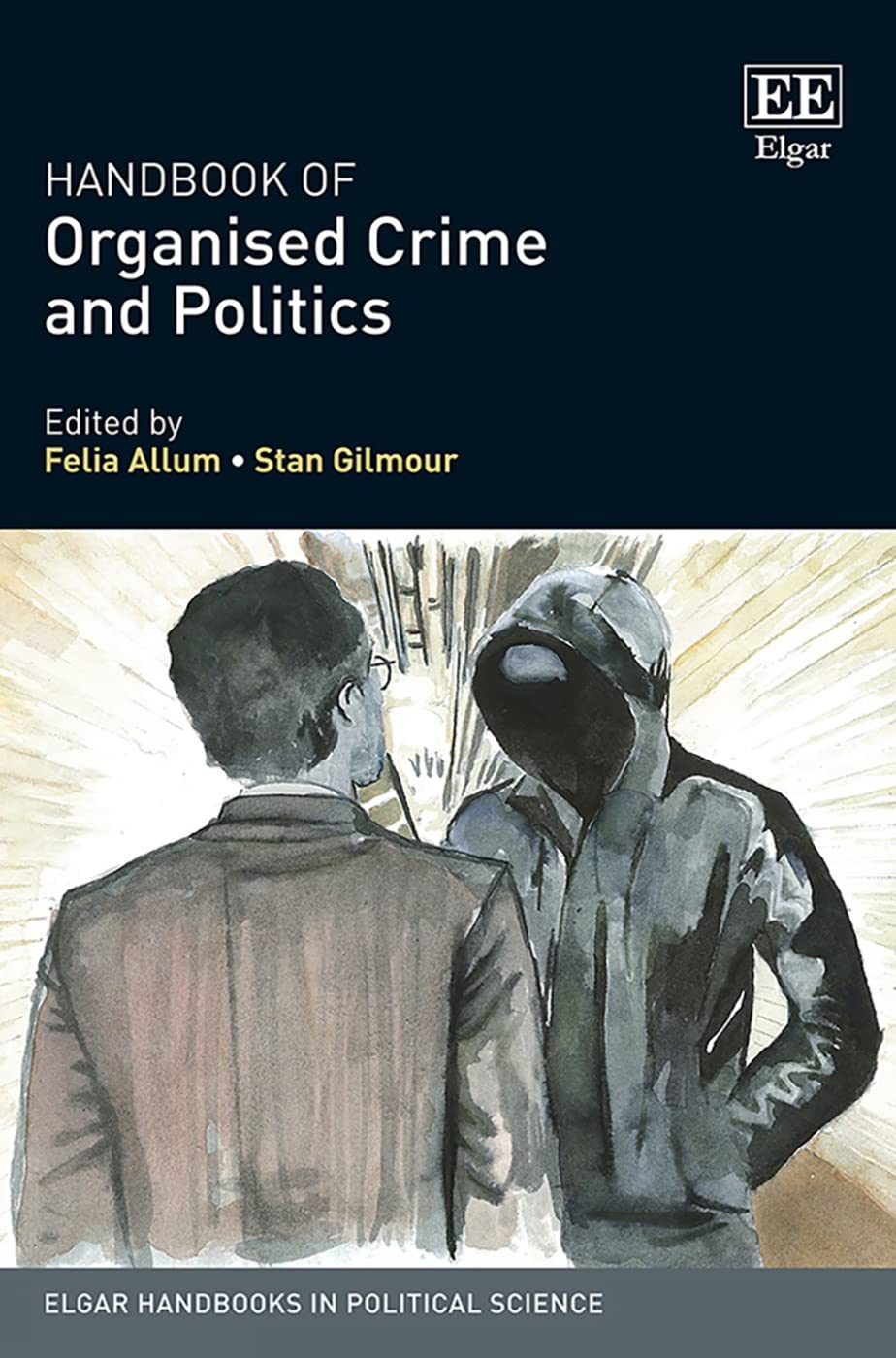
This multidisciplinary Handbook examines the complex and often hidden relationship between organised crime and politics across the globe, highlighting the difficulties involved in researching such relationships and offering new insights into how they evolve to become pervasive and destructive.Organised into five distinct sections, key chapters focus on issues and case studies from across Europe, the Americas, Africa, Eurasia and international organisations in order to provide a new and systematic picture and analysis of what the relationship between criminal organisations and politics looks like in different national contexts. In so doing, it offers an insight into the everevolving nature of this relationship, and the exchanges within it, in order to identify common features and key differences. These in turn raise provoking questions regarding the possibility of improving democracy, political systems, civil society and economic systems in order to counter the possible infiltration of these organisations, their associates and representatives.Students and scholars of public policy, politics, criminology and those focussing on organised crime more specifically will find this Handbook an original and engaging guide to the current state of play, whilst policy makers, practitioners and NGOs will find the case studies set in national context eminently valuable.Contributors include: S. Adorno, F. Allum, J. Arsovska, M. Beare, M. Bedetti, G. Borrelli, S. Brady, D. Bright, J.L. Briquet, A. Chung, N. Dalponte, A. De Vos, C.N. Dias, S. Dinnen, G. FavarelGarrigues, J. Gilbert, S. Gilmour, C. Gunnarson, E. Gutterman, C. Hemmings, A. Idler, D. Islas, J. Janssens, S. Jeperson, M. Joutsen, A. Kupatadze, R. Le Cour Grandmaison, S. Lemire, A. Markovska, V. Mete, S. Musau, A. Orlova, I. Roberge, A. Rostami, D. Silverstone, M. Shaw, D. Smith Jr., F. Strazzari, M. Tzvetkova, C. van Ham, G. Walton, J. Wheatley, J. Whittle, Y. Zabyelina, G. Zanoletti
⚠️ WARNING (California Proposition 65):
This product may contain chemicals known to the State of California to cause cancer, birth defects, or other reproductive harm.
For more information, please visit www.P65Warnings.ca.gov.