
Title
Handbook of Research on Student Engagement,Used
Sold by Ergodebooks, an authorized reseller.
Returns accepted within 30 days | support@ergodebooks.com
Shipping Information
- Free Standard Shipping — United States only
- Processing Time: 3–5 business days
- Estimated Delivery: 6–10 business days after dispatch
- Double-boxed, fully insured & discreetly packaged
- Tracking number sent via email once dispatched
Returns & Refund
Returns accepted within 30 days of delivery.
Damaged or Defective Item
Free return shipping + replacement or full refund
Wrong Item Received
Free return shipping + replacement or full refund
Change of Mind
Return shipping at customer's expense · 25% restocking fee applies
Payment Option

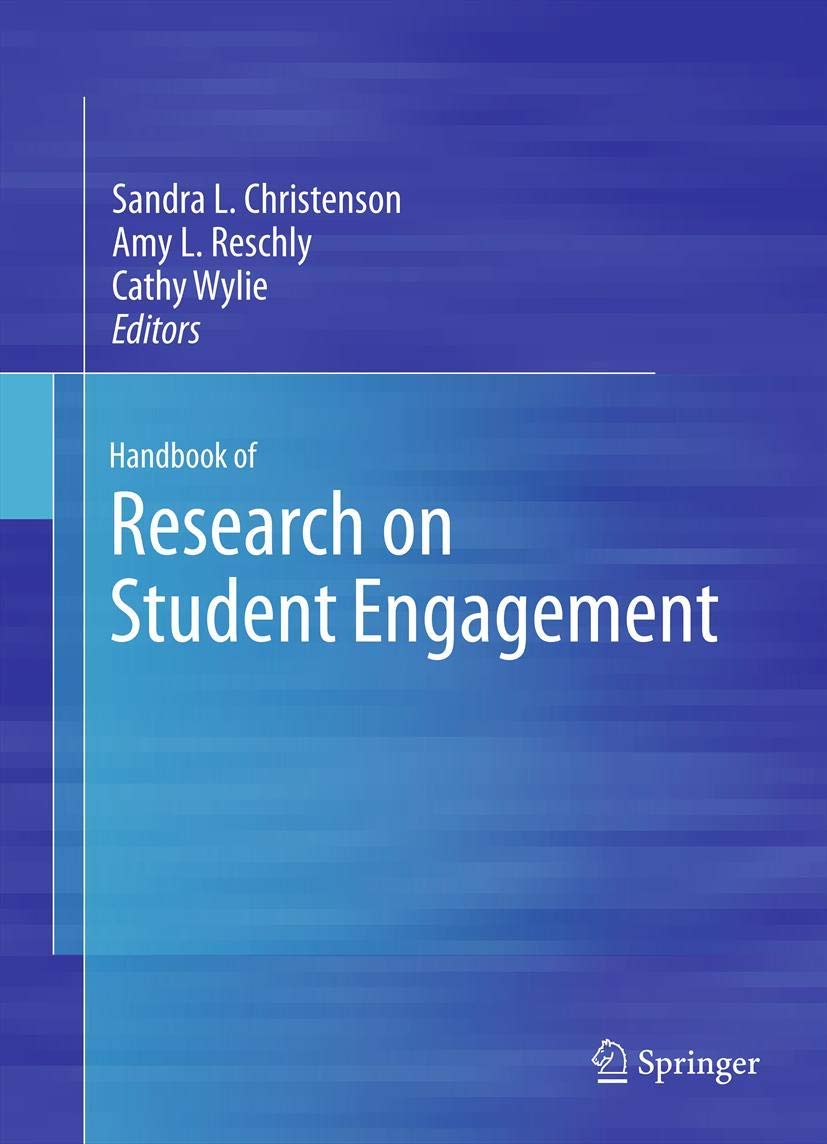
For more than two decades, the concept of student engagement has grown from simple attention in class to a construct comprised of cognitive, emotional, and behavioral components that embody and further develop motivation for learning. Similarly, the goals of student engagement have evolved from dropout prevention to improved outcomes for lifelong learning. This robust expansion has led to numerous lines of research across disciplines and are brought together clearly and comprehensively in the Handbook of Research on Student Engagement.The Handbook guides readers through the fields rich history, sorts out its component constructs, and identifies knowledge gaps to be filled by future research. Grounding data in realworld learning situations, contributors analyze indicators and facilitators of student engagement, link engagement to motivation, and gauge the impact of family, peers, and teachers on engagement in elementary and secondary grades. Findings on the effectiveness of classroom interventions are discussed in detail. And because assessing engagement is still a relatively new endeavor, chapters on measurement methods and issues round out this important resource.Topical areas addressed in the Handbook include: Engagement across developmental stages. Selfefficacy in the engaged learner. Parental and social influences on engagement and achievement motivation. The engaging nature of teaching for competency development. The relationship between engagement and highrisk behavior in adolescents. Comparing methods for measuring student engagement.An essential guide to the expanding knowledge base, the Handbook of Research on Student Engagement serves as a valuable resource for researchers, scientistpractitioners, and graduate students in such varied fields as clinical child and school psychology, educational psychology, public health, teaching and teacher education, social work, and educational policy.
⚠️ WARNING (California Proposition 65):
This product may contain chemicals known to the State of California to cause cancer, birth defects, or other reproductive harm.
For more information, please visit www.P65Warnings.ca.gov.