
Title
Handbook Of Vlsi Microlithography: Principles, Technology And Applications (Materials Science And Process Technology)
Sold by Ergodebooks, an authorized reseller.
Returns accepted within 30 days | support@ergodebooks.com
Shipping Information
- Free Standard Shipping — United States only
- Processing Time: 3–5 business days
- Estimated Delivery: 6–10 business days after dispatch
- Double-boxed, fully insured & discreetly packaged
- Tracking number sent via email once dispatched
Returns & Refund
Returns accepted within 30 days of delivery.
Damaged or Defective Item
Free return shipping + replacement or full refund
Wrong Item Received
Free return shipping + replacement or full refund
Change of Mind
Return shipping at customer's expense · 25% restocking fee applies
Payment Option

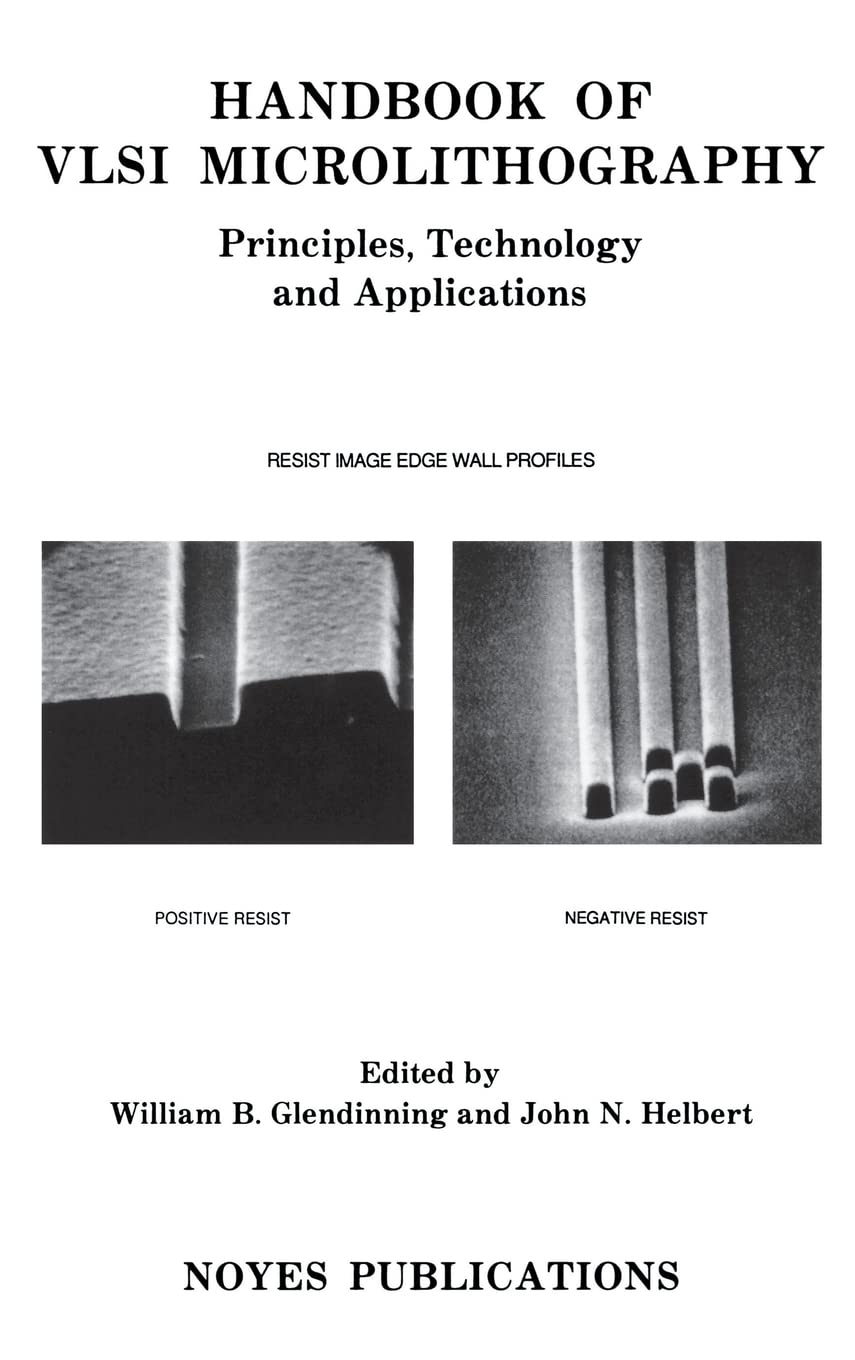
This Handbook Gives Readers A Close Look At The Entire Technology Of Printing Very High Resolution And High Density Integrated Circuit (Ic) Patterns Into Thin Resist Process Transfer Coatings Including Optical Lithography, Electron Beam, Ion Beam, And Xray Lithography. The Book'S Main Theme Is The Special Printing Process Needed To Achieve Volume High Density Ic Chip Production, Especially In The Dynamic Random Access Memory (Dram) Industry.The Book Leads Off With A Comparison Of Various Lithography Methods, Covering The Three Major Patterning Parameters Of Line/Space, Resolution, Line Edge And Pattern Feature Dimension Control. The Book'S Explanation Of Resist And Resist Process Equipment Technology May Well Be The First Practical Description Of The Relationship Between The Resist Process And Equipment Parameters. The Basics Of Resist Technology Are Completely Covered Including An Entire Chapter On Resist Process Defectivity And The Potential Yield Limiting Effect On Device Production.Each Alternative Lithographic Technique And Testing Method Is Considered And Evaluated: Basic Metrology Including Optical, Scanningelectronmicroscope (Sem) Techniques And Electrical Test Devices, Along With Explanations Of Actual Printing Tools And Their Design, Construction And Performance. The Editor Devotes An Entire Chapter To Today'S Sophisticated, Complex Electronbeam Printers, And To The Emerging Xray Printing Technology Now Used In Highdensity Cmos Devices. Energetic Ion Particle Printing Is A Controllable, Steerable Technology That Does Not Rely On Resist, And Occupies A Final Section Of The Handbook.
⚠️ WARNING (California Proposition 65):
This product may contain chemicals known to the State of California to cause cancer, birth defects, or other reproductive harm.
For more information, please visit www.P65Warnings.ca.gov.
- Q: How many pages does the handbook have? A: The handbook contains six hundred eighty pages. It provides extensive information on VLSI microlithography techniques and applications.
- Q: What is the binding type of this book? A: This book is hardcover. This binding type ensures durability and longevity, making it suitable for extensive use.
- Q: What are the dimensions of the handbook? A: The dimensions of the handbook are six inches in length, one point four six inches in width, and nine point zero two inches in height. These measurements make it a manageable size for reference.
- Q: Who is the author of the handbook? A: The author of the handbook is William B. Glendinning. He brings expertise in the field of microprocessors and system design.
- Q: What is the main focus of this handbook? A: The main focus of this handbook is the technology of printing high-resolution integrated circuit patterns. It covers various lithography methods crucial for IC chip production.
- Q: Is this book suitable for beginners? A: Yes, this book is suitable for beginners. It explains complex concepts in microlithography in a clear and structured manner, making it accessible.
- Q: How can I use this handbook effectively? A: You can use this handbook as a reference for learning about VLSI microlithography. It is also beneficial for professionals seeking to deepen their understanding of the subject.
- Q: Is there a specific audience for this book? A: Yes, this book is aimed at students and professionals in the fields of materials science and process technology. It caters to those interested in integrated circuit production.
- Q: Are there any special instructions for care and storage? A: Yes, store the handbook in a cool, dry place to maintain its condition. Avoid exposure to direct sunlight to prevent cover damage.
- Q: Can this book be cleaned if it gets dirty? A: Yes, you can clean the book gently with a soft, dry cloth. Avoid using moisture, as it can damage the pages.
- Q: What if my handbook arrives damaged? A: If your handbook arrives damaged, you should contact the seller for a return or exchange. They typically have policies in place for such situations.
- Q: Is there a warranty for this book? A: No, there is no warranty for this book. However, you can check the return policy provided by the seller.
- Q: What if I have further questions about this handbook? A: For further questions, you can reach out to the seller or publisher. They can provide additional information or support.
- Q: How does this book compare to others in its category? A: This book stands out due to its comprehensive coverage of lithography techniques and applications, making it a valuable resource compared to others.
- Q: Is this handbook relevant for current technologies? A: Yes, this handbook covers current technologies in VLSI microlithography, including electron beam and x-ray lithography, making it relevant for today's industry.
- Q: Does this book cover defectivity in resist processes? A: Yes, the handbook includes a dedicated chapter on resist process defectivity. It discusses its impact on device production and yield.