If you have any questions, you are always welcome to contact us. We'll get back to you as soon as possible, withing 24 hours on weekdays.
Customer service
All questions about your order, return and delivery must be sent to our customer service team by e-mail at yourstore@yourdomain.com
Sale & Press
If you are interested in selling our products, need more information about our brand or wish to make a collaboration, please contact us at press@yourdomain.com
Help
If you have any questions, you are always welcome to contact us. We'll get back to you as soon as possible, withing 24 hours on weekdays.
Customer service
All questions about your order, return and delivery must be sent to our customer service team by e-mail at yourstore@yourdomain.com
Sale & Press
If you are interested in selling our products, need more information about our brand or wish to make a collaboration, please contact us at press@yourdomain.com
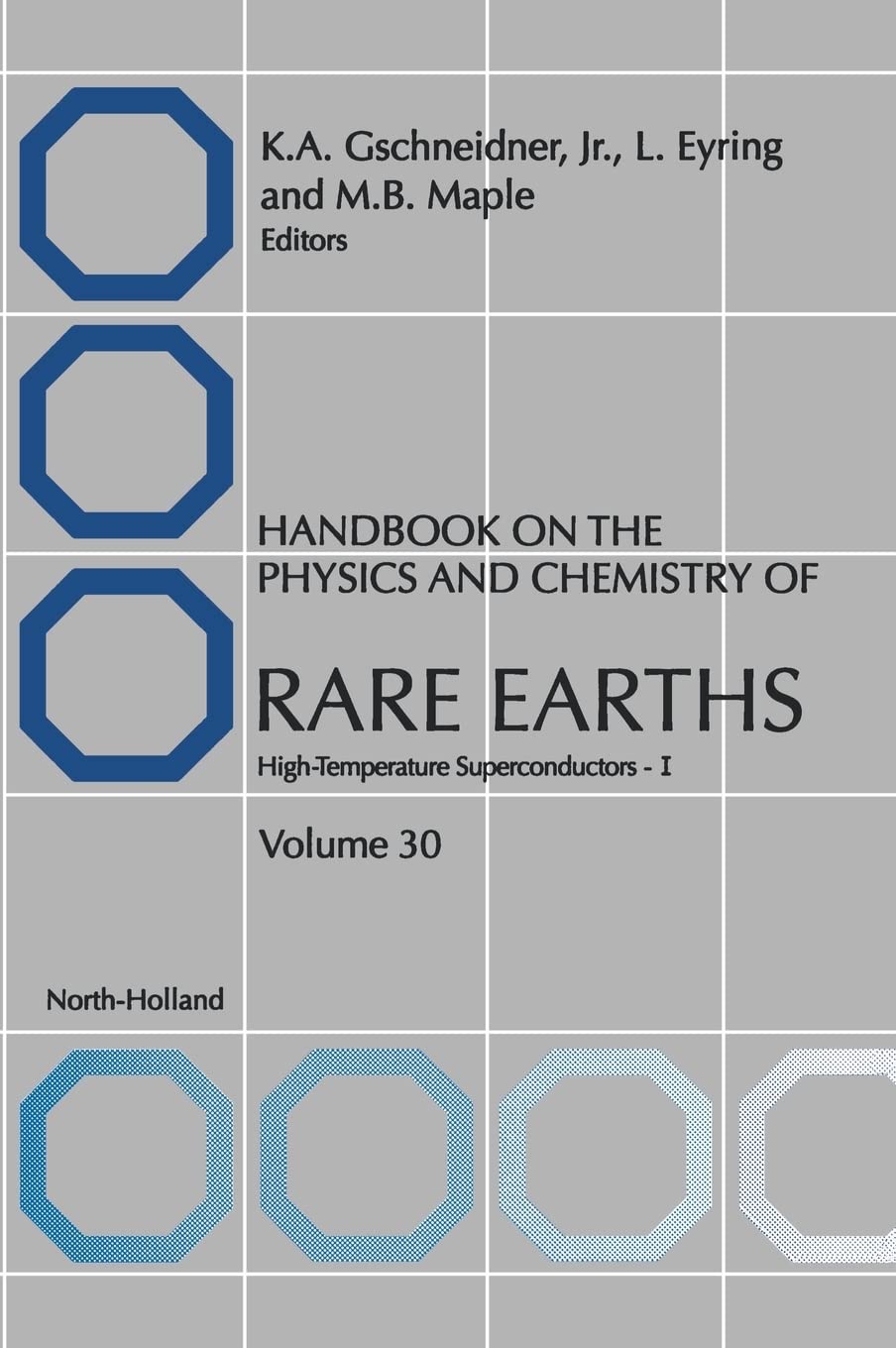
This volume of the Handbook is the first of a twovolume set of reviews devoted to the rareearthbased hightemperature oxide superconductors (commonly known as hiTC superconductors). The history of hiTC superconductors is a few months short of being 14 years old when Bednorz and Mller published their results which showed that (La,BA)2CuO4 had a superconducting transition of ~30 K, which was about 7K higher than any other known superconducting material. Within a year the upper temperature limit was raised to nearly 100K with the discovery of an ~90K superconducting transition in YBa2Cu3O7&dgr;. The announcement of a superconductor with a transition temperature higher than the boiling point of liquid nitrogen setoff a frenzy of research on trying to find other oxide hiTC superconductors. Within a few months the maximum superconducting transition reached 110 K (Bi2Sr2Ca2Cu3010, and then 122K (TlBa2Ca3Cu4O11. It took several years to push TC up another 11 K to 133 K with the discovery of superconductivity in HgBa2Ca2Cu3O8, which is still the record holder today.
⚠️ WARNING (California Proposition 65):
This product may contain chemicals known to the State of California to cause cancer,
birth defects, or other reproductive harm.
For MAP (Minimum Advertised Price) violations and Intellectual Property (IP) or Trademark concerns, please contact:
support@ergodebooks.com
⚠️ California Proposition 65 Warning: Some products sold on this website may expose you to chemicals known to the State of California to cause cancer, birth defects, or other reproductive harm. For more information, visit www.P65Warnings.ca.gov.