
Title
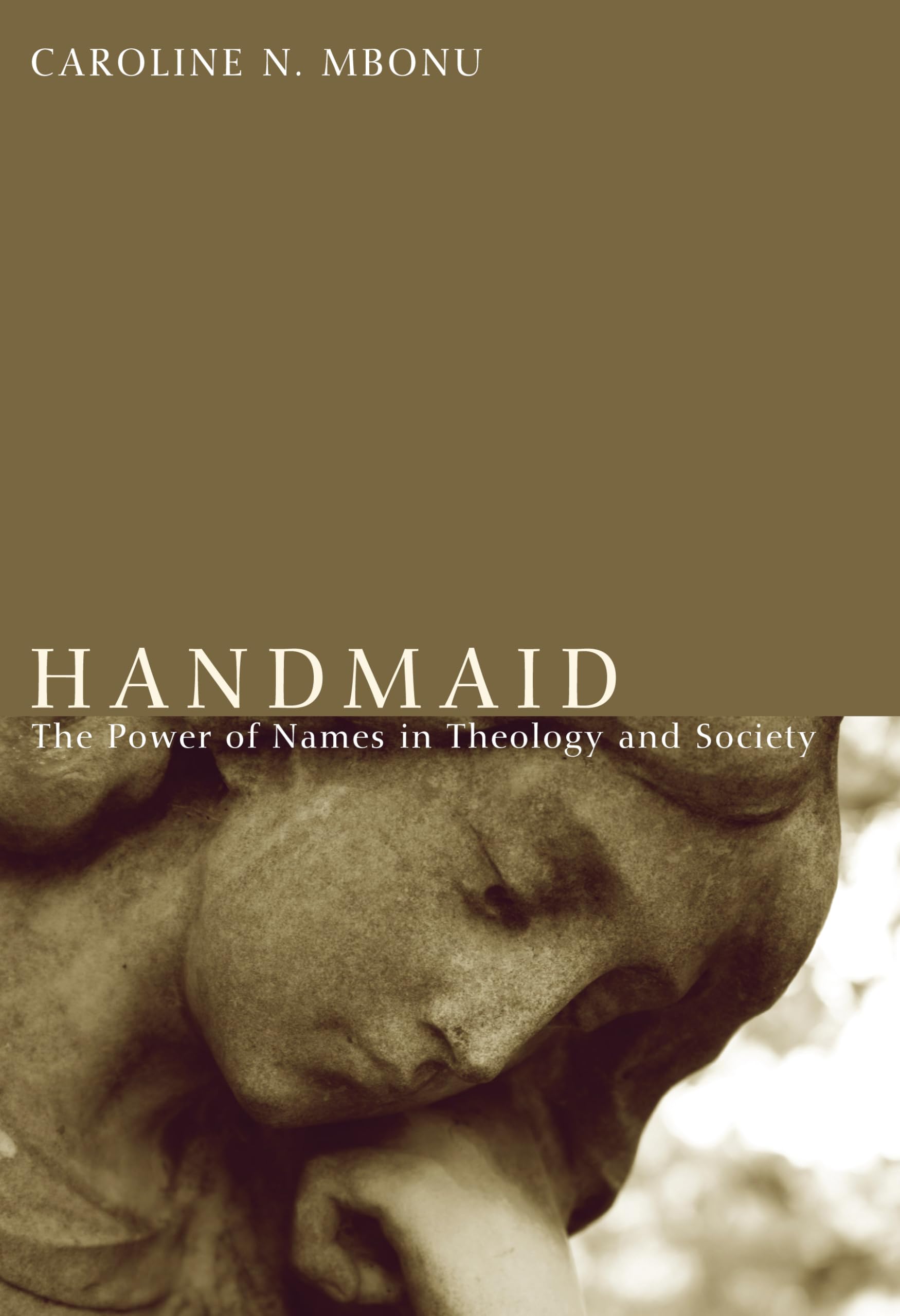
Handmaid: The Power Of Names In Theology And Society,Used
Sold by Ergodebooks, an authorized reseller.
Returns accepted within 30 days | support@ergodebooks.com
Shipping Information
- Free Standard Shipping — United States only
- Processing Time: 3–5 business days
- Estimated Delivery: 6–10 business days after dispatch
- Double-boxed, fully insured & discreetly packaged
- Tracking number sent via email once dispatched
Returns & Refund
Returns accepted within 30 days of delivery.
Damaged or Defective Item
Free return shipping + replacement or full refund
Wrong Item Received
Free return shipping + replacement or full refund
Change of Mind
Return shipping at customer's expense · 25% restocking fee applies
Payment Option

A project of women's advancement in society and church life engages a multidisciplinary and interdisciplinary approach in its quest for social transformation. In recent decades, governments, particularly in Africa, have employed various political, economic, and other social modi operandi in their attempt to advance women's participation more fully in society. The discussions on these pages seek to contribute to the women's discourse with insights from the theology and culture; more specifically, from name designation. The expression, what is in a name, falls flat on its face in most African cultures as well as the cultures that produced the Bible. In these traditions, a name is not merely a convenient collocation of sounds by which a person could be identified. Rather a name represents a story and can express something of the essence of that which is named. The power inherent in the way names are constructed and interpreted, both in terms of the Handmaid in the New Testament and more directly in the Igbo culture, contribute to the strengthening of patriarchy. Such construal potentially exclude women from full participation in social processes, and in so doing deprive society as a whole of the synergy of human potential. The discussion of Mary as Handmaid centers on the role of women in Catholic theology, so she becomes the vehicle for examining the role of the secondclass citizen assigned to women in the Church, then and now. Drawing from textual and oral history, the book reinterprets in a liberative manner female names both from Igbo tradition as well as Chinua Achebe's Anthills of the Savannah. Thus the freight that a name designation carries makes imperative the exploration of its redemptive significance.
⚠️ WARNING (California Proposition 65):
This product may contain chemicals known to the State of California to cause cancer, birth defects, or other reproductive harm.
For more information, please visit www.P65Warnings.ca.gov.