
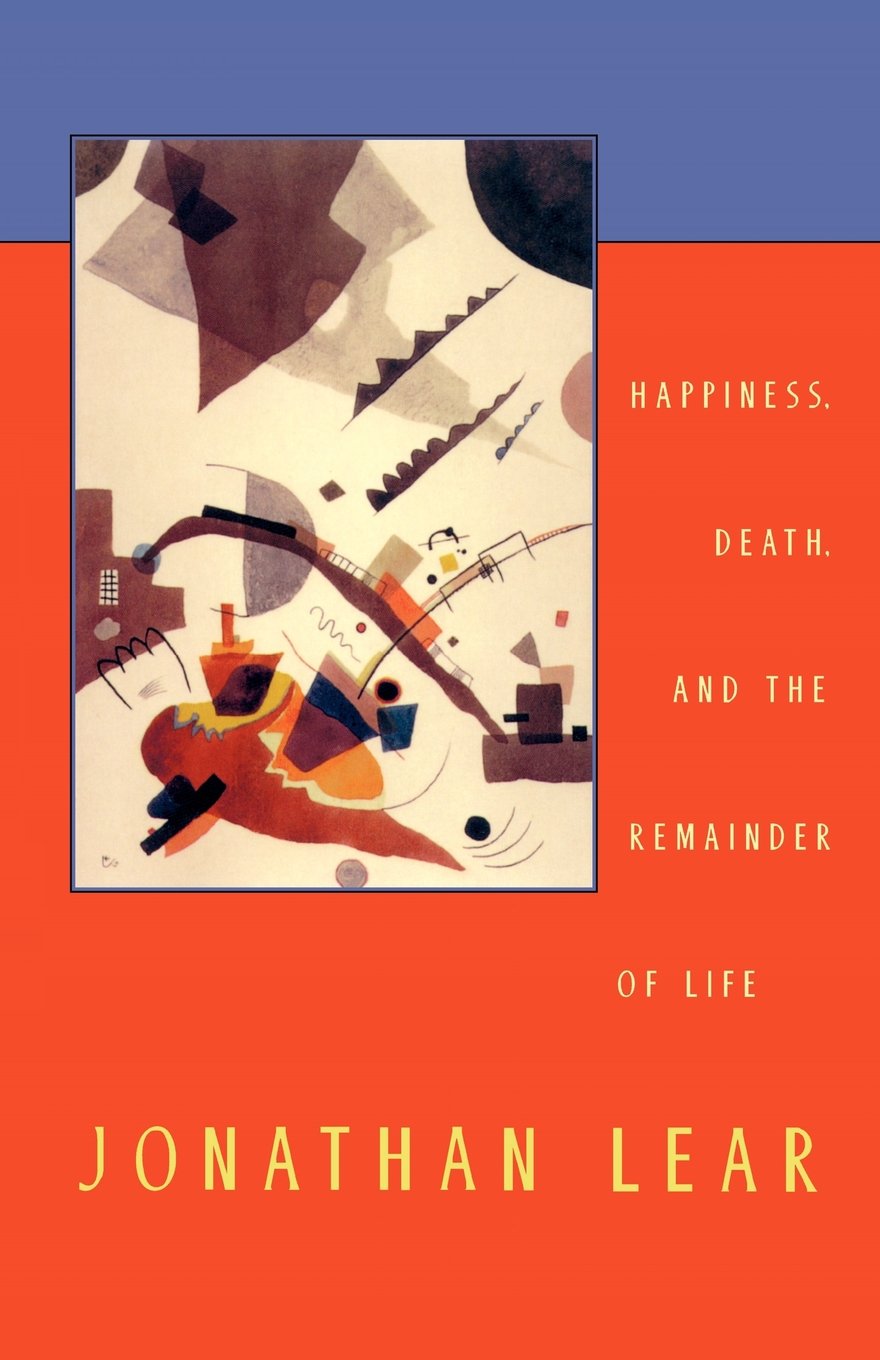
Title
Happiness, Death, and the Remainder of Life (The Tanner Lectures on Human Values),Used
Sold by Ergodebooks, an authorized reseller.
Returns accepted within 30 days | support@ergodebooks.com
Shipping Information
- Free Standard Shipping — United States only
- Processing Time: 3–5 business days
- Estimated Delivery: 6–10 business days after dispatch
- Double-boxed, fully insured & discreetly packaged
- Tracking number sent via email once dispatched
Returns & Refund
Returns accepted within 30 days of delivery.
Damaged or Defective Item
Free return shipping + replacement or full refund
Wrong Item Received
Free return shipping + replacement or full refund
Change of Mind
Return shipping at customer's expense · 25% restocking fee applies
Payment Option

Separated by millennia, Aristotle and Sigmund Freud gave us disparate but compelling pictures of the human condition. But if, with Jonathan Lear, we scrutinize these thinkers attempts to explain human behavior in terms of a higher principlewhether happiness or deaththe pictures fall apart. Aristotle attempted to ground ethical life in human striving for happiness, yet he didnt understand what happiness is any better than we do. Happiness became an enigmatic, always unattainable, means of seducing humankind into living an ethical life. Freud fared no better when he tried to ground human striving, aggression, and destructiveness in the death drive, like Aristotle attributing purpose where none exists. Neither overarching principle can guide or govern the remainder of life, in which our inherently disruptive unconscious moves in breaks and swerves to affect who and how we are. Lear exposes this tendency to selfdisruption for what it is: an opening, an opportunity for new possibilities. His insights have profound consequences not only for analysis but for our understanding of civilization and its discontent.
⚠️ WARNING (California Proposition 65):
This product may contain chemicals known to the State of California to cause cancer, birth defects, or other reproductive harm.
For more information, please visit www.P65Warnings.ca.gov.
- Q: What is the main focus of 'Happiness, Death, and the Remainder of Life'? A: The book explores the contrasting perspectives of Aristotle and Sigmund Freud on human behavior, particularly how concepts of happiness and death influence ethical life and our understanding of the human condition.
- Q: Who is the author of this book? A: The author of 'Happiness, Death, and the Remainder of Life' is Jonathan Lear.
- Q: What is the publication date of this book? A: The book was published on February 15, 2002.
- Q: How many pages does this book have? A: This book has a total of 208 pages.
- Q: What type of binding does this book have? A: The book is available in paperback binding.
- Q: Is this book in new condition? A: Yes, the item condition is listed as New.
- Q: What category does this book fall under? A: The book is categorized under Psychoanalysis.
- Q: What are the key features of this book? A: The key feature of this book is that it is a used book in good condition.
- Q: What insights does Jonathan Lear provide in the book? A: Jonathan Lear provides insights into how our unconscious tendencies to self-disruption can lead to new possibilities, challenging the overarching principles of happiness and death.
- Q: Is there any specific philosophy discussed in the book? A: Yes, the book discusses philosophical themes from both Aristotle's and Freud's perspectives on ethics, happiness, and the human psyche.