
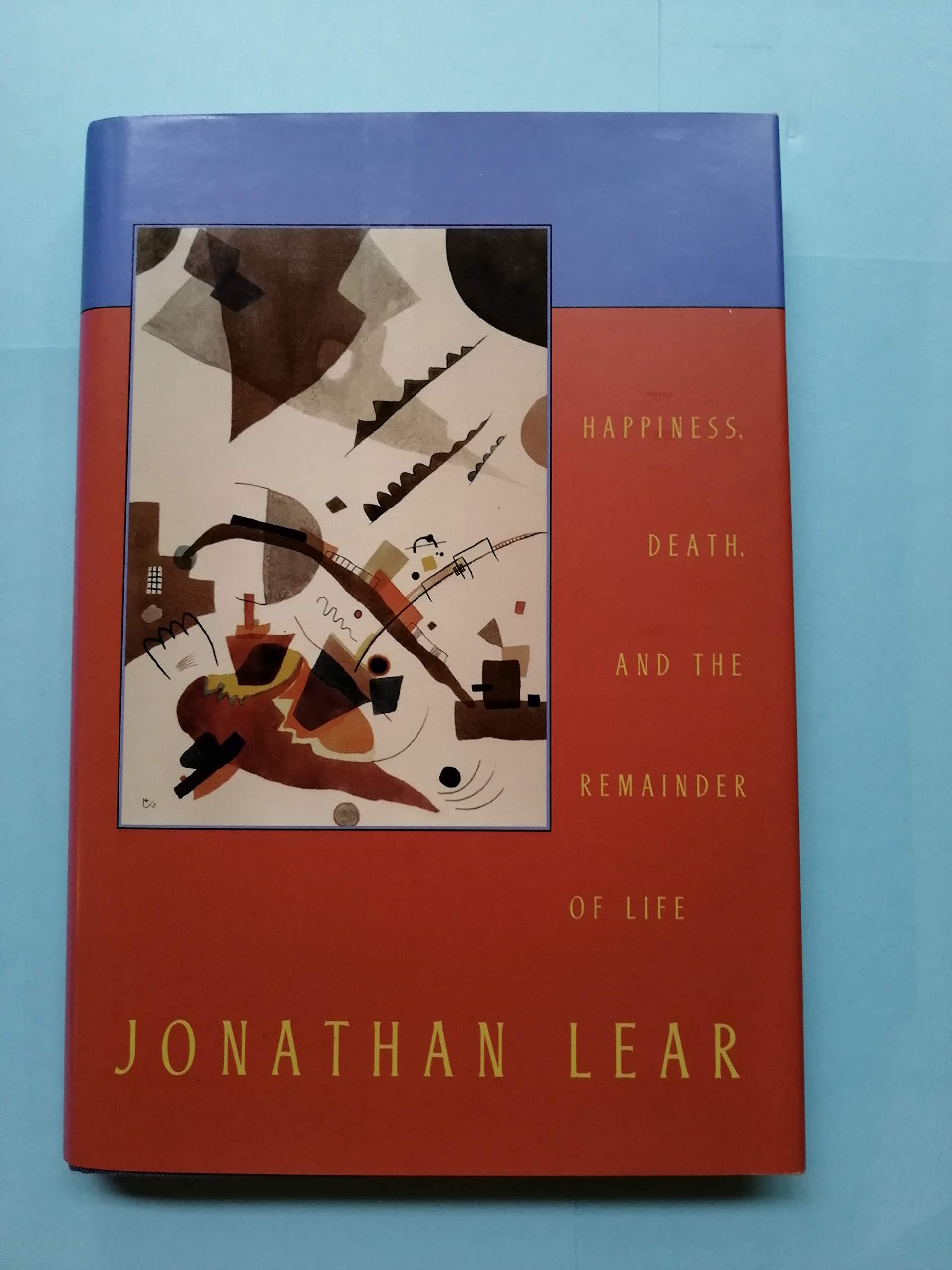
Title
Happiness, Death, And The Remainder Of Life,Used
Sold by Ergodebooks, an authorized reseller.
Returns accepted within 30 days | support@ergodebooks.com
Shipping Information
- Free Standard Shipping — United States only
- Processing Time: 3–5 business days
- Estimated Delivery: 6–10 business days after dispatch
- Double-boxed, fully insured & discreetly packaged
- Tracking number sent via email once dispatched
Returns & Refund
Returns accepted within 30 days of delivery.
Damaged or Defective Item
Free return shipping + replacement or full refund
Wrong Item Received
Free return shipping + replacement or full refund
Change of Mind
Return shipping at customer's expense · 25% restocking fee applies
Payment Option

Separated By Millennia, Aristotle And Sigmund Freud Gave Us Disparate But Compelling Pictures Of The Human Condition. But If, With Jonathan Lear, We Scrutinize These Thinkers' Attempts To Explain Human Behavior In Terms Of A Higher Principlewhether Happiness Or Deaththe Pictures Fall Apart.Aristotle Attempted To Ground Ethical Life In Human Striving For Happiness, Yet He Didn'T Understand What Happiness Is Any Better Than We Do. Happiness Became An Enigmatic, Always Unattainable, Means Of Seducing Humankind Into Living An Ethical Life. Freud Fared No Better When He Tried To Ground Human Striving, Aggression, And Destructiveness In The Death Drive, Like Aristotle Attributing Purpose Where None Exists. Neither Overarching Principle Can Guide Or Govern 'The Remainder Of Life,' In Which Our Inherently Disruptive Unconscious Moves In Breaks And Swerves To Affect Who And How We Are. Lear Exposes This Tendency To Selfdisruption For What It Is: An Opening, An Opportunity For New Possibilities. His Insights Have Profound Consequences Not Only For Analysis But For Our Understanding Of Civilization And Its Discontent.
⚠️ WARNING (California Proposition 65):
This product may contain chemicals known to the State of California to cause cancer, birth defects, or other reproductive harm.
For more information, please visit www.P65Warnings.ca.gov.
- Q: What is the page count of 'Happiness, Death, and the Remainder of Life'? A: The book has two hundred twenty-four pages. This provides a comprehensive exploration of the insights from Aristotle and Freud.
- Q: What are the dimensions of this book? A: The dimensions are five point seventy-five inches in length, zero point seventy-five inches in width, and eight point five inches in height. This size makes it convenient for reading and storage.
- Q: What is the binding type of this book? A: This book is hardcover bound. Hardcover editions are typically more durable and suitable for long-term use.
- Q: How should I read 'Happiness, Death, and the Remainder of Life'? A: You can read it like any other book, starting from the beginning. It is suitable for anyone interested in psychoanalysis and philosophy.
- Q: Is this book suitable for beginners in psychoanalysis? A: Yes, it is suitable for beginners. The book bridges complex ideas from Aristotle and Freud, making them accessible.
- Q: What age group is this book appropriate for? A: This book is appropriate for adults and mature teens. The content involves deep philosophical discussions that may not be suitable for younger readers.
- Q: How do I keep this book in good condition? A: To keep it in good condition, store it upright and avoid exposure to direct sunlight. Handle it gently to preserve the binding and pages.
- Q: Can I clean the book if it gets dirty? A: Yes, you can clean it by gently wiping the cover with a dry cloth. Avoid using water or cleaning solutions that may damage the material.
- Q: What is the best way to store this book? A: The best way to store it is upright on a shelf. Make sure it's away from moisture and extreme temperatures to prevent damage.
- Q: How does this book compare to others in psychoanalysis? A: This book offers a unique perspective by combining the thoughts of Aristotle and Freud. It's different from traditional psychoanalysis texts that focus on one thinker.
- Q: Is this book a good choice for psychology students? A: Yes, it's a great choice for psychology students. It provides critical insights into human behavior and ethical living.
- Q: How does the author's perspective influence the content? A: Jonathan Lear's perspective shapes the content by challenging conventional views of happiness and death in philosophy and psychoanalysis.
- Q: What should I do if the book arrives damaged? A: If the book arrives damaged, contact the seller for a return or exchange. Most sellers have policies to handle such issues.
- Q: Is there a warranty for this book? A: Typically, there is no warranty for books. However, check with the seller for their specific return policy.
- Q: What if I have trouble understanding the concepts in the book? A: If you have trouble, consider discussing it with peers or seeking supplementary materials. There are many resources available on Aristotle and Freud.