
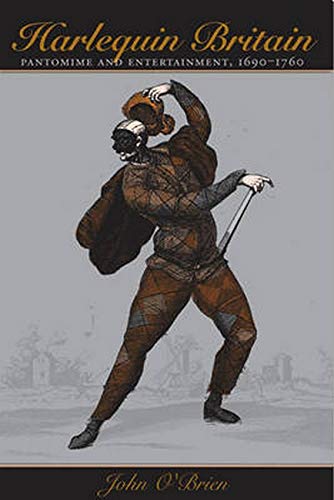
Title
Harlequin Britain: Pantomime and Entertainment, 16901760,Used
Sold by Ergodebooks, an authorized reseller.
Returns accepted within 30 days | support@ergodebooks.com
Shipping Information
- Free Standard Shipping — United States only
- Processing Time: 3–5 business days
- Estimated Delivery: 6–10 business days after dispatch
- Double-boxed, fully insured & discreetly packaged
- Tracking number sent via email once dispatched
Returns & Refund
Returns accepted within 30 days of delivery.
Damaged or Defective Item
Free return shipping + replacement or full refund
Wrong Item Received
Free return shipping + replacement or full refund
Change of Mind
Return shipping at customer's expense · 25% restocking fee applies
Payment Option

In the fall of 1723, two London theaters staged, almost simultaneously, pantomime performances of the Faust story. Unlike traditional fiveact plays, pantomimea bawdy hybrid of dance, music, spectacle, and commedia dell'arte featuring the familiar figure of the harlequin at its centerwas a theatrical experience of unprecedented accessibility. The immediate popularity of this new genre drew theater apprentices to the cities to learn the new style, and pantomime became the subject of lively debate within British society. Alexander Pope and Henry Fielding bitterly opposed the intrusion into legitimate literary culture of what they regarded as fairground amusements that appealed to sensation and passion over reason and judgment.In Harlequin Britain, literary scholar John O'Brien examines this new form of entertainment and the effect it had on British culture. Why did pantomime become so popular so quickly? Why was it perceived as culturally threatening and socially destabilizing? OBrien finds that pantomimes socially subversive commentary cut through the dampened spirit of debate created by Robert Walpole's oneparty rule. At the same time, pantomime appealed to the abstracted taste of the mass audience. Its extraordinary popularity underscores the continuing centrality of live performance in a culture that is most typically seen as having shifted its attention to the written textin particular, to the novel.Written in a lively style rich with anecdotes, Harlequin Britain establishes the emergence of eighteenthcentury English pantomime, with its promiscuous blending of genres and subjects, as a key moment in the development of modern entertainment culture.
⚠️ WARNING (California Proposition 65):
This product may contain chemicals known to the State of California to cause cancer, birth defects, or other reproductive harm.
For more information, please visit www.P65Warnings.ca.gov.