
Title
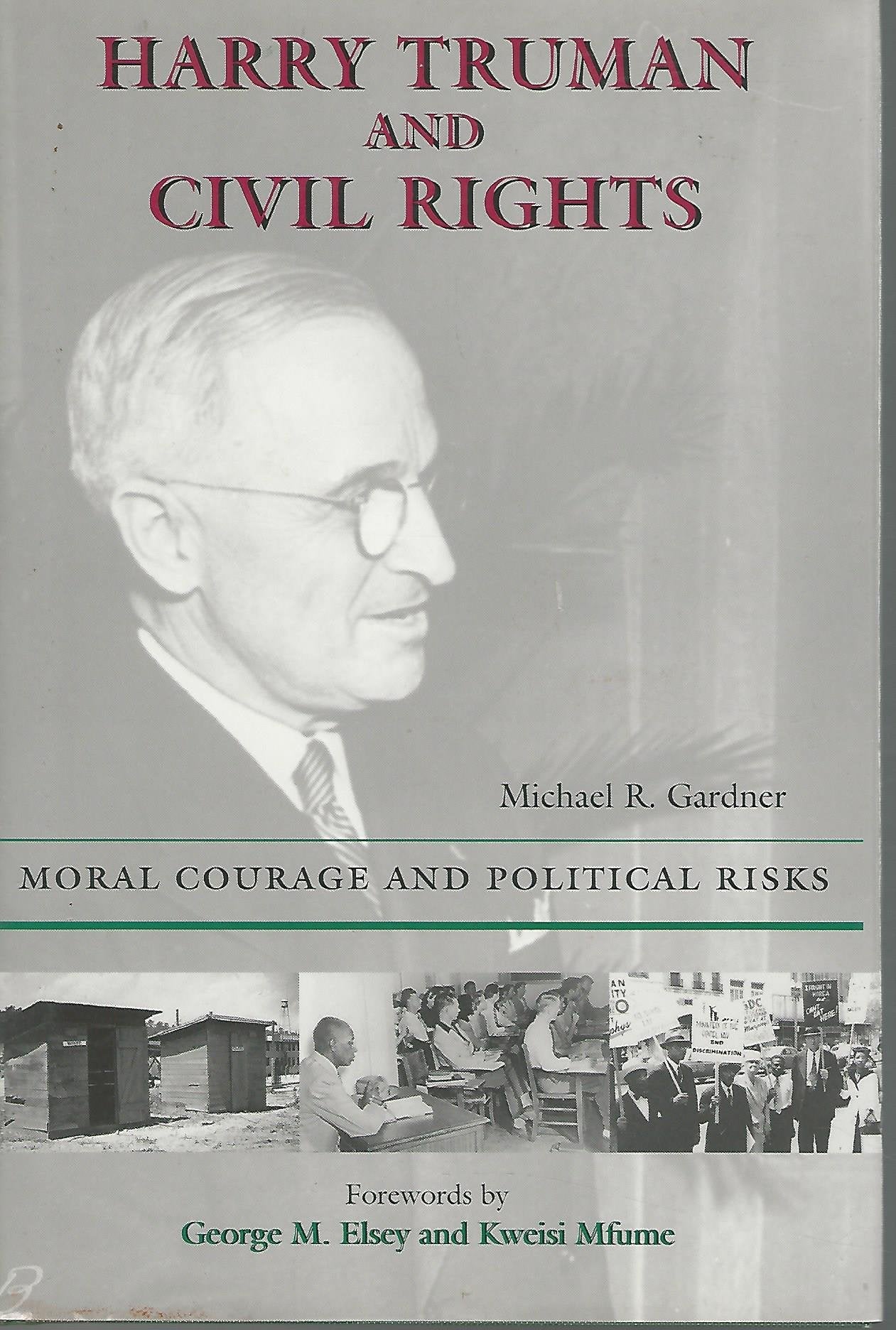
Harry Truman and Civil Rights: Moral Courage and Political Risks,Used
Sold by Ergodebooks, an authorized reseller.
Returns accepted within 30 days | support@ergodebooks.com
Shipping Information
- Free Standard Shipping — United States only
- Processing Time: 3–5 business days
- Estimated Delivery: 6–10 business days after dispatch
- Double-boxed, fully insured & discreetly packaged
- Tracking number sent via email once dispatched
Returns & Refund
Returns accepted within 30 days of delivery.
Damaged or Defective Item
Free return shipping + replacement or full refund
Wrong Item Received
Free return shipping + replacement or full refund
Change of Mind
Return shipping at customer's expense · 25% restocking fee applies
Payment Option

Given his background, President Truman was an unlikely champion of civil rights. Where he grew upthe border state of Missourisegregation was accepted and largely unquestioned. Both his maternal and paternal grandparents had owned slaves, and his mother, victimized by Yankee forces, railed against Abraham Lincoln for the remainder of her ninetyfour years. When Truman assumed the presidency on April 12, 1945, Michael R. Gardner points out, Washington, DC, in many ways resembled Cape Town, South Africa, under apartheid rule circa 1985.Trumans background notwithstanding, Gardner shows that it was Harry Trumannot Franklin D. Roosevelt, Dwight D. Eisenhower, or John F. Kennedywho energized the modern civil rights movement, a movement that basically had stalled since Abraham Lincoln had freed the slaves. Gardner recounts Trumans public and private actions regarding black Americans. He analyzes speeches, private conversations with colleagues, the executive orders that shattered federal segregation policies, and the appointments of likeminded civil rights activists to important positions. Among those appointments was the first black federal judge in the continental United States.One of Gardners essential and provocative points is that the Frederick Moore Vinson Supreme Courta court significantly shaped by Trumanprovided the legal basis for the nationwide integration that Truman could not get through the Congress. Challenging the myth that the civil rights movement began with Brown v. Board of Education under Chief Justice Earl Warren, Gardner contends that the lifealtering civil rights rulings by the Vinson Court provided the necessary legal framework for the landmark Brown v. Board of Education decision.Gardner characterizes Trumans evolution from a man who grew up in a racist household into a president willing to put his political career at mortal risk by actively supporting the interests of black Americans.
⚠️ WARNING (California Proposition 65):
This product may contain chemicals known to the State of California to cause cancer, birth defects, or other reproductive harm.
For more information, please visit www.P65Warnings.ca.gov.