
Title
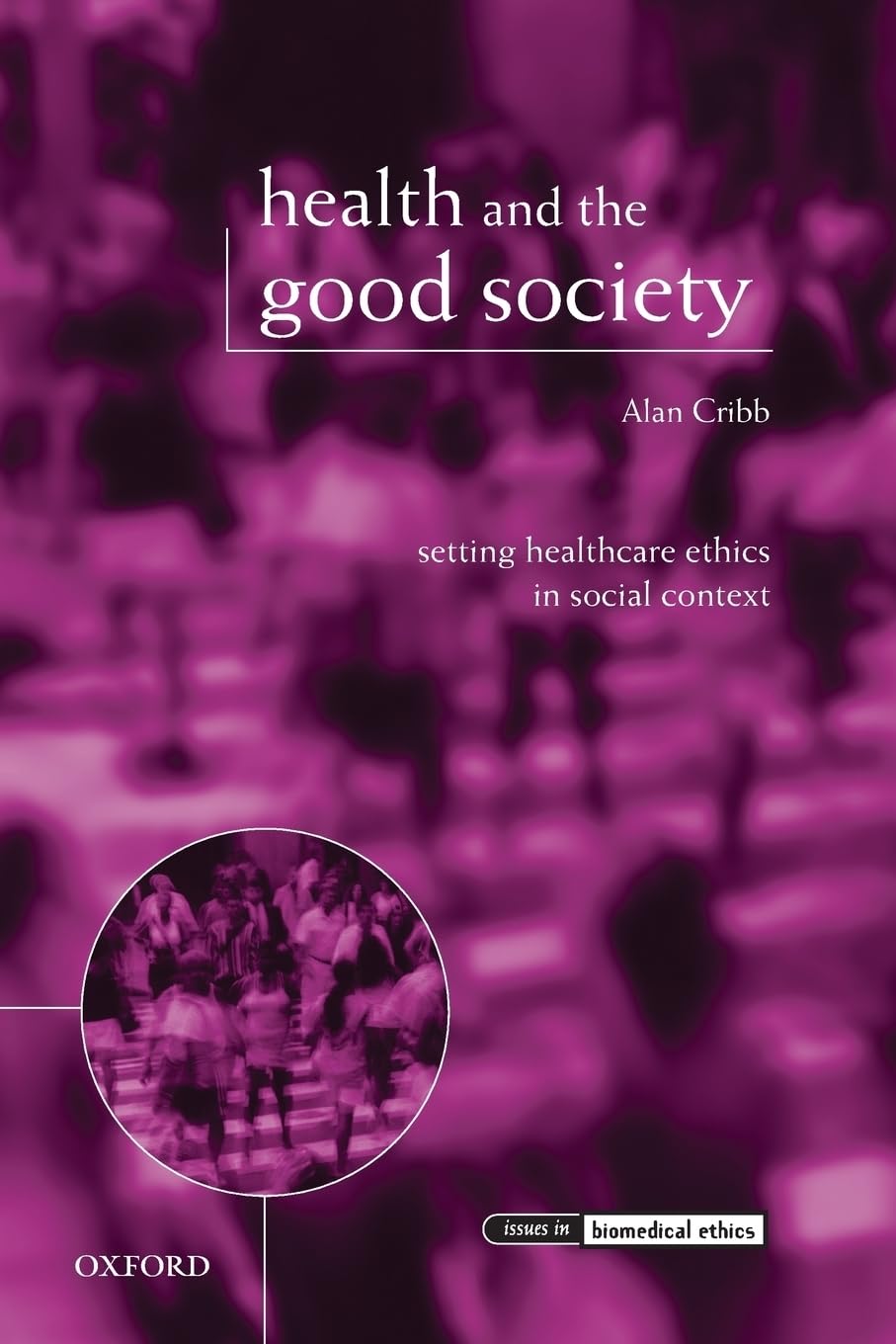
Health And The Good Society: Setting Healthcare Ethics In Social Context (Issues In Biomedical Ethics)
Sold by Ergodebooks, an authorized reseller.
Returns accepted within 30 days | support@ergodebooks.com
Shipping Information
- Free Standard Shipping — United States only
- Processing Time: 3–5 business days
- Estimated Delivery: 6–10 business days after dispatch
- Double-boxed, fully insured & discreetly packaged
- Tracking number sent via email once dispatched
Returns & Refund
Returns accepted within 30 days of delivery.
Damaged or Defective Item
Free return shipping + replacement or full refund
Wrong Item Received
Free return shipping + replacement or full refund
Change of Mind
Return shipping at customer's expense · 25% restocking fee applies
Payment Option

The goals of healthcare and health policy, and the healthrelated dilemmas facing policy makers, professionals, and citizens are extensively analyzed and debated in a range of disciplines including public health, sociology, and applied philosophy. Health and the Good Society is the first fulllength work that addresses these debates in a way that cuts across these disciplinary boundaries.Alan Cribb's core argument is that clinical ethics needs to be understood in the context of public health ethics. This entails healthcare ethics embracing 'the social dimension' of health in two overlapping senses: first, the various respects in which health experiences and outcomes are socially determined; and second, the ways in which healthrelated goods are better understood as social rather then purely individual goods. This broader approach to the ethics of healthcare includes a concern with the social construction of both healthcare goods and the roles, ideals, and obligations of agents; that is to say it focuses upon the 'value field' of healthrelated action and not only upon the ethics of action within this value field. This groundbreaking book thus seeks to 'open up' the agenda of healthcare ethics both methodologically and substantively: it argues that populationoriented perspectives are central to all healthcare ethics, and that everybody has some share of responsibility for securing healthrelated goods including the good of greater health equality. One of its major conclusions is that the rather limited tradition of health education policy and practice needs a complete rethink.
⚠️ WARNING (California Proposition 65):
This product may contain chemicals known to the State of California to cause cancer, birth defects, or other reproductive harm.
For more information, please visit www.P65Warnings.ca.gov.