
Title
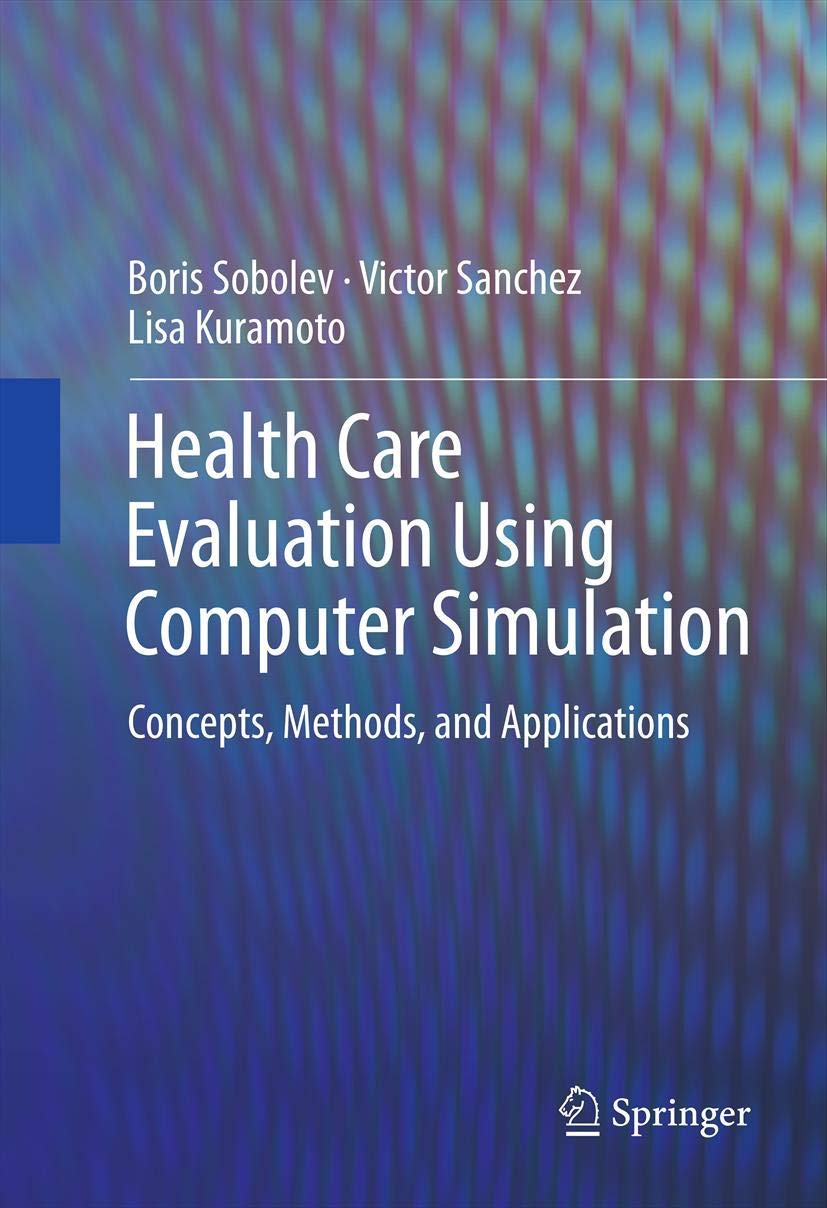
Health Care Evaluation Using Computer Simulation: Concepts, Methods, And Applications,Used
Sold by Ergodebooks, an authorized reseller.
Returns accepted within 30 days | support@ergodebooks.com
Shipping Information
- Free Standard Shipping — United States only
- Processing Time: 3–5 business days
- Estimated Delivery: 6–10 business days after dispatch
- Double-boxed, fully insured & discreetly packaged
- Tracking number sent via email once dispatched
Returns & Refund
Returns accepted within 30 days of delivery.
Damaged or Defective Item
Free return shipping + replacement or full refund
Wrong Item Received
Free return shipping + replacement or full refund
Change of Mind
Return shipping at customer's expense · 25% restocking fee applies
Payment Option

The purpose of this book is to place computer simulation studies within the paradigm of intervention research that is concerned with comparing the outcomes of health care delivered under different policies. This book presents computer simulation as a tool for testing various policy alternatives that have been developed by decisionmakers within health care systems. This approach differs from the use of computer simulation in operations research, where simulation helps determine the configurations of a system that will allow it to function optimally. Although simulation of health care processes is not new, few health care systems have used simulations as a basis for reengineering the delivery of health services. There is growing appreciation that the complexity of health care processes exceeds the capacity of individual disciplineshealth services research, health economics, or operations researchto guide health care reform. In this book, the authors focus on bringing the methodological rigor of evaluative research to the design and analysis of such simulation studies. The book is intended as a reference for health services researchers. It offers a comprehensive description of the methodology of conducting simulation studies in evaluation of service alternatives in surgical care using discreteevent models, including the steps for identifying the clinical and managerial activities of the perioperative process, determining the model requirements, implementing simulation models, designing simulation experiments and analyzing the experimental data, and interpreting and reporting results. The book also offers examples of specific aspects of conducting simulation experiments: how to determine the number of runs needed to estimate the effect of implementing a health care policy; how to allocate the number of runs to study groups in simulation experiments aiming to evaluate policy or management alternatives; and how to use statistical analysis to estimate, interpret, and report effect sizes.
⚠️ WARNING (California Proposition 65):
This product may contain chemicals known to the State of California to cause cancer, birth defects, or other reproductive harm.
For more information, please visit www.P65Warnings.ca.gov.