
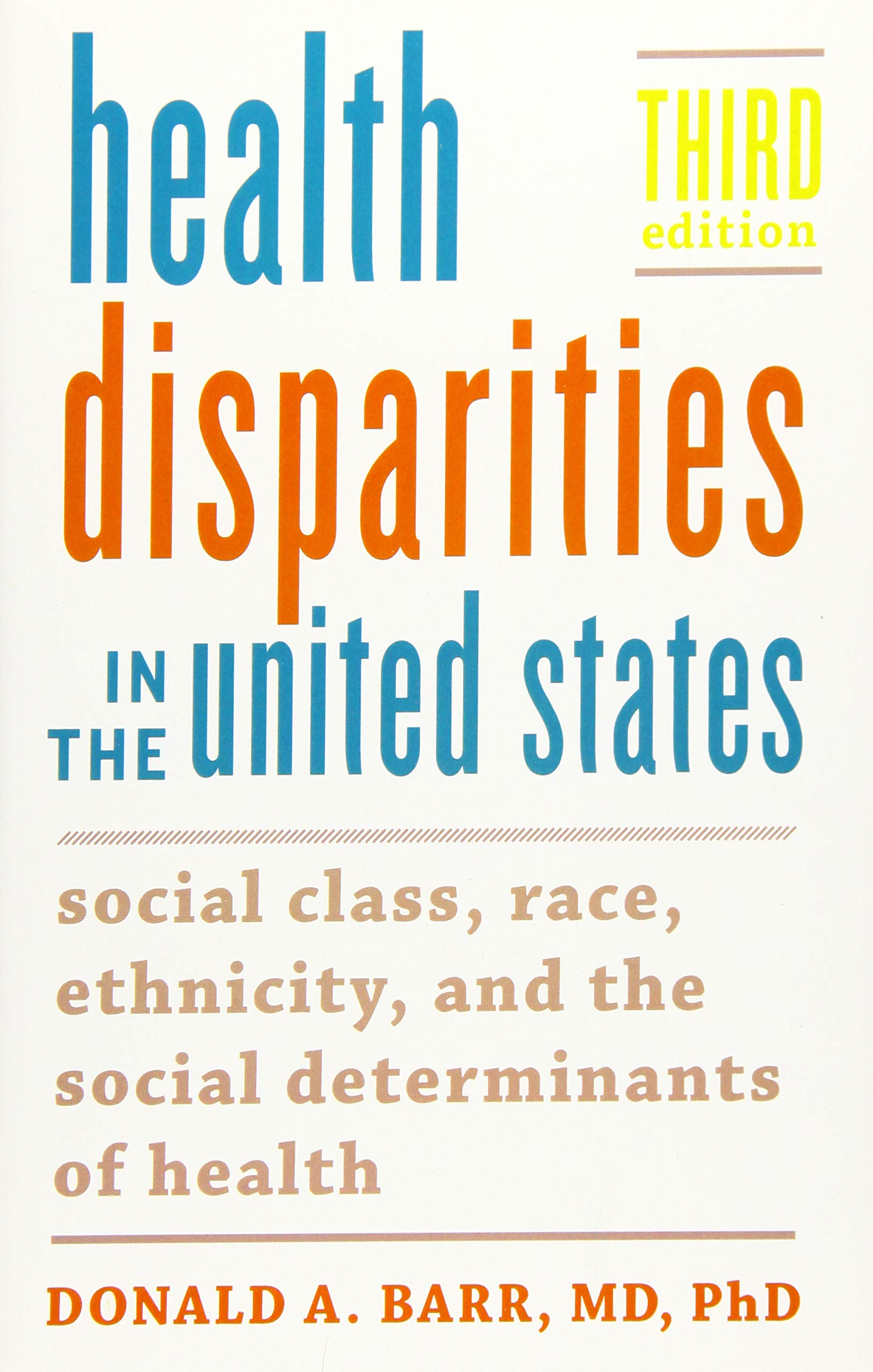
Title

Health Disparities In The United States: Social Class, Race, Ethnicity, And The Social Determinants Of Health
Sold by Ergodebooks, an authorized reseller.
Returns accepted within 30 days | support@ergodebooks.com
Shipping Information
- Free Standard Shipping — United States only
- Processing Time: 3–5 business days
- Estimated Delivery: 6–10 business days after dispatch
- Double-boxed, fully insured & discreetly packaged
- Tracking number sent via email once dispatched
Returns & Refund
Returns accepted within 30 days of delivery.
Damaged or Defective Item
Free return shipping + replacement or full refund
Wrong Item Received
Free return shipping + replacement or full refund
Change of Mind
Return shipping at customer's expense · 25% restocking fee applies
Payment Option

Challenging Students To Think Critically About The Complex Web Of Social Forces That Leads To Health Disparities In The United States.The Health Care System In The United States Has Been Called The Best In The World. Yet Wide Disparities Persist Between Social Groups, And Many Americans Suffer From Poorer Health Than People In Other Developed Countries. In This Revised Edition Of Health Disparities In The United States, Donald A. Barr Provides Extensive New Data About The Ways Low Socioeconomic Status, Race, And Ethnicity Interact To Create And Perpetuate These Health Disparities. Examining The Significance Of This Gulf For The Medical Community And Society At Large, Barr Offers Potential Policy And Physicianbased Solutions For Reducing Health Inequity In The Long Term.This Thoroughly Updated Edition Focuses On A New Challenge The United States Last Experienced More Than Half A Century Ago: Successive Years Of Declining Life Expectancy. Barr Addresses The Causes Of This Decline, Including What Are Commonly Referred To As Deaths Of DespairFrom Opiate Overdose Or Suicide. Exploring The Growing Role Geography Plays In Health Disparities, Barr Asks Why People Living In Rural Areas Suffer The Greatest Increases In These Deaths. He Also Analyzes Recent Changes Under The Affordable Care Act And Considers The Literature On How Race And Ethnicity Affect The Way Health Care Providers Evaluate And Treat Patients.As Both A Physician And A Sociologist, Barr Is Uniquely Positioned To Offer Rigorous Medical Explanations Alongside Sociological Analysis. An Essential Text For Courses In Public Health, Health Policy, And Sociology, This Compelling Book Is A Vital Teaching Tool And A Comprehensive Reference For Social Science And Medical Professionals.
⚠️ WARNING (California Proposition 65):
This product may contain chemicals known to the State of California to cause cancer, birth defects, or other reproductive harm.
For more information, please visit www.P65Warnings.ca.gov.
- Q: How many pages does the book have? A: The book has three hundred seventy-six pages. This length allows for an in-depth exploration of health disparities in the United States.
- Q: What is the binding type of the book? A: The book is available in paperback binding. This makes it lightweight and portable for easy reading.
- Q: What are the dimensions of the book? A: The book measures six inches in length, zero point ninety-eight inches in width, and nine point zero two inches in height. These dimensions make it a convenient size for shelves and bags.
- Q: Who is the author of this book? A: The author is Donald A. Barr. He combines his expertise as a physician and sociologist to address complex health issues.
- Q: What topics does the book cover? A: The book addresses health disparities related to social class, race, and ethnicity. It examines how these factors affect health outcomes in the United States.
- Q: Is this book suitable for college students? A: Yes, it is suitable for college students. It serves as an essential text for courses in public health, health policy, and sociology.
- Q: What key issues does the book discuss? A: The book discusses issues like declining life expectancy and 'deaths of despair.' It provides insights into how these trends affect various demographics.
- Q: Can this book help inform policy decisions? A: Yes, it offers potential policy solutions for reducing health inequity. The insights are relevant for policymakers and health professionals.
- Q: How does the book approach the topic of health care? A: The book examines the health care system's response to disparities. It highlights changes under the Affordable Care Act and their impacts.
- Q: Is this book appropriate for health professionals? A: Yes, it is a comprehensive reference for social science and medical professionals. It provides valuable information on health disparities.
- Q: What is the focus of the revised edition? A: The revised edition focuses on new data regarding health disparities and the impact of socioeconomic status. It updates previous findings with current research.
- Q: How does geography play a role in health disparities? A: The book analyzes how geography affects health outcomes, particularly in rural areas. It addresses why these regions experience higher rates of certain health issues.
- Q: Does the book include solutions to health disparities? A: Yes, it offers both policy- and physician-based solutions. The author provides actionable recommendations for addressing health inequities.
- Q: What makes the author qualified to write this book? A: Donald A. Barr is both a physician and a sociologist. His dual expertise allows for a nuanced analysis of health disparities.
- Q: Are there any specific case studies in the book? A: Yes, the book includes case studies and data to illustrate health disparities. These examples help contextualize the broader themes discussed.
- Q: What is the target audience for this book? A: The target audience includes students, health professionals, and policymakers. It is designed for anyone interested in understanding health disparities.