
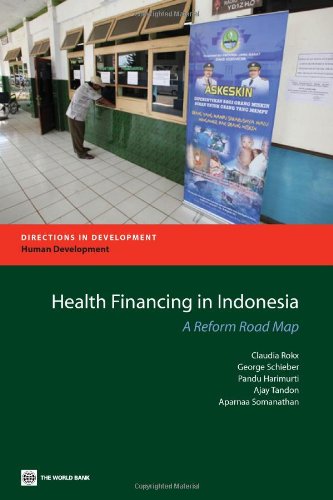
Title
Health Financing In Indonesia: A Reform Road Map (Directions In Development Human Development),New
Sold by Ergodebooks, an authorized reseller.
Returns accepted within 30 days | support@ergodebooks.com
Shipping Information
- Free Standard Shipping — United States only
- Processing Time: 3–5 business days
- Estimated Delivery: 6–10 business days after dispatch
- Double-boxed, fully insured & discreetly packaged
- Tracking number sent via email once dispatched
Returns & Refund
Returns accepted within 30 days of delivery.
Damaged or Defective Item
Free return shipping + replacement or full refund
Wrong Item Received
Free return shipping + replacement or full refund
Change of Mind
Return shipping at customer's expense · 25% restocking fee applies
Payment Option

In 2004 The Indonesian Government Made A Commitment To Provide Its Entire Population With Health Insurance Coverage Through A Mandatory Public Health Insurance Scheme. It Has Moved Boldly Already Provides Coverage To An Estimated 76.4 Million Poor And Near Poor, Funded Through The Public Budget. Nevertheless, Over Half The Population Still Lacks Health Insurance Coverage, And The Full Fiscal Impacts Of The Government S Program For The Poor Have Not Been Fully Assessed Or Felt. In Addition, Significant Deficiencies In The Efficiency And Equity Of The Current Health System, Unless Addressed Will Exacerbate Cost Pressures And Could Preclude The Effective Implementation Of Universal Coverage (Uc) And The Desired Result Of Improvements In Population Health Outcomes And Financial Protection. For Indonesia To Achieve Uc, Systems Performance Must Be Improved And Key Policy Choices With Respect To The Configuration Of The Health Financing System Must Be Made. Indonesia S Health System Performs Well With Respect To Some Health Outcomes And Financial Protection, But There Is Potential For Significant Improvement. Highlevel Political Decisions Are Necessary On Key Elements Of The Health Financing Reform Package. The Key Transitional Questions To Get There Include: The Benefits That Can Be Afforded And Their Impacts On Health Outcomes And Financial Protection; How The More Than 50 Percent Of Those Currently Without Coverage Will Be Insured; How To Pay Medical Care Providers To Assure Access, Efficiency, And Quality; Developing A Streamlined And Efficient Administrative Structure; How To Address The Current Supply Constraints To Assure Availability Of Promised Services; How To Raise Revenues To Finance The System, Including The Program For The Poor As Well As Currently Uninsured Groups That May Require Government Subsidization Such As The More Than 60 Million Informal Sector Workers, The 85 Percent Of Workers In Firms Of Less Than Five Employees, And The 70 Percent Of The Population Living In Rural Areas.
⚠️ WARNING (California Proposition 65):
This product may contain chemicals known to the State of California to cause cancer, birth defects, or other reproductive harm.
For more information, please visit www.P65Warnings.ca.gov.