If you have any questions, you are always welcome to contact us. We'll get back to you as soon as possible, withing 24 hours on weekdays.
Customer service
All questions about your order, return and delivery must be sent to our customer service team by e-mail at yourstore@yourdomain.com
Sale & Press
If you are interested in selling our products, need more information about our brand or wish to make a collaboration, please contact us at press@yourdomain.com
Help
If you have any questions, you are always welcome to contact us. We'll get back to you as soon as possible, withing 24 hours on weekdays.
Customer service
All questions about your order, return and delivery must be sent to our customer service team by e-mail at yourstore@yourdomain.com
Sale & Press
If you are interested in selling our products, need more information about our brand or wish to make a collaboration, please contact us at press@yourdomain.com
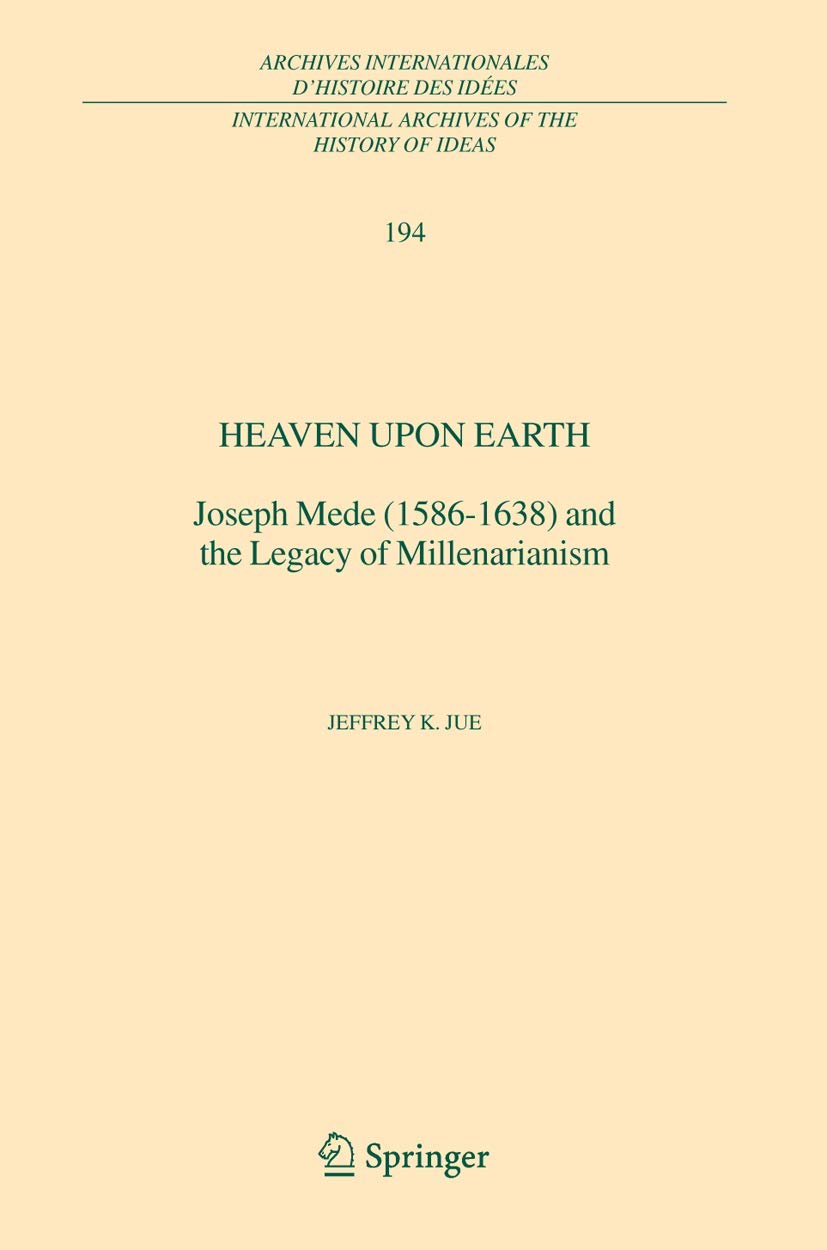
1.i THE HISTORY OF BRITISHAPOCALYPTICTHOUGHT The study of early modern Britain between the Reformation of the 1530s and the Wars of the Three Kingdoms of the 1640s has undergone a series of historiographical revisions. The dramatic events during that century were marked by a religious struggle that produced a Protestant nation, divided internally, yet clearly opposed to Rome. Likewise the political environment instilled a sense of responsible awareness regarding the administration of the realm and the defense 1 of constitutional liberty. Whig Historians from the nineteenth century described 2 these changes as a Puritan Revolution. Essentially this was Englands inevitable 3 march towards enlightenment as a result t of religious and political maturation. Subsequent Marxist historians attributed these radical changes to socioeconomic 4 factors. Britain was witnessing the decline of the medieval feudal system and the rise of a new capitalist class. Both of these early views claimed that brewing social, political and economic unrest culminated in extreme radical action. More recently, beginning in the 1980s, new studies appeared that began to challenge these old assumptions. Relying on careful archival research, many of these studies discarded the former conception of this period as revolutionary, instead 5 arguing that the Reformation was in fact a gradual and unpopular process. In 1 Margo Todd (ed.) Reformation to Revolution: Politics and Religion in Early Modern England (London and New York, 1995), p. 1. 2 S. R. Gardiner, The First Two Stuarts and the Puritan Revolution (London, 1876).
⚠️ WARNING (California Proposition 65):
This product may contain chemicals known to the State of California to cause cancer,
birth defects, or other reproductive harm.
<div class="dynamic-checkout__content" id="dynamic-checkout-cart" data-shopify="dynamic-checkout-cart"> <shopify-accelerated-checkout-cart wallet-configs="[{"name":"shop_pay","wallet_params":{"shopId":73758048501,"merchantName":"Ergodebooks","personalized":true}},{"name":"amazon_pay","wallet_params":{"checkoutLanguage":"en_US","ledgerCurrency":"USD","placement":"Cart","sandbox":false,"merchantId":"A1G1ZY975O1T6J","productType":"PayAndShip","design":"C0002"}},{"name":"paypal","wallet_params":{"shopId":73758048501,"countryCode":"US","merchantName":"Ergodebooks","phoneRequired":true,"companyRequired":false,"shippingType":"shipping","shopifyPaymentsEnabled":true,"hasManagedSellingPlanState":false,"requiresBillingAgreement":false,"merchantId":"L873BZSC9NMQS","sdkUrl":"https://www.paypal.com/sdk/js?components=buttons\u0026commit=false\u0026currency=USD\u0026locale=en_US\u0026client-id=AbasDhzlU0HbpiStJiN1KRJ_cNJJ7xYBip7JJoMO0GQpLi8ePNgdbLXkC7_KMeyTg8tnAKW4WKrh9qmf\u0026merchant-id=L873BZSC9NMQS\u0026intent=authorize"}}]" access-token="c0f52a66b386e9fa5c0ab4c2febc737c" buyer-country="US" buyer-locale="en" buyer-currency="USD" shop-id="73758048501" cart-id="a1b0f44a8e708b57d5a5473f898c96ca" enabled-flags="["ae0f5bf6"]" > <div class="wallet-button-wrapper"> <ul class='wallet-cart-grid wallet-cart-grid--skeleton' role="list" data-shopify-buttoncontainer="true"> <li data-testid='grid-cell' class='wallet-cart-button-container'><div class='wallet-cart-button wallet-cart-button__skeleton' role='button' disabled aria-hidden='true'> </div></li><li data-testid='grid-cell' class='wallet-cart-button-container'><div class='wallet-cart-button wallet-cart-button__skeleton' role='button' disabled aria-hidden='true'> </div></li><li data-testid='grid-cell' class='wallet-cart-button-container'><div class='wallet-cart-button wallet-cart-button__skeleton' role='button' disabled aria-hidden='true'> </div></li> </ul> </div> </shopify-accelerated-checkout-cart> <small id="shopify-buyer-consent" class="hidden" aria-hidden="true" data-consent-type="subscription"> One or more of the items in your cart is a recurring or deferred purchase. By continuing, I agree to the <span id="shopify-subscription-policy-button">cancellation policy</span> and authorize you to charge my payment method at the prices, frequency and dates listed on this page until my order is fulfilled or I cancel, if permitted. </small> </div>
Stay in the know
Subscribe to our newsletter and stay updated on latest offers, discounts and events near you.
For MAP (Minimum Advertised Price) violations, please contact:
map@ergode.com
For Intellectual Property (IP) or Trademark concerns, please contact:
ip@ergode.com
⚠️ California Proposition 65 Warning: Some products sold on this website may expose you to chemicals known to the State of California to cause cancer, birth defects, or other reproductive harm. For more information, visit www.P65Warnings.ca.gov.