
Title
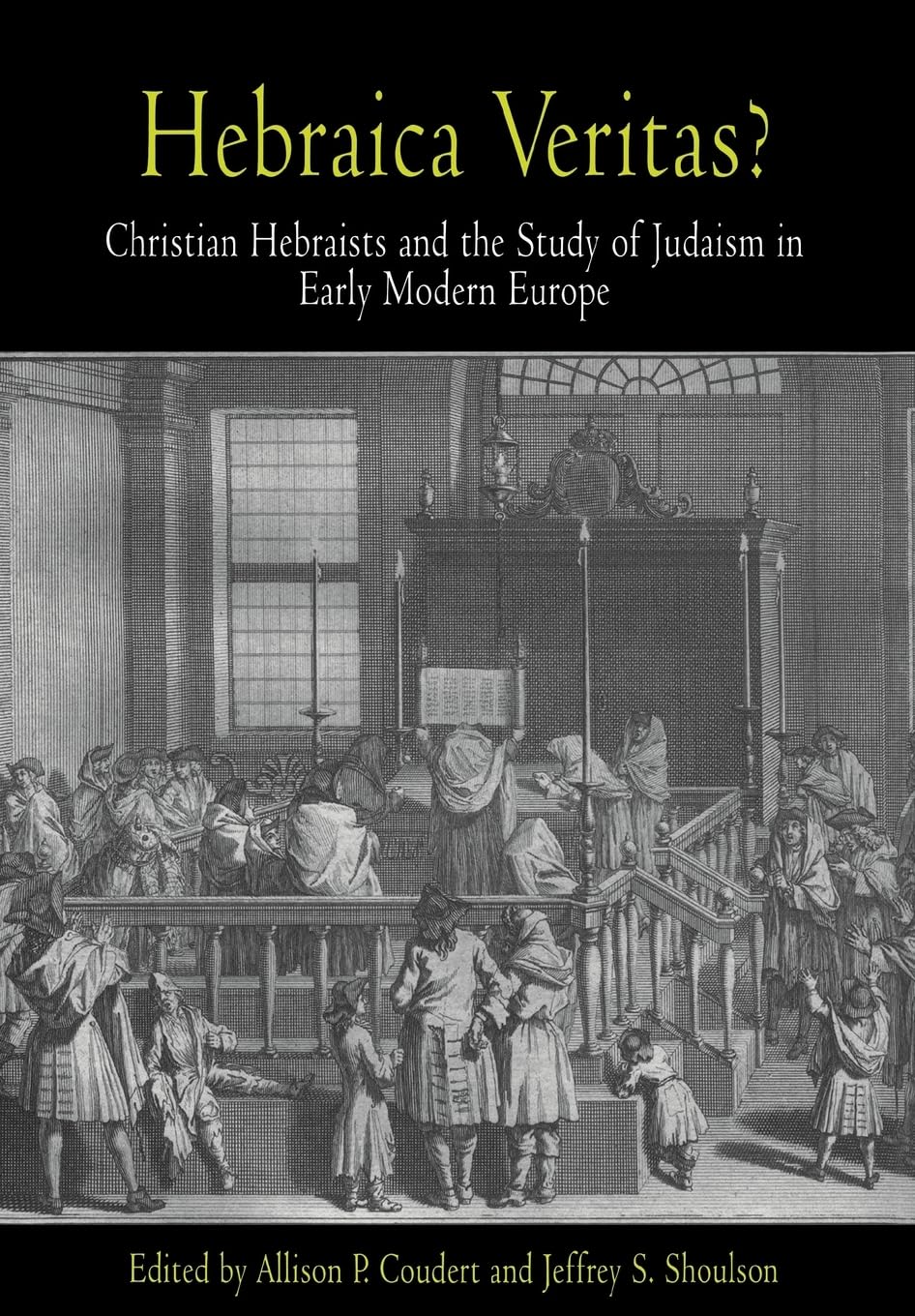
Hebraica Veritas?: Christian Hebraists And The Study Of Judaism In Early Modern Europe (Jewish Culture And Contexts),Used
Sold by Ergodebooks, an authorized reseller.
Returns accepted within 30 days | support@ergodebooks.com
Shipping Information
- Free Standard Shipping — United States only
- Processing Time: 3–5 business days
- Estimated Delivery: 6–10 business days after dispatch
- Double-boxed, fully insured & discreetly packaged
- Tracking number sent via email once dispatched
Returns & Refund
Returns accepted within 30 days of delivery.
Damaged or Defective Item
Free return shipping + replacement or full refund
Wrong Item Received
Free return shipping + replacement or full refund
Change of Mind
Return shipping at customer's expense · 25% restocking fee applies
Payment Option

In the early modern period, the religious fervor of the Reformation and CounterReformation, social unrest, and millenarianism all seemed to foster greater antiJudaism in Christian Europe, yet the increased intolerance was also accompanied by more intimate and complex forms of interaction between Christians and Jews. Printing, trade, and travel combined to bring those from both sides of the religious divide into closer contact than ever before, while growing interest in magic and the Kabbalah encouraged Christians to study Hebrew in addition to Latin and Greek. In Hebraica Veritas? Christian Hebraists and the Study of Judaism in Early Modern Europe, noted scholars trace how these early modern encounters played key roles in defining attitudes toward personal, national, and religious identity in Western culture.As Christians increasingly patronized Jewish scholars, in person and in print, Christian Hebraism flourished. The twelve essays assembled here address the important but often neglected subject of the early modern encounter between Christians and Jews. They illustrate how this envolvement shaped each group's selfperception and sense of otherness and contributed to the emergence of the modern study of cultural anthropology, comparative religion, and Jewish studies. But the chapters also reveal how the encounter challenged traditional religious beliefs, fostering the skepticism, toleration, and irreligion conventionally associated with the Enlightenment.Many of the Christian Hebraists described in these essays were linguists and textual critics, and their work highlights the ambiguous role played by language and texts in transmitting natural and divine truth. It was during the early modern period that numerous concepts underpinning modern Western secular society came into existence, and as Hebraica Veritas? shows, the subject of Christian Hebraism has direct relevance to understanding the intellectual changes and challenges characterizing the transition from the ancient to the modern world.
⚠️ WARNING (California Proposition 65):
This product may contain chemicals known to the State of California to cause cancer, birth defects, or other reproductive harm.
For more information, please visit www.P65Warnings.ca.gov.