
Title
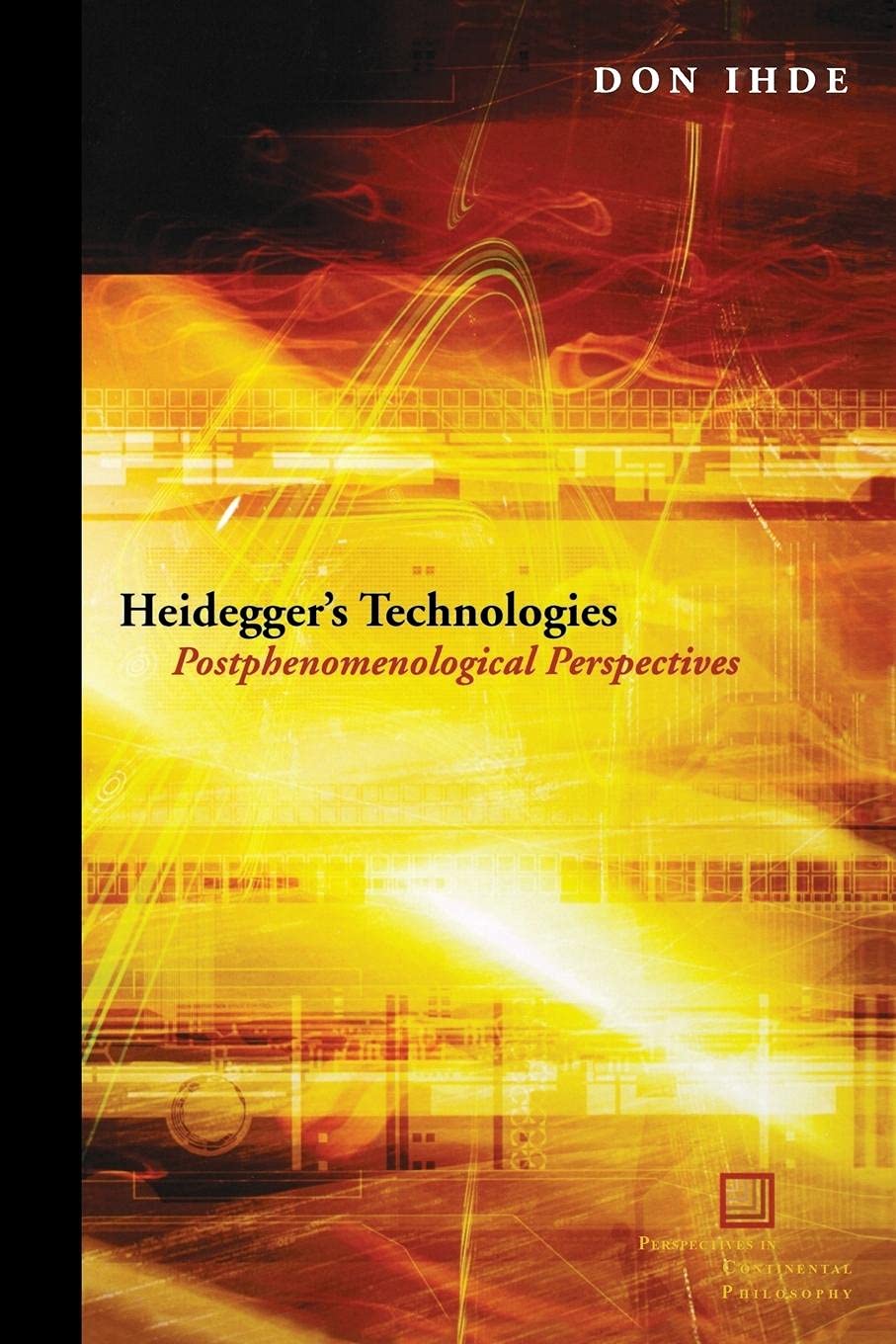
Heidegger's Technologies: Postphenomenological Perspectives (Perspectives in Continental Philosophy),Used
Sold by Ergodebooks, an authorized reseller.
Returns accepted within 30 days | support@ergodebooks.com
Shipping Information
- Free Standard Shipping — United States only
- Processing Time: 3–5 business days
- Estimated Delivery: 6–10 business days after dispatch
- Double-boxed, fully insured & discreetly packaged
- Tracking number sent via email once dispatched
Returns & Refund
Returns accepted within 30 days of delivery.
Damaged or Defective Item
Free return shipping + replacement or full refund
Wrong Item Received
Free return shipping + replacement or full refund
Change of Mind
Return shipping at customer's expense · 25% restocking fee applies
Payment Option

Heidegger is the only thinker of his generation whose philosophy of technology is still widely read today. In it, he made three basic claims. First, he asserted that the essence of technology is not technologicalthat technology is not a neutral instrumentality. Second, he claimed that there is a qualitative difference between modern and traditional technologies. Third and most interestingly, he claimed that technology is a metaphysical perspective, a paradigmatic view of the whole of nature.Although Martin Heidegger remains recognized as a founder of the philosophy of technology, in the last sixty years a whole new world of technologies has appearedbio, nano, info, and imaging. With technology, time moves fast. Does philosophical time move, too? How adequate is Heideggers thinking now for understanding todays technological advances?After an extensive Introduction that places Heidegger within the thinking about technology typical of his time, the author, a prominent philosopher of technology, reexamines Heideggers positions from multiple perspectiveshistorical, pragmatic, antiRomantic and postphenomenological. His critiques invert Heideggers essentialism and phenomenologically analyze Heideggers favored and disfavored technologies. In conclusion, he undertakes a concrete analysis of the technologies Heidegger used to produce his writing and discovers heretofore undiscussed and ironic results.Overall, the book not only serves as an excellent introduction Heideggers philosophy of technology and a corrective in outlining its limitations, it indicates a postphenomenological counterstrategy for technological analysis, one that would look at the production of technology in practice, based on observing its forms of embodied activity.
⚠️ WARNING (California Proposition 65):
This product may contain chemicals known to the State of California to cause cancer, birth defects, or other reproductive harm.
For more information, please visit www.P65Warnings.ca.gov.