If you have any questions, you are always welcome to contact us. We'll get back to you as soon as possible, withing 24 hours on weekdays.
Customer service
All questions about your order, return and delivery must be sent to our customer service team by e-mail at yourstore@yourdomain.com
Sale & Press
If you are interested in selling our products, need more information about our brand or wish to make a collaboration, please contact us at press@yourdomain.com
Help
If you have any questions, you are always welcome to contact us. We'll get back to you as soon as possible, withing 24 hours on weekdays.
Customer service
All questions about your order, return and delivery must be sent to our customer service team by e-mail at yourstore@yourdomain.com
Sale & Press
If you are interested in selling our products, need more information about our brand or wish to make a collaboration, please contact us at press@yourdomain.com
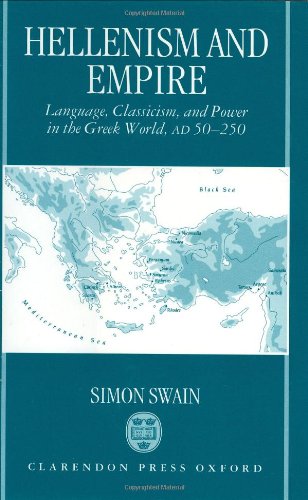
Product DescriptionHellenism and Empire explores identity, politics, and culture in the Greek world of the first three centuries AD, the period known as the second sophistic. The sources of this identity were the words and deeds of classical Greece, and the emphasis placed on Greekness and Greek heritage was fargreater then than at any other time. Yet this period is often seen as a time of happy consensualism between the Greek and Roman halves of the Roman Empire. The first part of the book shows that Greek identity came before any loyalty to Rome (and was indeed partly a reaction to Rome), while theviews of the major authors of the period, which are studied in the second part, confirm and restate the prior claims of Hellenism.Review"This book is a must for anyone interested in the evolution of Greek culture..."History"A learned social analysis that will interest both specialists and informed readers generally."Choice"...this book presents thoughtprovoking treatments of many of the major Greek authors of the second sophistic... [and] is certainly important reading for anyone working on any of the sophists, rhetors, philosophers, intellecturals, novelists or litterati of the first centuries, or more generally onGreek culture under Roman domination. It should also be required reading for anyone who still indulges in that problematic hypenization, "GraecoRoman."Bryn Mawr Classical ReviewAbout the AuthorSimon Swain is at All Souls College, Oxford.
⚠️ WARNING (California Proposition 65):
This product may contain chemicals known to the State of California to cause cancer,
birth defects, or other reproductive harm.
For MAP (Minimum Advertised Price) violations and Intellectual Property (IP) or Trademark concerns, please contact:
support@ergodebooks.com
⚠️ California Proposition 65 Warning: Some products sold on this website may expose you to chemicals known to the State of California to cause cancer, birth defects, or other reproductive harm. For more information, visit www.P65Warnings.ca.gov.