
Title
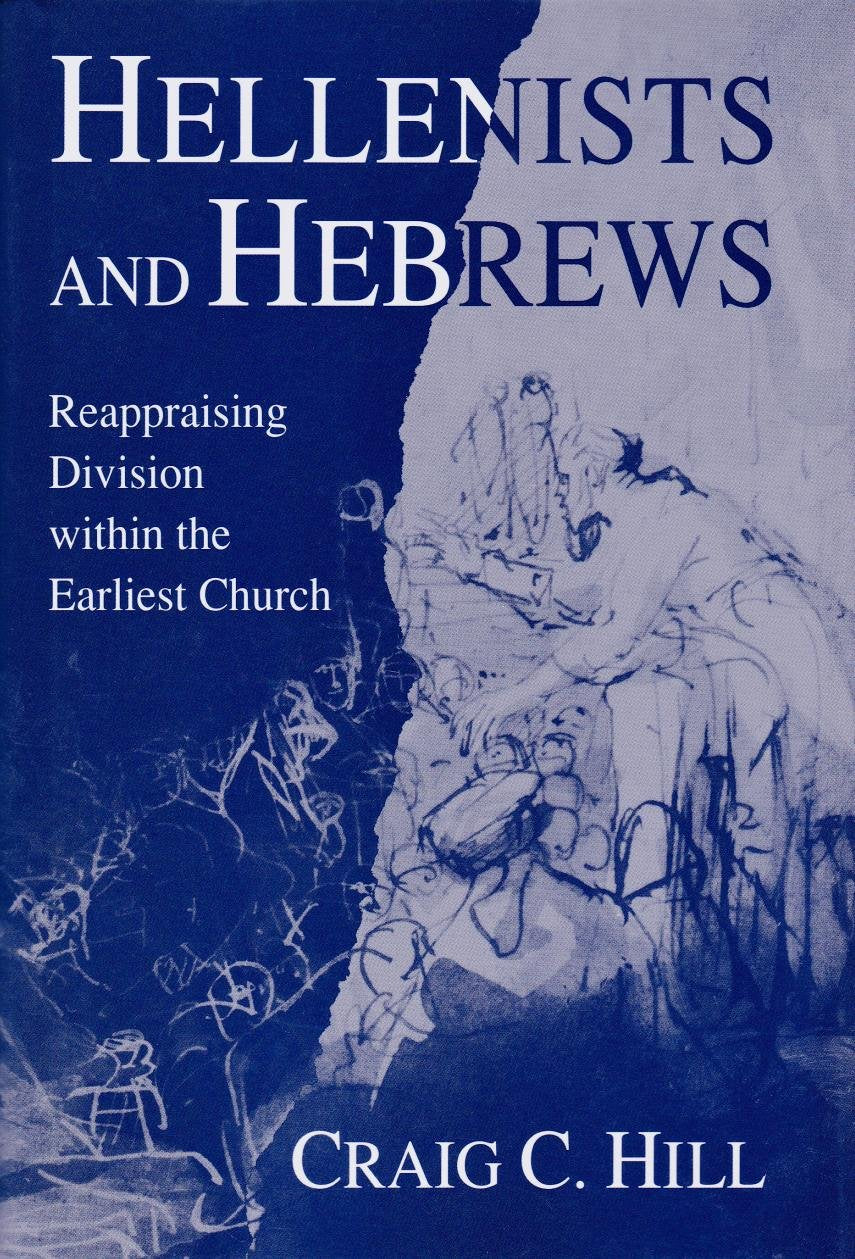
Hellenists and Hebrews: Reappraising Division Within the Earliest Church,Used
Sold by Ergodebooks, an authorized reseller.
Returns accepted within 30 days | support@ergodebooks.com
Shipping Information
- Free Standard Shipping — United States only
- Processing Time: 3–5 business days
- Estimated Delivery: 6–10 business days after dispatch
- Double-boxed, fully insured & discreetly packaged
- Tracking number sent via email once dispatched
Returns & Refund
Returns accepted within 30 days of delivery.
Damaged or Defective Item
Free return shipping + replacement or full refund
Wrong Item Received
Free return shipping + replacement or full refund
Change of Mind
Return shipping at customer's expense · 25% restocking fee applies
Payment Option

One of the most interesting (and surprisingly neglected) implications for New Testament studies of the "eclipse of the dichotomy" between Hellenism and Judaism concerns the dominant understanding of the "Hellenists" and "Hebrews" of Acts. The prevailing interpretation of Acts 6:18:4 holds that the Hellenists and Hebrews were separate, ideologically based parties within the earliest Jerusalem church. The Hellenists, being universalistic in outlook and liberal in temperament, came after a short time to realize (in a way in which the narrow, conservative Hebrew believers could not) the true ramifications of the gospel of Jesus Christ. In light of the diversity of firstcentury Judaism, it must be asked whether this depiction of the Hellenists and the Hebrews is founded on anything but stereotype. Why should our acceptance of the cultural pluralism of firstcentury Judaism (both Diaspora and Palestinian) stop at the door of Jewish Christianity? Surely the historically credible picture here, as in the case of Judaism itself, is the complex one. We should expect to find Jewish Christians of various opinions irrespective of their particular nationalities. We ought not to be surprised, for example, to learn of liberal Hebrews and conservative Hellenists.
⚠️ WARNING (California Proposition 65):
This product may contain chemicals known to the State of California to cause cancer, birth defects, or other reproductive harm.
For more information, please visit www.P65Warnings.ca.gov.
- Q: How many pages does this book have? A: This book has two hundred forty pages. It offers a comprehensive analysis of the cultural dynamics within the earliest church.
- Q: What are the dimensions of this book? A: The dimensions of this book are six and a half inches by one inch by nine and a half inches. This makes it a suitable size for both reading and storage.
- Q: What type of binding does this book use? A: This book is bound in hardcover. This ensures durability and a professional appearance on your bookshelf.
- Q: Who is the author of this book? A: The author of this book is Craig C. Hill. He provides insights into the early Christian community's cultural interactions.
- Q: What is the main theme of this book? A: The main theme of this book is the reappraisal of the divisions within the earliest church. It explores the relationships between Hellenists and Hebrews.
- Q: Is this book suitable for academic study? A: Yes, this book is suitable for academic study. It presents a scholarly examination of New Testament interpretations.
- Q: How can I use this book for research? A: You can use this book for research by referencing its analysis of Hellenism and Judaism in early Christianity. It provides valuable context and citations.
- Q: Is this book appropriate for beginner readers? A: Yes, this book is appropriate for beginner readers interested in religious studies. It is accessible while still offering in-depth analysis.
- Q: How should I store this book to keep it in good condition? A: Store this book upright on a shelf or in a bookcase to keep it in good condition. Avoid direct sunlight to prevent fading.
- Q: Can this book be read in a group study setting? A: Yes, this book can be read in a group study setting. Its themes encourage discussion about cultural diversity in early Christianity.
- Q: How do I clean this book if it gets dirty? A: To clean this book, gently wipe the cover with a dry cloth. Avoid using water or cleaning solutions that could damage the pages.
- Q: Is this book safe for all ages? A: Yes, this book is generally safe for all ages. However, its themes may be more suitable for those with an interest in religion.
- Q: What if I receive a damaged copy of this book? A: If you receive a damaged copy of this book, contact customer support for assistance with returns or exchanges.
- Q: Does this book include any illustrations? A: No, this book does not include illustrations. It focuses on textual analysis and historical context.
- Q: How does this book compare to other works on early Christianity? A: This book offers a unique perspective by challenging stereotypes about Hellenists and Hebrews, making it a distinct contribution to the field.
- Q: Is this book part of a series? A: No, this book is not part of a series. It stands alone as a comprehensive analysis of early Christian divisions.