
Title
Henry Friendly, Greatest Judge of His Era,New
Sold by Ergodebooks, an authorized reseller.
Returns accepted within 30 days | support@ergodebooks.com
Shipping Information
- Free Standard Shipping — United States only
- Processing Time: 3–5 business days
- Estimated Delivery: 6–10 business days after dispatch
- Double-boxed, fully insured & discreetly packaged
- Tracking number sent via email once dispatched
Returns & Refund
Returns accepted within 30 days of delivery.
Damaged or Defective Item
Free return shipping + replacement or full refund
Wrong Item Received
Free return shipping + replacement or full refund
Change of Mind
Return shipping at customer's expense · 25% restocking fee applies
Payment Option

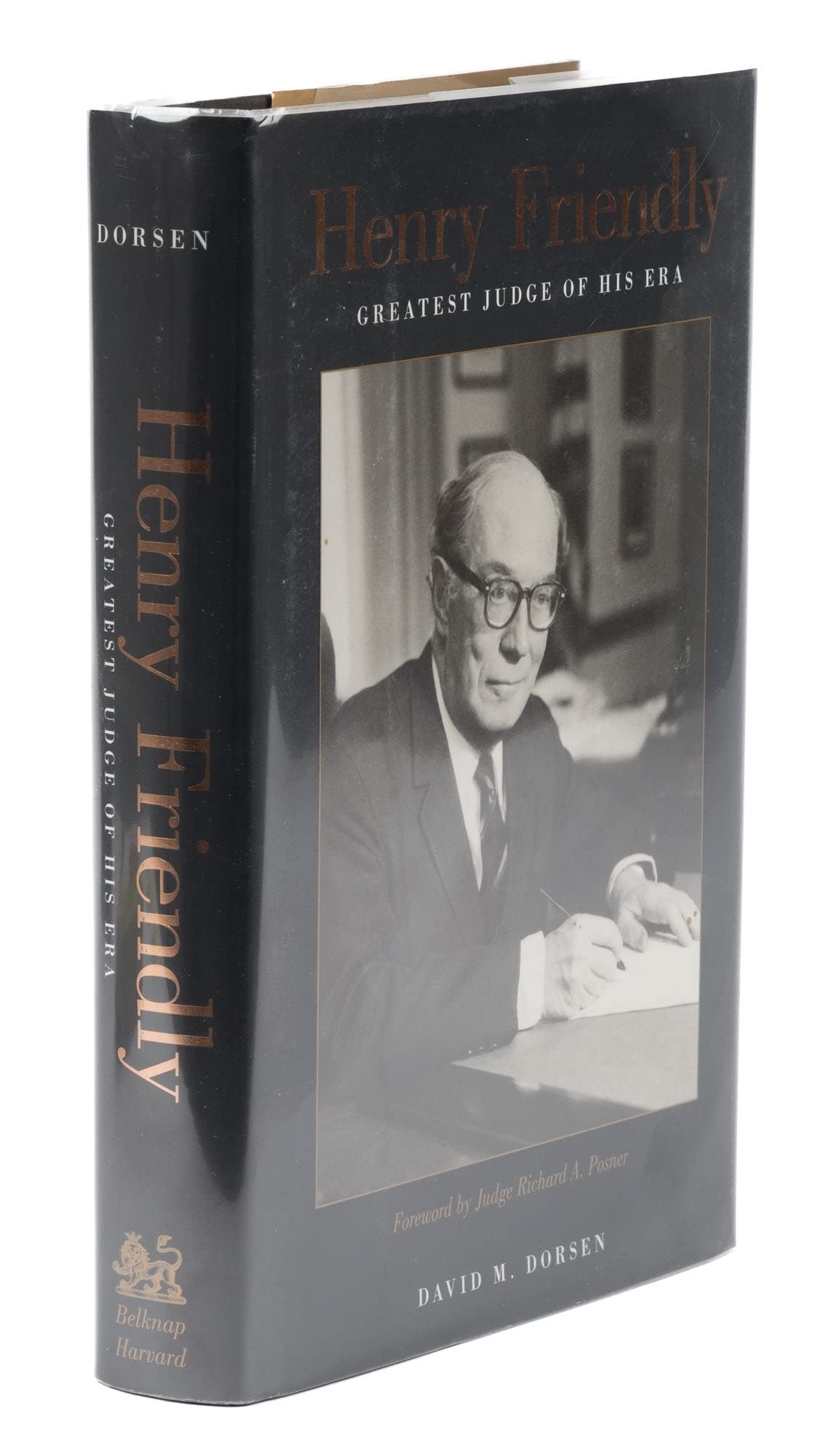
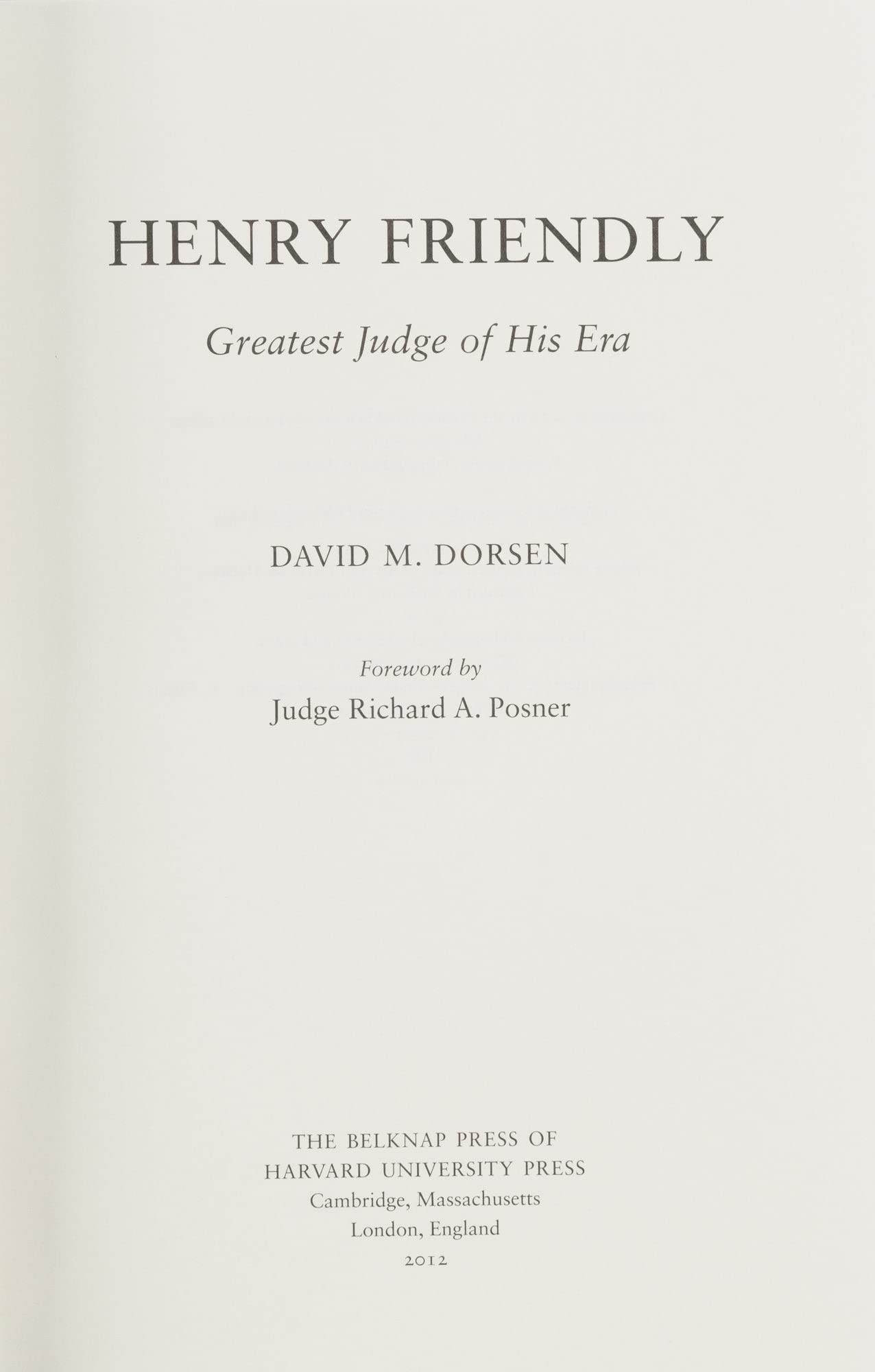
Henry Friendly is frequently grouped with Oliver Wendell Holmes, Louis Brandeis, Benjamin Cardozo, and Learned Hand as the best American jurists of the twentieth century. In this first, comprehensive biography of Friendly, David M. Dorsen opens a unique window onto how a judge of this caliber thinks and decides cases, and how Friendly lived his life.During his time on the Court of Appeals for the Second Circuit (19591986), Judge Friendly was revered as a conservative who exemplified the tradition of judicial restraint. But he demonstrated remarkable creativity in circumventing precedent and formulating new rules in multiple areas of the law. Henry Friendly, Greatest Judge of His Era describes the inner workings of Friendlys chambers and his craftsmanship in writing opinions. His articles on habeas corpus, the Fourth Amendment, selfincrimination, and the reach of the state are still cited by the Supreme Court.Dorsen draws on extensive research, employing private memoranda between the judges and interviews with all fiftyone of Friendlys law clerksa veritable Whos Who that includes Chief Justice John R. Roberts, Jr., six other federal judges, and seventeen professors at Harvard, Yale, Stanford, and elsewhere. In his Foreword, Judge Richard Posner writes: David Dorsen has produced the most illuminating, the most useful, judicial biography that I have ever read . . . We learn more about the American judiciary at its best than we can learn from any other . . . Some of what Ive learned has already induced me to make certain changes in my judicial practice.
⚠️ WARNING (California Proposition 65):
This product may contain chemicals known to the State of California to cause cancer, birth defects, or other reproductive harm.
For more information, please visit www.P65Warnings.ca.gov.
- Q: What is the main focus of 'Henry Friendly, Greatest Judge of His Era'? A: This biography centers on Judge Henry Friendly, exploring his judicial philosophy, decision-making processes, and personal life, highlighting his influence on American law.
- Q: Who is the author of this biography? A: The book is authored by David M. Dorsen, who provides an in-depth look at Judge Friendly's life and career.
- Q: What are some key themes discussed in the book? A: Key themes include judicial restraint, creativity in legal rulings, and the impact of Judge Friendly's opinions on areas such as habeas corpus and the Fourth Amendment.
- Q: How many pages does this book contain? A: The book has a total of 512 pages.
- Q: Is this book suitable for non-lawyers? A: Yes, while it delves into legal topics, the biography is written in an accessible manner that can appeal to general readers interested in American history and the judiciary.
- Q: What type of binding does this book have? A: The book is available in a hardcover binding, offering durability and a professional appearance.
- Q: When was 'Henry Friendly, Greatest Judge of His Era' published? A: The book was published on March 27, 2012.
- Q: Is this book a first edition? A: Yes, this is the first edition of the biography.
- Q: What condition is the book in? A: The book is listed as 'New', ensuring it is in excellent condition for readers.
- Q: What audience might benefit from reading this biography? A: This biography is beneficial for law students, legal professionals, historians, and anyone interested in the American judiciary and influential legal figures.