
Title
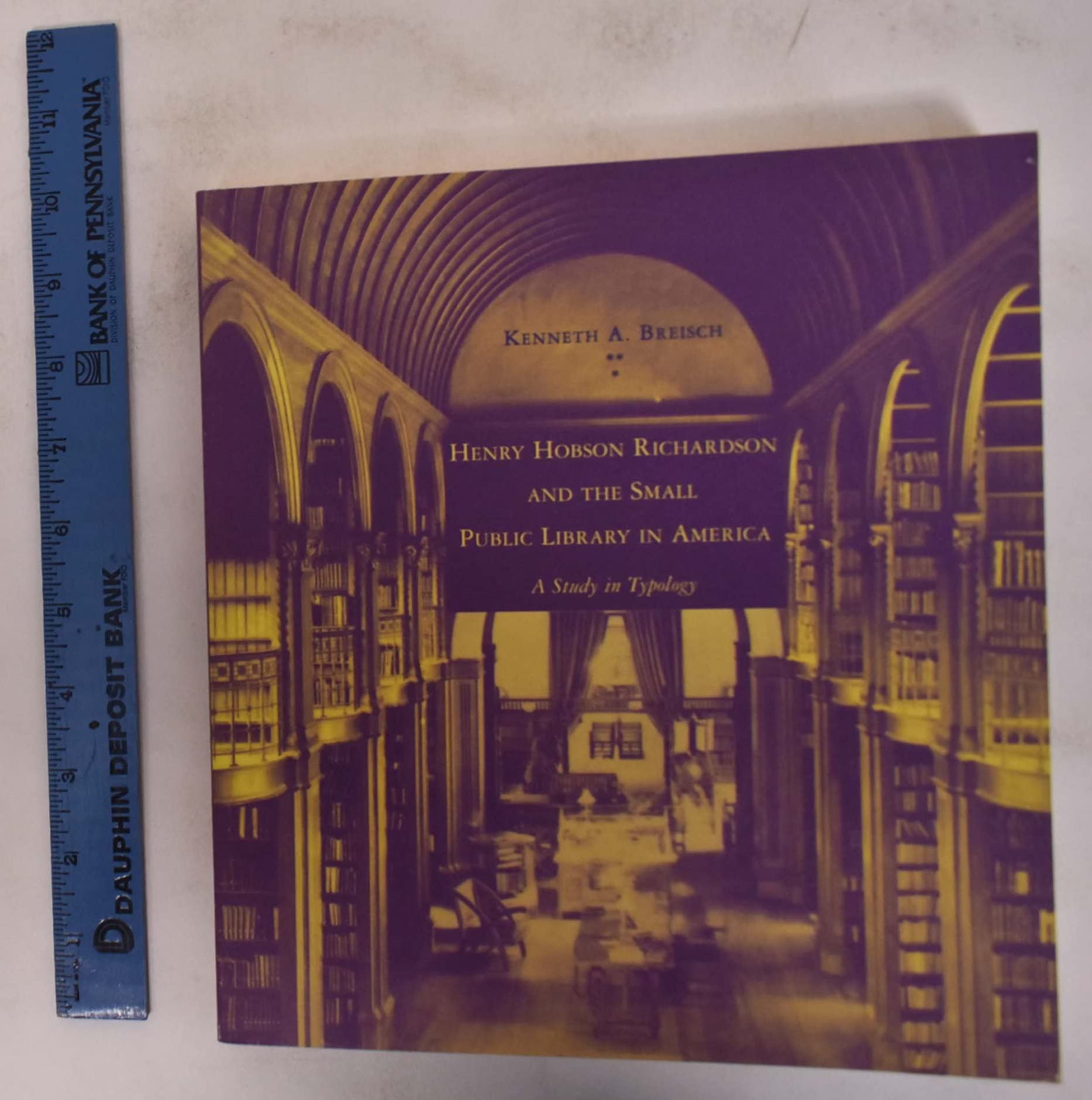
Henry Hobson Richardson and the Small Public Library in America: A Study in Typology,Used
Sold by Ergodebooks, an authorized reseller.
Returns accepted within 30 days | support@ergodebooks.com
Shipping Information
- Free Standard Shipping — United States only
- Processing Time: 3–5 business days
- Estimated Delivery: 6–10 business days after dispatch
- Double-boxed, fully insured & discreetly packaged
- Tracking number sent via email once dispatched
Returns & Refund
Returns accepted within 30 days of delivery.
Damaged or Defective Item
Free return shipping + replacement or full refund
Wrong Item Received
Free return shipping + replacement or full refund
Change of Mind
Return shipping at customer's expense · 25% restocking fee applies
Payment Option

One natural outcome of the educational reform movement of the 1840s was the growth of the American public library. Though the first public libraries were housed in post offices and town halls, even in local drug stores, growing book collections soon forced cities and towns to recognize the need for larger, more appropriate buildings. Some 450 public libraries were built in the latter half of the nineteenth century. The most important and influential architect of the era who built librairies was Henry Hobson Richardson (18381886), perhaps best known for his design of Boston's Trinity Church.The primary focus of Kenneth Breisch's Henry Hobson Richardson and the Small Public Library in America is on Richardson's designs for public libraries in Woburn, North Easton, Quincy, and Malden, Massachusetts, as well as an unbuilt proposal for the Hoyt Library in East Saginaw, Michigan. In addition to placing them within the broader history of American library design, Breisch offers a close examination of these buildings as participants in the cultural, political, and economic developments of the period. Since more than 80 percent of the public libraries built in the latter half of the nineteenth century were privately endowedas were all of Richardson's library commissionshis discussion of the role of philanthropy, in particular, illuminates the perceived meaning and function of public libraries to the monied classes, as well as their function as memorials to deceased family members. Breisch also examines the role played by the library profession in the development of modern library planning theory during this period, a role that often clashed with the goals of the architects commissioned to design the library buildings. Although this conflict eventually led the American Library Association to condemn Richardson's buildings as unsuitable for library work, his designs still had enormous influence on the architectural vocabulary of the institution. The fact remains that Richardson invented and refined a significant prototype for the smaller American public library building.
⚠️ WARNING (California Proposition 65):
This product may contain chemicals known to the State of California to cause cancer, birth defects, or other reproductive harm.
For more information, please visit www.P65Warnings.ca.gov.