
Title
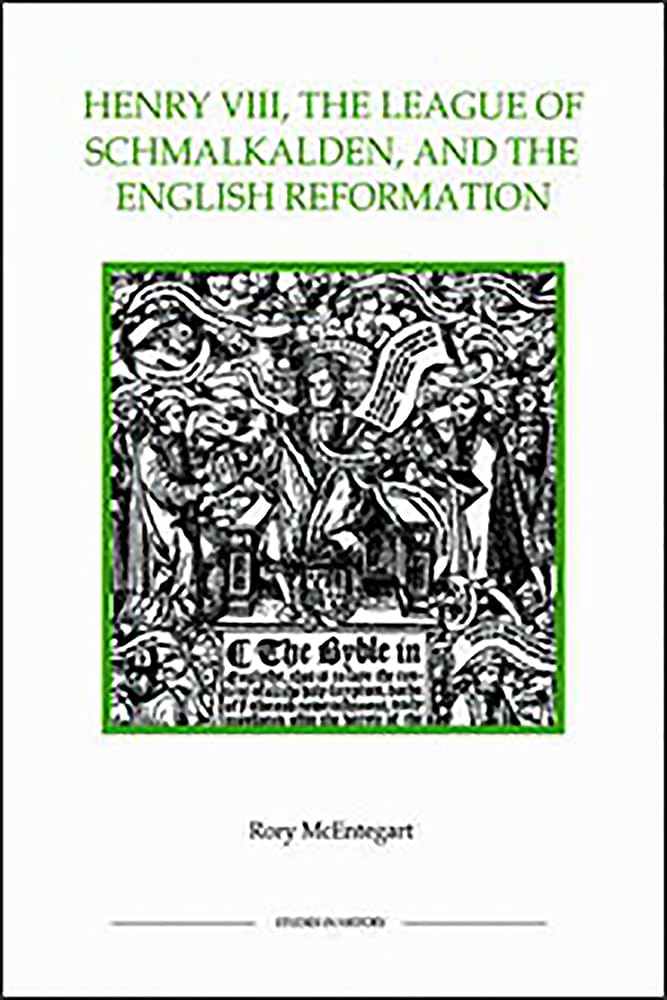
Henry VIII, the League of Schmalkalden, and the English Reformation (Royal Historical Society Studies in History New Series, 25),Used
Sold by Ergodebooks, an authorized reseller.
Returns accepted within 30 days | support@ergodebooks.com
Shipping Information
- Free Standard Shipping — United States only
- Processing Time: 3–5 business days
- Estimated Delivery: 6–10 business days after dispatch
- Double-boxed, fully insured & discreetly packaged
- Tracking number sent via email once dispatched
Returns & Refund
Returns accepted within 30 days of delivery.
Damaged or Defective Item
Free return shipping + replacement or full refund
Wrong Item Received
Free return shipping + replacement or full refund
Change of Mind
Return shipping at customer's expense · 25% restocking fee applies
Payment Option

England's first Protestant foreign policy initiative, an alliance with German Protestants, is shown to have been a significant influence on the Henrician Reformation.England's first Protestant foreign policy venture took place under Henry VIII, who in the wake of the break with Rome pursued diplomatic contacts with the League of Schmalkalden, the German Protestant alliance. This venture was supported by evangelicallyinclined counsellors such as Thomas Cromwell and Thomas Cranmer, while religiously conservative figures such as Cuthbert Tunstall, John Stokesley and Stephen Gardiner sought to limit such contacts. The king's own involvement reflected these opposed reactions: he was interested in the Germans as alliance partners and as a consultative source in establishing the theology of his own Church, but at the same time he was reluctant to accept all the religious innovations proposed by the Germans and their English advocates.This study breaks new ground in presenting religious ideology, rather than secular diplomacy, as the motivation behind AngloSchmalkaldicnegotiations. Relations between England and the League exerted a considerable influence on the development of the king's theology in the second half of the reign, and hence affected the redirection of religious policy in 1538, thepassing of the Act of Six Articles, the marriage of Henry to Anne of Cleves and the fall of Thomas Cromwell. The examination of the development of Henry's religious thinking is set in the wider context of the foreign policy imperatives of the German Protestants, the ministerial priorities of Thomas Cromwell and factional politics at the court of Henry VIII.RORY McENTEGART is Academic Director of American College Dublin.
⚠️ WARNING (California Proposition 65):
This product may contain chemicals known to the State of California to cause cancer, birth defects, or other reproductive harm.
For more information, please visit www.P65Warnings.ca.gov.