
Title
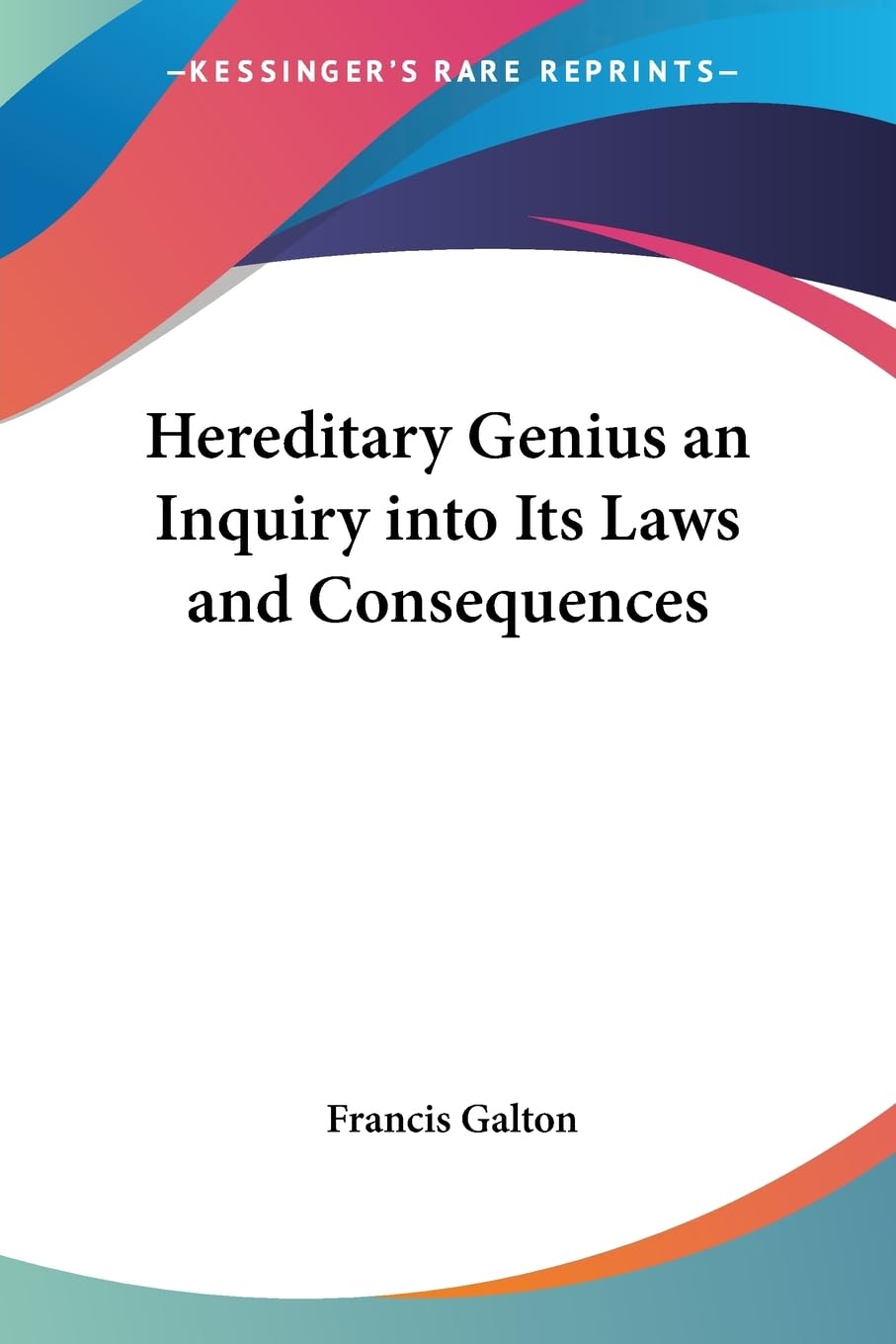
Hereditary Genius an Inquiry into Its Laws and Consequences,Used
Sold by Ergodebooks, an authorized reseller.
Returns accepted within 30 days | support@ergodebooks.com
Shipping Information
- Free Standard Shipping — United States only
- Processing Time: 3–5 business days
- Estimated Delivery: 6–10 business days after dispatch
- Double-boxed, fully insured & discreetly packaged
- Tracking number sent via email once dispatched
Returns & Refund
Returns accepted within 30 days of delivery.
Damaged or Defective Item
Free return shipping + replacement or full refund
Wrong Item Received
Free return shipping + replacement or full refund
Change of Mind
Return shipping at customer's expense · 25% restocking fee applies
Payment Option

""Hereditary Genius: An Inquiry into Its Laws and Consequences"" is a book written by Francis Galton, a British scientist, in which he explores the concept of hereditary genius. Galton argues that intelligence and other abilities are largely inherited, and that the most successful people in society come from families with a high degree of inherited ability. He examines the lives of famous people from various fields, including science, art, and politics, and uses statistical analysis to support his theory. Galton also discusses the potential consequences of this idea, including the possible creation of a eugenics program to selectively breed individuals with high intelligence and ability. The book is a pioneering work in the field of intelligence testing and the study of genetics, and it continues to be a subject of debate and controversy in modern times.1869. Galton, an explorer and anthropologist, is known for his pioneering studies of human intelligence. Influenced by the work of his cousin Charles Darwin, he coined the term eugenics (from the Greek eugenes or wellborn) and devoted the latter part of life to applying Darwinian science to develop theories about heredity and good or noble birth. In this volume he makes the case for his theory of hereditary genius. Contents: Classification of Men According to Their Reputation; Classification of Men According to Their Natural Gifts; Comparison of the Two Classifications; Notation; The Judges of England between 1660 and 1865; Statesmen; English Peerages, Their Influence Upon Race; Commanders; Literary Men; Men of Science; Poets; Musicians; Painters; Divines; Senior Classics of Cambridge; Oarsmen; Wrestlers of the North Country; Comparison of Results; The Comparative Worth of Different Races; Influences that Affect the Natural Ability of Nations. See other titles by this author available from Kessinger Publishing.This scarce antiquarian book is a facsimile reprint of the old original and may contain some imperfections such as library marks and notations. Because we believe this work is culturally important, we have made it available as part of our commitment for protecting, preserving, and promoting the world's literature in affordable, high quality, modern editions, that are true to their original work.
⚠️ WARNING (California Proposition 65):
This product may contain chemicals known to the State of California to cause cancer, birth defects, or other reproductive harm.
For more information, please visit www.P65Warnings.ca.gov.