
Title
Heredity Explored: Between Public Domain and Experimental Science, 18501930 (Transformations: Studies in the History of Science,Used
Sold by Ergodebooks, an authorized reseller.
Returns accepted within 30 days | support@ergodebooks.com
Shipping Information
- Free Standard Shipping — United States only
- Processing Time: 3–5 business days
- Estimated Delivery: 6–10 business days after dispatch
- Double-boxed, fully insured & discreetly packaged
- Tracking number sent via email once dispatched
Returns & Refund
Returns accepted within 30 days of delivery.
Damaged or Defective Item
Free return shipping + replacement or full refund
Wrong Item Received
Free return shipping + replacement or full refund
Change of Mind
Return shipping at customer's expense · 25% restocking fee applies
Payment Option

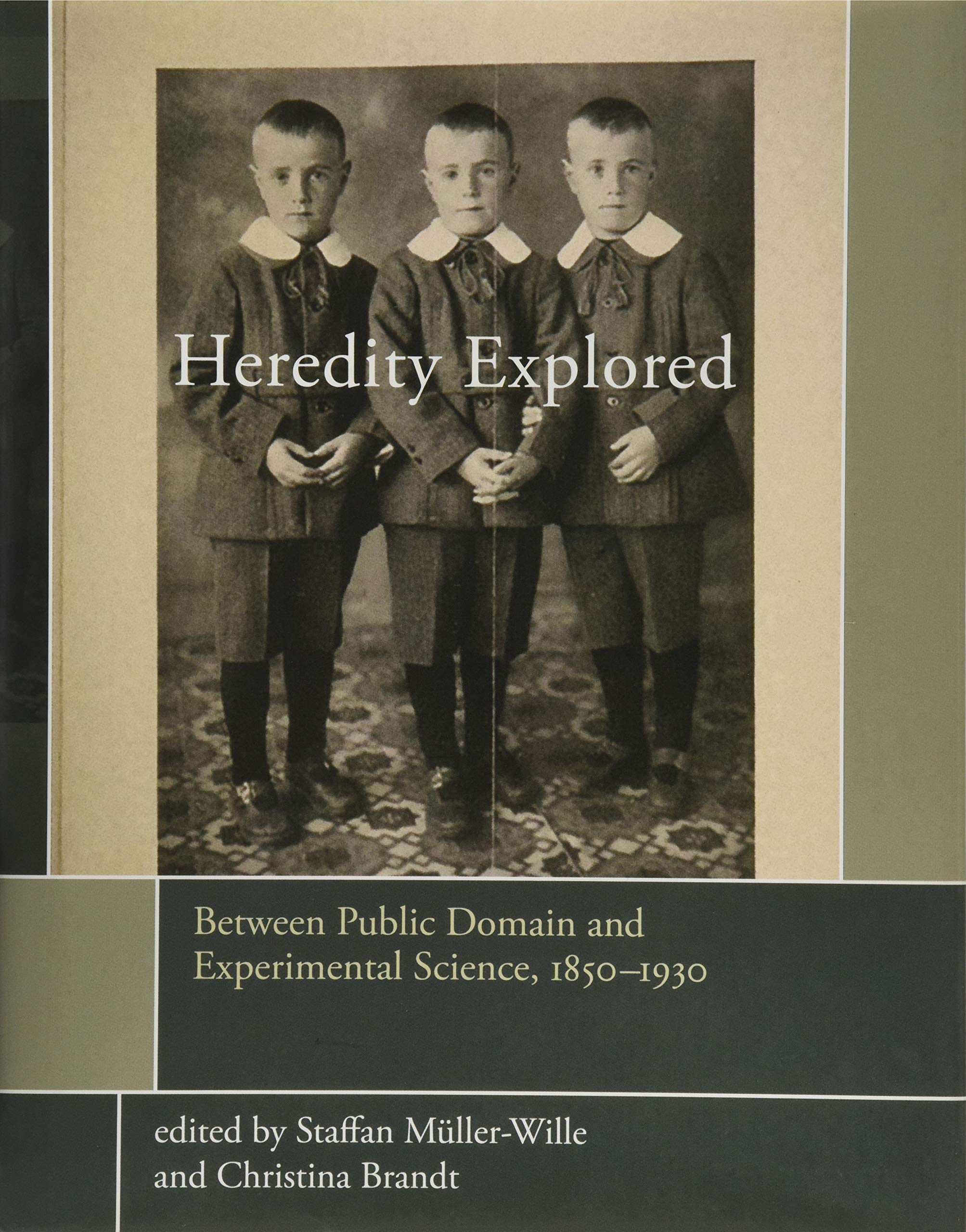
Investigations of how the understanding of heredity developed in scientific, medical, agroindustrial, and political contexts of the late nineteenth and early twentieth centuries.This book examines the wide range of scientific and social arenas in which the concept of inheritance gained relevance in the late nineteenth and early twentieth centuries. Although genetics emerged as a scientific discipline during this period, the idea of inheritance also played a role in a variety of medical, agricultural, industrial, and political contexts.The book, which follows an earlier collection, Heredity Produced (covering the period 1500 to 1870), addresses heredity in national debates over identity, kinship, and reproduction; biopolitical conceptions of heredity, degeneration, and gender; agroindustrial contexts for newly emerging genetic rationality; heredity and medical research; and the genealogical constructs and experimental systems of genetics that turned heredity into a representable and manipulable object. Taken together, the essays in Heredity Explored show that a history of heredity includes much more than the history of genetics, and that knowledge of heredity was always more than the knowledge formulated as Mendelism. It was the broader public discourse of heredity in all its contexts that made modern genetics possible.ContributorsCaroline Arni, Christophe Bonneuil, Christina Brandt, Luis Campos, JeanPaul Gaudillire, Bernd Gausemeier, Jean Gayon, Veronika Lipphardt, Ilana Lwy, J. Andrew Mendelsohn, Staffan MllerWille, Diane B. Paul, Theodore M. Porter, Alain Pottage, HansJrg Rheinberger, Marsha L. Richmond, Helga Satzinger, Judy Johns Schloegel, Alexander von Schwerin, Hamish G. Spencer, Ulrike Vedder
⚠️ WARNING (California Proposition 65):
This product may contain chemicals known to the State of California to cause cancer, birth defects, or other reproductive harm.
For more information, please visit www.P65Warnings.ca.gov.