
Title
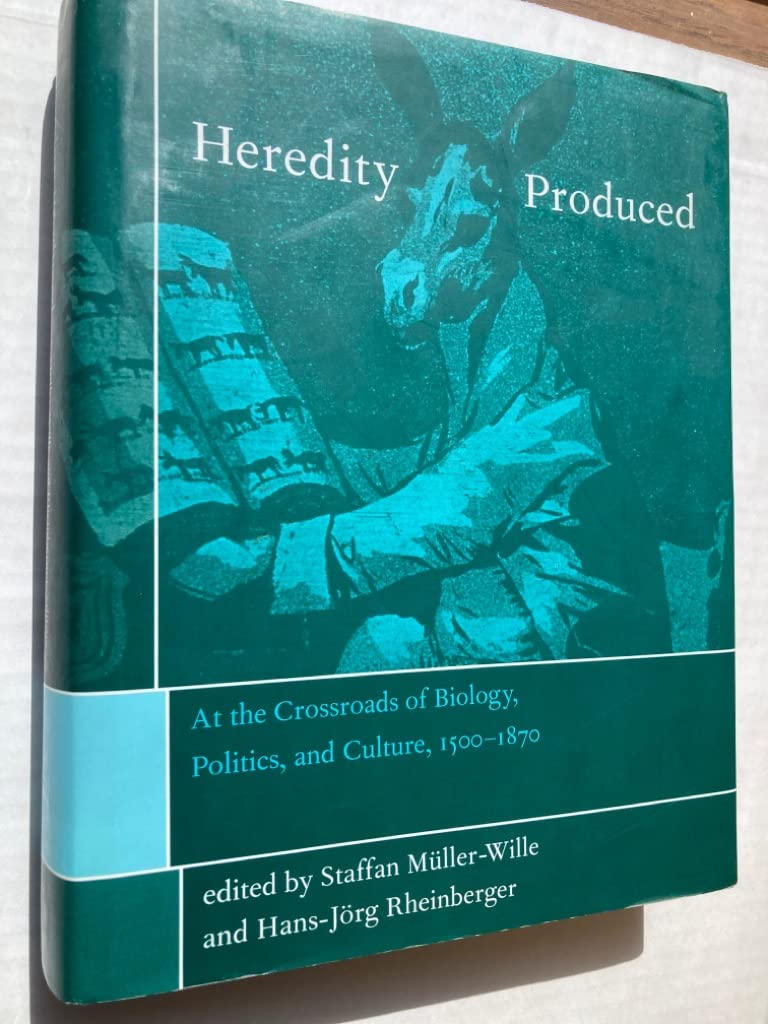
Heredity Produced: At The Crossroads Of Biology, Politics, And Culture, 15001870 (Transformations: Studies In The History Of Sc
Sold by Ergodebooks, an authorized reseller.
Returns accepted within 30 days | support@ergodebooks.com
Shipping Information
- Free Standard Shipping — United States only
- Processing Time: 3–5 business days
- Estimated Delivery: 6–10 business days after dispatch
- Double-boxed, fully insured & discreetly packaged
- Tracking number sent via email once dispatched
Returns & Refund
Returns accepted within 30 days of delivery.
Damaged or Defective Item
Free return shipping + replacement or full refund
Wrong Item Received
Free return shipping + replacement or full refund
Change of Mind
Return shipping at customer's expense · 25% restocking fee applies
Payment Option

The Cultural History Of Heredity: Scholars From A Range Of Disciplines Discuss The Evolution Of The Concept Of Heredity, From The Early Modern Understanding Of The Act Of Generation To Its Later Nineteenthcentury Definition As The Transmission Of Characteristics Across Generations.Until The Middle Of The Eighteenth Century, The Biological Makeup Of An Organism Was Ascribed To An Individual Instance Of GenerationInvolving Conception, Pregnancy, Embryonic Development, Parturition, Lactation, And Even Astral Influences And Maternal Moodrather Than The Biological Transmission Of Traits And Characteristics. Discussions Of Heredity And Inheritance Took Place Largely In The Legal And Political Sphere. In Heredity Produced, Scholars From A Broad Range Of Disciplines Explore The Development Of The Concept Of Heredity From The Early Modern Period To The Era Of Darwin And Mendel.The Contributors Examine The Evolution Of The Concept In Disparate Cultural Realmsincluding Law, Medicine, And Natural Historyand Show That It Did Not Coalesce Into A More General Understanding Of Heredity Until The Midnineteenth Century. They Consider Inheritance And Kinship In A Legal Context; The Classification Of Certain Diseases As Hereditary; The Study Of Botany; Animal And Plant Breeding And Hybridization For Desirable Characteristics; Theories Of Generation And Evolution; And Anthropology And Its Study Of Physical Differences Among Humans, Particularly Skin Color. The Editors Argue That Only When People, Animals, And Plants Became More Mobileand Were Separated From Their Natural Habitats Through Exploration, Colonialism, And Other Causescould Scientists Distinguish Between Inherited And Environmentally Induced Traits And Develop A Coherent Theory Of Heredity.Contributorsdavid Sabean, Silvia De Renzi, Ulrike Vedder, Carlos Lpez Beltrn, Phillip K. Wilson, Laure Cartron, Staffan Mllerwille, Marc J. Ratcliff, Roger Wood, Mary Terrall, Peter Mclaughlin, Franois Duchesneau, Ohad Parnes, Renato Mazzolini, Paul White, Nicolas Pethes, Stefan Willer, Helmuth Mllersievers
⚠️ WARNING (California Proposition 65):
This product may contain chemicals known to the State of California to cause cancer, birth defects, or other reproductive harm.
For more information, please visit www.P65Warnings.ca.gov.
- Q: What is the page count of this book? A: The book has four hundred ninety-six pages. It provides a comprehensive look at the cultural history of heredity.
- Q: What are the dimensions of this book? A: The book measures seven point zero one inches in length, one point two six inches in width, and nine point zero two inches in height.
- Q: What type of binding does this book have? A: This book features a hardcover binding. This type of binding enhances durability and is suitable for long-term use.
- Q: Who is the author of this book? A: The author of this book is Laure Cartron. She is among several scholars contributing to the discussions on heredity.
- Q: What is the genre of this book? A: This book falls under the genre of History. It specifically explores the evolution of heredity from a cultural perspective.
- Q: How do I read or use this book? A: You can read this book by starting from the introduction and following through each chapter. It’s suitable for anyone interested in the history of science and culture.
- Q: Is this book suitable for beginners in the subject? A: Yes, this book is suitable for beginners. It provides an accessible exploration of the concept of heredity throughout history.
- Q: What themes does this book cover? A: The book covers themes such as the evolution of heredity, cultural influences, and the impact of legal and political contexts on biological concepts.
- Q: How should I care for this book? A: To keep this book in good condition, store it upright in a cool, dry place. Avoid exposure to direct sunlight to prevent fading.
- Q: Is this book safe for children? A: Yes, the content is appropriate for older children and young adults interested in history and science. However, parental discretion is advised.
- Q: What is the recommended storage for this book? A: Store this book on a bookshelf or in a protective cover to prevent wear. Ensure it is kept away from moisture.
- Q: What if the book arrives damaged? A: If the book arrives damaged, you can contact the seller for a return or replacement. Check the return policy for specific instructions.
- Q: Can I return this book? A: Yes, you can return this book according to the seller's return policy. Ensure you retain the original packaging and receipt.
- Q: How does this book compare to other history books? A: This book provides a unique perspective on heredity compared to traditional history books, emphasizing cultural and political contexts.
- Q: Is this book suitable for academic purposes? A: Yes, this book is suitable for academic purposes. It includes scholarly contributions and references relevant to the study of heredity.
- Q: What is the significance of this book in understanding heredity? A: This book is significant as it traces the evolution of the concept of heredity, highlighting its cultural, legal, and scientific implications.