If you have any questions, you are always welcome to contact us. We'll get back to you as soon as possible, withing 24 hours on weekdays.
Customer service
All questions about your order, return and delivery must be sent to our customer service team by e-mail at yourstore@yourdomain.com
Sale & Press
If you are interested in selling our products, need more information about our brand or wish to make a collaboration, please contact us at press@yourdomain.com
Help
If you have any questions, you are always welcome to contact us. We'll get back to you as soon as possible, withing 24 hours on weekdays.
Customer service
All questions about your order, return and delivery must be sent to our customer service team by e-mail at yourstore@yourdomain.com
Sale & Press
If you are interested in selling our products, need more information about our brand or wish to make a collaboration, please contact us at press@yourdomain.com
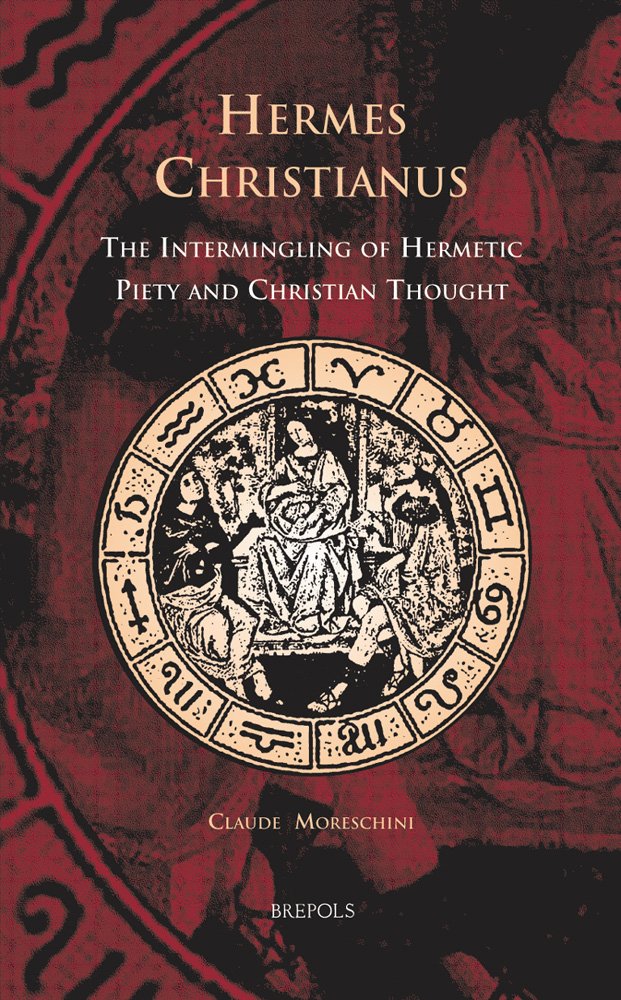
Hermetic theosophy, originally an offspring of Egyptian religion, spread throughout the ancient world from the Hellenistic age onwards and was welcomed by Christianity in Late Antiquity. Cultivated people in a Christian milieu were convinced that Hermetic piety and religion were the preparation, expressed by heathen imagery, of their own faith: Hermes, a wise and pious philosopher in Egypt in the time of Moses, received (so it was thought) the same revelation which would be manifested 1,000 years later by Christ. At the end of the third century AD, this belief did not perish with the end of the Roman Empire; rather, it was taken up and explored during the French Renaissance of the twelfth century. In the fifteenth century, Italian humanism, supported by the rediscovery of Greek language and literature, promoted a fresh new evaluation of the ancient Hermetic texts which continued to be considered and studied as preChristian documents. In the sixteenth century, new interpretations of Christian Hermetism were explored until this connection between pagan and Christian was increasingly criticized by scholars who argued that Hermetism was neither as ancient as was thought nor as close to Christianity. The theory was abandoned in scientific milieux from the seventeenth century onwards, whereas Hermetic theosophy, on the contrary, survived in esoteric circles.
⚠️ WARNING (California Proposition 65):
This product may contain chemicals known to the State of California to cause cancer,
birth defects, or other reproductive harm.
For MAP (Minimum Advertised Price) violations and Intellectual Property (IP) or Trademark concerns, please contact:
support@ergodebooks.com
⚠️ California Proposition 65 Warning: Some products sold on this website may expose you to chemicals known to the State of California to cause cancer, birth defects, or other reproductive harm. For more information, visit www.P65Warnings.ca.gov.