
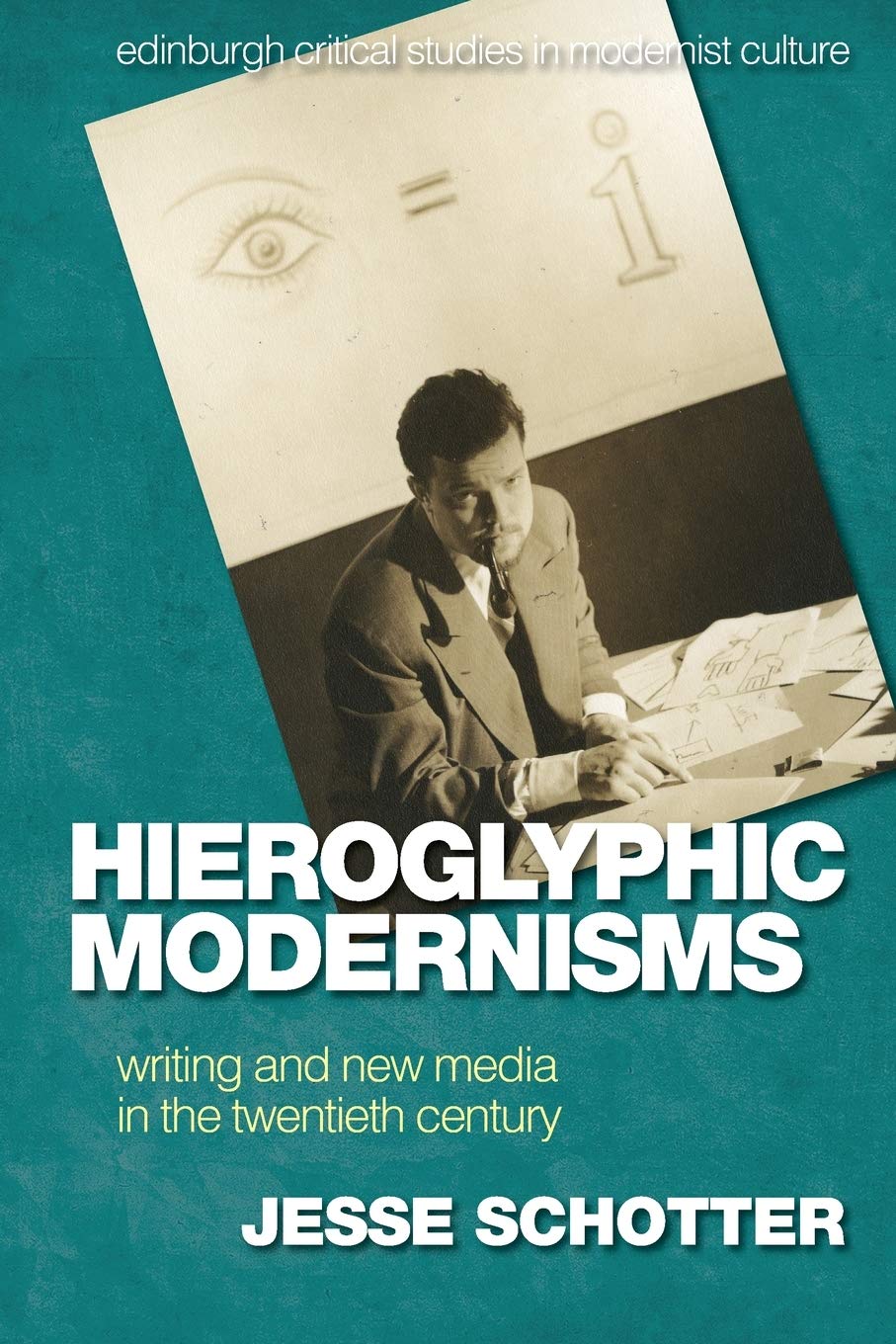
Title
Hieroglyphic Modernisms: Writing and New Media in the Twentieth Century (Edinburgh Critical Studies in Modernist Culture),Used
Sold by Ergodebooks, an authorized reseller.
Returns accepted within 30 days | support@ergodebooks.com
Shipping Information
- Free Standard Shipping — United States only
- Processing Time: 3–5 business days
- Estimated Delivery: 6–10 business days after dispatch
- Double-boxed, fully insured & discreetly packaged
- Tracking number sent via email once dispatched
Returns & Refund
Returns accepted within 30 days of delivery.
Damaged or Defective Item
Free return shipping + replacement or full refund
Wrong Item Received
Free return shipping + replacement or full refund
Change of Mind
Return shipping at customer's expense · 25% restocking fee applies
Payment Option

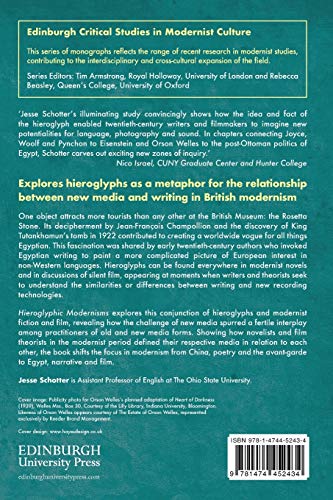
Explores hieroglyphs as a metaphor for the relationship between new media and writing in British modernismIn the British Museum, one object attracts more tourists than any other: the Rosetta Stone. The decipherment of the Stone by JeanFranois Champollion and the discovery of King Tutankhamuns tomb in 1922 contributed to creating a worldwide vogue for all things Egyptian. This fascination was shared by earlytwentiethcentury authors who invoked Egyptian writing to paint a more complicated picture of European interest in nonWestern languages. Hieroglyphs can be found everywhere in modernist novels and in discussions of silent film, appearing at moments when writers and theorists seek to understand the similarities or differences between writing and new recording technologies. Hieroglyphic Modernisms explores this conjunction of hieroglyphs and modernist fiction and film, revealing how the challenge of new media spurred a fertile interplay among practitioners of old and new media forms. Showing how novelists and film theorists in the modernist period defined their respective media in relation to each other, the book shifts the focus in modernism from China, poetry, and the avantgarde to Egypt, narrative, and film.Key Features: Argues for the connections among discourses about film, phonography, digital media, and literature in the twentieth century through the recurrent invocations of hieroglyphs Shows how novelists and film theorists in the modernist period defined their respective media in relation to each other Shifts the focus in accounts of visual languages in modernism from China, poetry, and the avantgarde to Egypt, narrative, and film Establishes a dialogue between Egyptian writers of the 1920s and 30s and canonical British modernists
⚠️ WARNING (California Proposition 65):
This product may contain chemicals known to the State of California to cause cancer, birth defects, or other reproductive harm.
For more information, please visit www.P65Warnings.ca.gov.