
Title
High Dynamic Range Imaging: Sensors and Architectures,Used
Sold by Ergodebooks, an authorized reseller.
Returns accepted within 30 days | support@ergodebooks.com
Shipping Information
- Free Standard Shipping — United States only
- Processing Time: 3–5 business days
- Estimated Delivery: 6–10 business days after dispatch
- Double-boxed, fully insured & discreetly packaged
- Tracking number sent via email once dispatched
Returns & Refund
Returns accepted within 30 days of delivery.
Damaged or Defective Item
Free return shipping + replacement or full refund
Wrong Item Received
Free return shipping + replacement or full refund
Change of Mind
Return shipping at customer's expense · 25% restocking fee applies
Payment Option

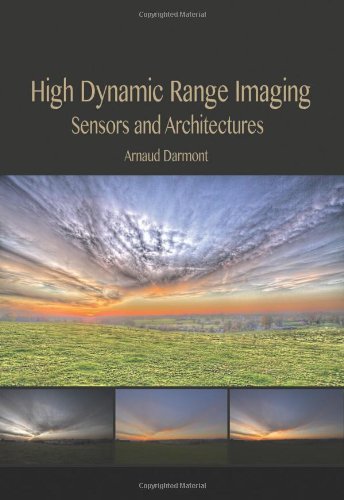
Illumination is a crucial element in many applications, matching the luminance of the scene with the operational range of a camera. When luminance cannot be adequately controlled, a high dynamic range (HDR) imaging system may be necessary. These systems are being increasingly used in automotive onboard systems, road traffic monitoring, and other industrial, security, and military applications. This book provides readers with an intermediate discussion of HDR image sensors and techniques for industrial and nonindustrial applications. It describes various sensor and pixel architectures capable of achieving HDR imaging, as well as software approaches to make high dynamic range images out of lower dynamic range sensors or image sets. Some methods for automatic control of exposure and dynamic range of image sensors are also introduced.
⚠️ WARNING (California Proposition 65):
This product may contain chemicals known to the State of California to cause cancer, birth defects, or other reproductive harm.
For more information, please visit www.P65Warnings.ca.gov.
- Q: What is High Dynamic Range Imaging? A: High Dynamic Range Imaging (HDR) refers to techniques used to capture a wider range of luminance levels in images, allowing for more detail in both bright and dark areas.
- Q: Who is the author of the book 'High Dynamic Range Imaging: Sensors and Architectures'? A: The author of the book is Arnaud Darmont.
- Q: What are the applications of HDR imaging discussed in the book? A: The book discusses various applications of HDR imaging, including automotive on-board systems, road traffic monitoring, industrial, security, and military applications.
- Q: How many pages does 'High Dynamic Range Imaging: Sensors and Architectures' have? A: The book has a total of 123 pages.
- Q: What is the publication date of the book? A: The book was published on January 3, 2013.
- Q: What type of binding does the book have? A: The book is available in paperback binding.
- Q: Does the book cover software approaches for HDR imaging? A: Yes, the book describes software approaches to create high dynamic range images from lower dynamic range sensors or image sets.
- Q: Is this book suitable for beginners in HDR imaging? A: The book provides an intermediate discussion, making it more suitable for readers with some prior knowledge of HDR imaging.
- Q: What sensor architectures are discussed in the book? A: The book describes various sensor and pixel architectures capable of achieving HDR imaging.
- Q: Can I find methods for automatic control of exposure in this book? A: Yes, the book introduces methods for automatic control of exposure and dynamic range for image sensors.