
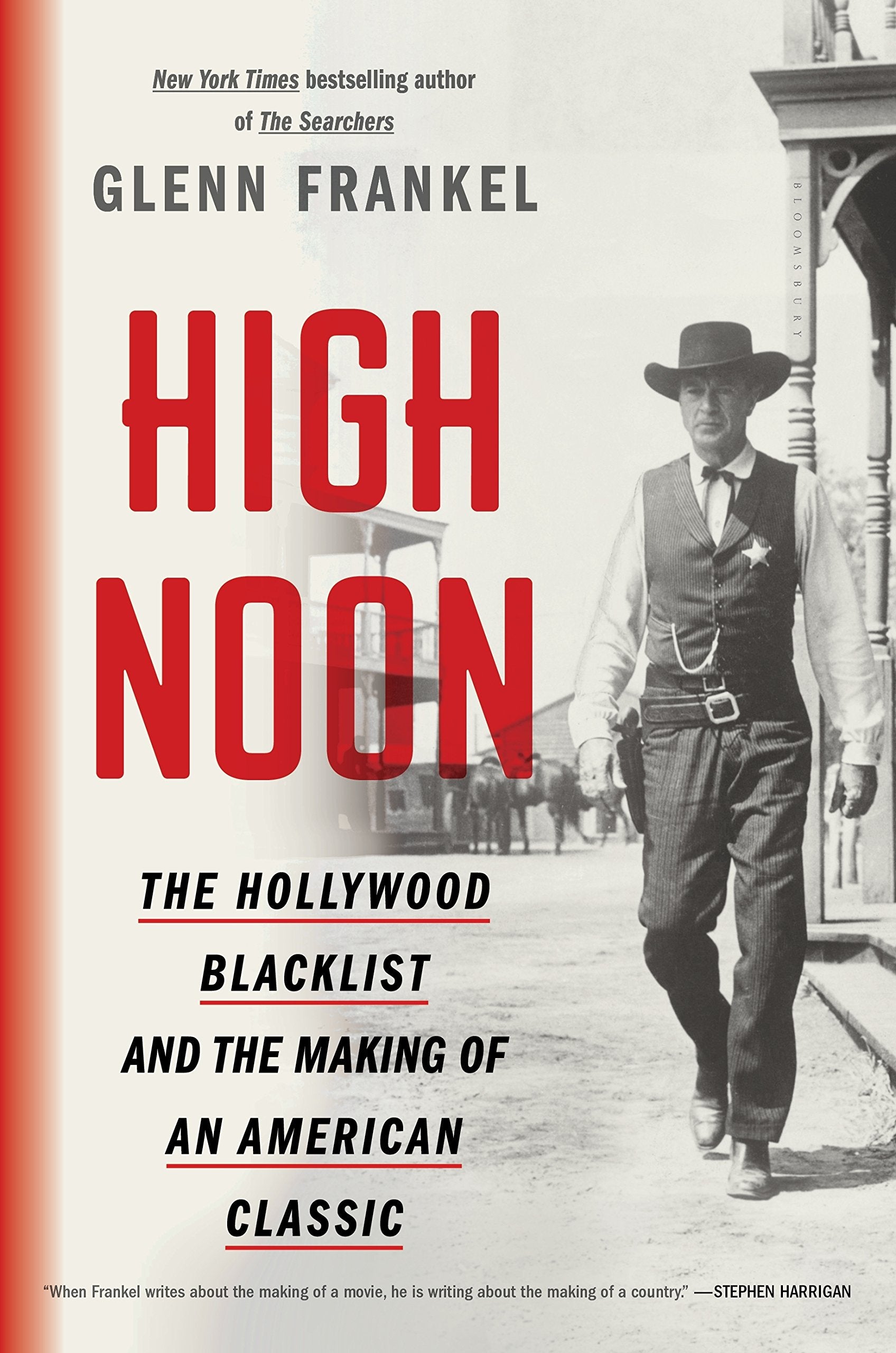
Title

High Noon: The Hollywood Blacklist And The Making Of An American Classic,Used
Sold by Ergodebooks, an authorized reseller.
Returns accepted within 30 days | support@ergodebooks.com
Shipping Information
- Free Standard Shipping — United States only
- Processing Time: 3–5 business days
- Estimated Delivery: 6–10 business days after dispatch
- Double-boxed, fully insured & discreetly packaged
- Tracking number sent via email once dispatched
Returns & Refund
Returns accepted within 30 days of delivery.
Damaged or Defective Item
Free return shipping + replacement or full refund
Wrong Item Received
Free return shipping + replacement or full refund
Change of Mind
Return shipping at customer's expense · 25% restocking fee applies
Payment Option

From The New York Times Bestselling Author Of The Searchers, The Revelatory Story Behind The Classic Movie High Noon And The Toxic Political Climate In Which It Was Created.It'S One Of The Most Revered Movies Of Hollywood'S Golden Era. Starring Screen Legend Gary Cooper And Grace Kelly In Her First Significant Film Role, High Noon Was Shot On A Lean Budget Over Just Thirtytwo Days But Achieved Instant Boxoffice And Critical Success. It Won Four Academy Awards In 1953, Including A Best Actor Win For Cooper. And It Became A Cultural Touchstone, Often Cited By Politicians As A Favorite Film, Celebrating Moral Fortitude.Yet What Has Been Often Overlooked Is That High Noon Was Made During The Height Of The Hollywood Blacklist, A Time Of Political Inquisition And Personal Betrayal. In The Middle Of The Film Shoot, Screenwriter Carl Foreman Was Forced To Testify Before The House Committee On Unamerican Activities About His Former Membership In The Communist Party. Refusing To Name Names, He Was Eventually Blacklisted And Fled The United States. (His Coauthored Screenplay For Another Classic, The Bridge On The River Kwai, Went Uncredited In 1957.) Examined In Light Of Foreman'S Testimony, High Noon'S Emphasis On Courage And Loyalty Takes On Deeper Meaning And Importance.In This Book, Pulitzer Prizewinning Journalist Glenn Frankel Tells The Story Of The Making Of A Great American Western, Exploring How Carl Foreman'S Concept Of High Noon Evolved From Idea To First Draft To Final Script, Taking On Allegorical Weight. Both The Classic Film And Its Turbulent Political Times Emerge Newly Illuminated.
⚠️ WARNING (California Proposition 65):
This product may contain chemicals known to the State of California to cause cancer, birth defects, or other reproductive harm.
For more information, please visit www.P65Warnings.ca.gov.
- Q: What is the page count of 'High Noon: The Hollywood Blacklist and the Making of an American Classic'? A: This book has four hundred pages. It provides an in-depth exploration of the making of the classic film 'High Noon'.
- Q: What type of binding does this book have? A: The book is available in paperback binding. This format makes it portable and easy to read.
- Q: Who is the author of 'High Noon'? A: The author is Glenn Frankel. He is a Pulitzer Prize-winning journalist known for his insightful narratives.
- Q: What genre does this book belong to? A: The book belongs to the Performing Arts genre. It specifically focuses on cinema history and the political context of the Hollywood blacklist.
- Q: Is 'High Noon' suitable for young readers? A: Yes, this book is suitable for young adult readers. It offers historical insights that can be valuable for high school students studying American cinema.
- Q: How can I use this book for research? A: You can use this book as a resource for essays or projects on film history. It provides detailed accounts of the Hollywood blacklist and its impact on cinema.
- Q: What themes are explored in 'High Noon'? A: The book explores themes of courage, loyalty, and moral fortitude. It discusses how these themes are reflected in the film and its creation during a politically charged era.
- Q: Is this book appropriate for film studies courses? A: Yes, it is highly appropriate for film studies courses. It provides critical insights into a landmark film and its historical context.
- Q: How should I care for this paperback book? A: To care for this paperback book, keep it in a dry place and avoid exposure to direct sunlight. This helps preserve the cover and pages.
- Q: Does this book have a warranty or return policy? A: Books typically do not come with a warranty. However, you can return it if it arrives damaged or defective, depending on the retailer.
- Q: What should I do if my book arrives damaged? A: If your book arrives damaged, contact the retailer for a return or exchange. Most retailers have policies in place for such situations.
- Q: Can this book be shipped discreetly? A: Yes, most online retailers offer discreet shipping options. You can check with the retailer for specific shipping policies.
- Q: Is there a specific audience for this book? A: Yes, the book appeals to film enthusiasts, historians, and students. Its detailed narrative is perfect for anyone interested in Hollywood's history.
- Q: What makes this book unique? A: This book uniquely combines film analysis with historical context. It sheds light on the complexities of the Hollywood blacklist during the film's production.
- Q: What is the publication year of this book? A: The book was published in two thousand thirteen. It provides contemporary insights into a classic film's legacy.
- Q: What is the book's significance in American cinema? A: The book is significant as it examines a pivotal film that reflects America's cultural and political struggles during the 1950s.