
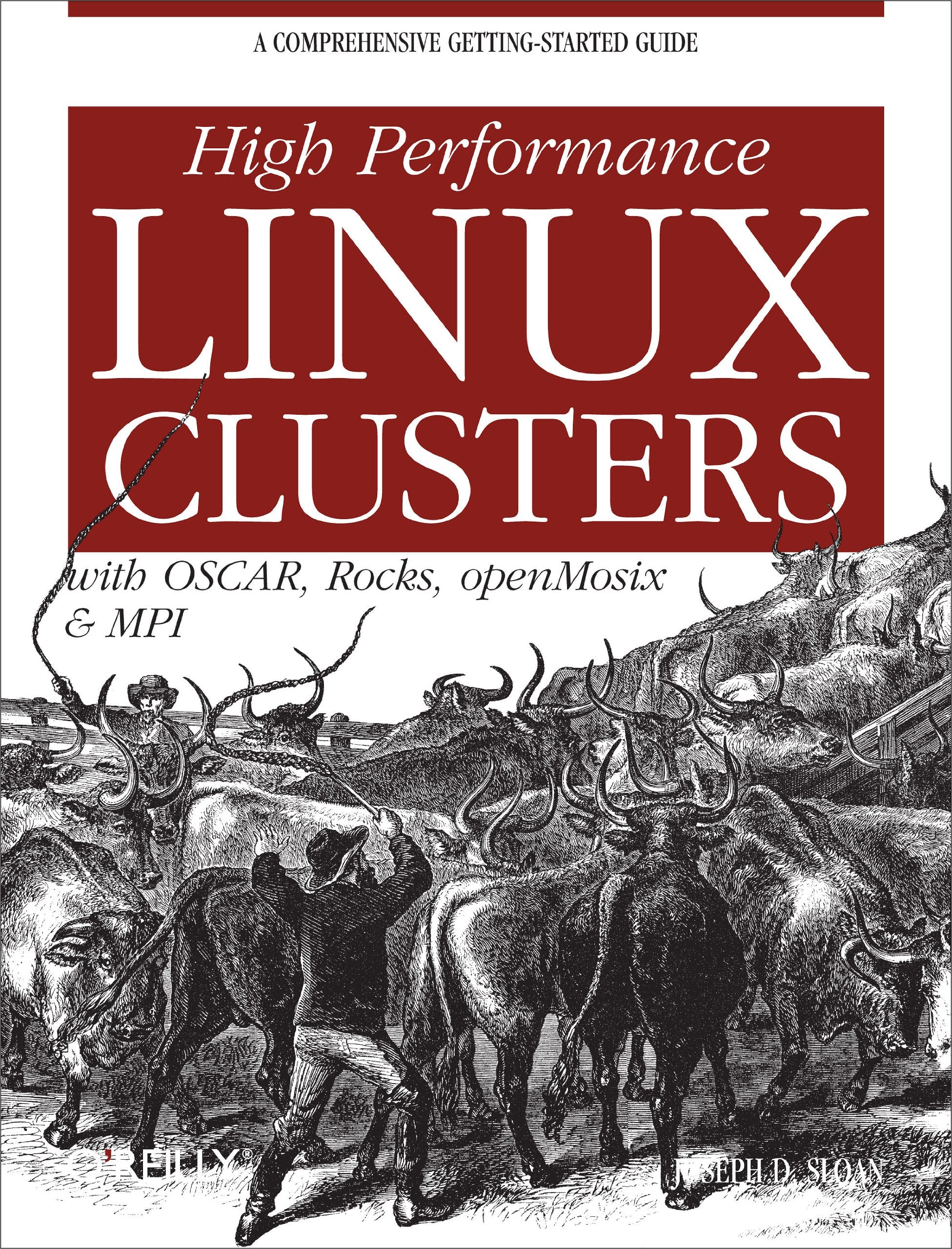
Title
High Performance Linux Clusters with OSCAR, Rocks, OpenMosix, and MPI: A Comprehensive GettingStarted Guide,New
Sold by Ergodebooks, an authorized reseller.
Returns accepted within 30 days | support@ergodebooks.com
Shipping Information
- Free Standard Shipping — United States only
- Processing Time: 3–5 business days
- Estimated Delivery: 6–10 business days after dispatch
- Double-boxed, fully insured & discreetly packaged
- Tracking number sent via email once dispatched
Returns & Refund
Returns accepted within 30 days of delivery.
Damaged or Defective Item
Free return shipping + replacement or full refund
Wrong Item Received
Free return shipping + replacement or full refund
Change of Mind
Return shipping at customer's expense · 25% restocking fee applies
Payment Option

To the outside world, a 'supercomputer' appears to be a single system. In fact, it's a cluster of computers that share a local area network and have the ability to work together on a single problem as a team. Many businesses used to consider supercomputing beyond the reach of their budgets, but new Linux applications have made highperformance clusters more affordable than ever. These days, the promise of lowcost supercomputing is one of the main reasons many businesses choose Linux over other operating systems. This new guide covers everything a newcomer to clustering will need to plan, build, and deploy a highperformance Linux cluster. The book focuses on clustering for highperformance computation, although much of its information also applies to clustering for highavailability (failover and disaster recovery). The book discusses the key tools you'll need to get started, including good practices to use while exploring the tools and growing a system. You'll learn about planning, hardware choices, bulk installation of Linux on multiple systems, and other basic considerations. Then, you'll learn about software options that can save you hoursor even weeksof deployment time. Since a wide variety of options exist in each area of clustering software, the author discusses the pros and cons of the major free software projects and chooses those that are most likely to be helpful to new cluster administrators and programmers. A few of the projects introduced in the book include: MPI, the most popular programming library for clusters. This book offers simple but realistic introductory examples along with some pointers for advanced use. OSCAR and Rocks, two comprehensive installation and administrative systems openMosix (a convenient tool for distributing jobs), Linux kernel extensions that migrate processes transparently for load balancing PVFS, one of the parallel filesystems that make clustering I/O easier C3, a set of commands for administering multiple systems Ganglia, OpenPBS, and cloning tools (Kickstart, SIS and G4U) are also covered. The book looks at cluster installation packages (OSCAR & Rocks) and then considers the core packages individually for greater depth or for folks wishing to do a custom installation. Guidelines for debugging, profiling, performance tuning, and managing jobs from multiple users round out this immensely useful book.
⚠️ WARNING (California Proposition 65):
This product may contain chemicals known to the State of California to cause cancer, birth defects, or other reproductive harm.
For more information, please visit www.P65Warnings.ca.gov.