If you have any questions, you are always welcome to contact us. We'll get back to you as soon as possible, withing 24 hours on weekdays.
Customer service
All questions about your order, return and delivery must be sent to our customer service team by e-mail at yourstore@yourdomain.com
Sale & Press
If you are interested in selling our products, need more information about our brand or wish to make a collaboration, please contact us at press@yourdomain.com
Help
If you have any questions, you are always welcome to contact us. We'll get back to you as soon as possible, withing 24 hours on weekdays.
Customer service
All questions about your order, return and delivery must be sent to our customer service team by e-mail at yourstore@yourdomain.com
Sale & Press
If you are interested in selling our products, need more information about our brand or wish to make a collaboration, please contact us at press@yourdomain.com
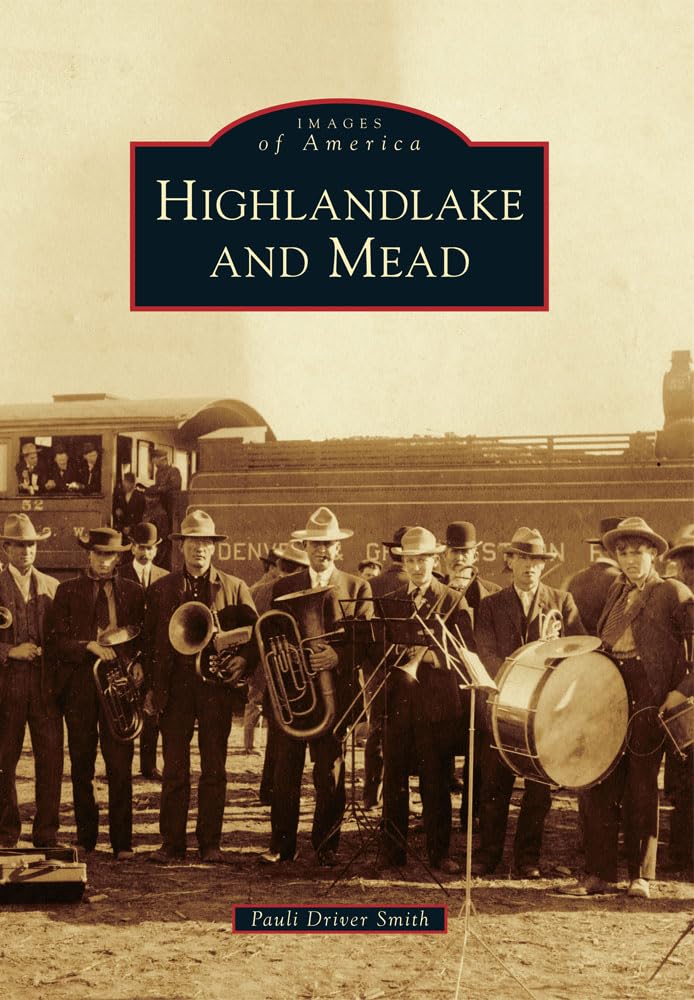
Today, Mead is a vibrant "Little Town with a Big Future," but when Lorin C. Mead homesteaded 80 acres in 1871, it was nothing more than virgin prairie with a small springfed pond he named Highland Lake after Sir Walter Scott's poem "The Lady of the Lake." In 1873, he completed the Highland Ditch and enlarged the pond into a reservoir. The availability of irrigation water attracted additional settlers, and soon a village named Highlandlake sprang up along the shore. In late 1905, a promised railroad bypassed Highlandlake and instead established a beet dump along the eastern border of Paul Mead's farm. Paul, the son of Lorin C. Mead's brother Dr. Martin Luther Mead, immediately platted a new town, naming it after his father. Mead thrived until the Great Depression, during which several businesses were lost, including both banks. For almost 60 years, the town struggled to overcome the resultant losses until finally, in the 1990s, families rediscovered Mead's quaint charm and rural beauty.
⚠️ WARNING (California Proposition 65):
This product may contain chemicals known to the State of California to cause cancer,
birth defects, or other reproductive harm.
For MAP (Minimum Advertised Price) violations and Intellectual Property (IP) or Trademark concerns, please contact:
support@ergodebooks.com
⚠️ California Proposition 65 Warning: Some products sold on this website may expose you to chemicals known to the State of California to cause cancer, birth defects, or other reproductive harm. For more information, visit www.P65Warnings.ca.gov.