
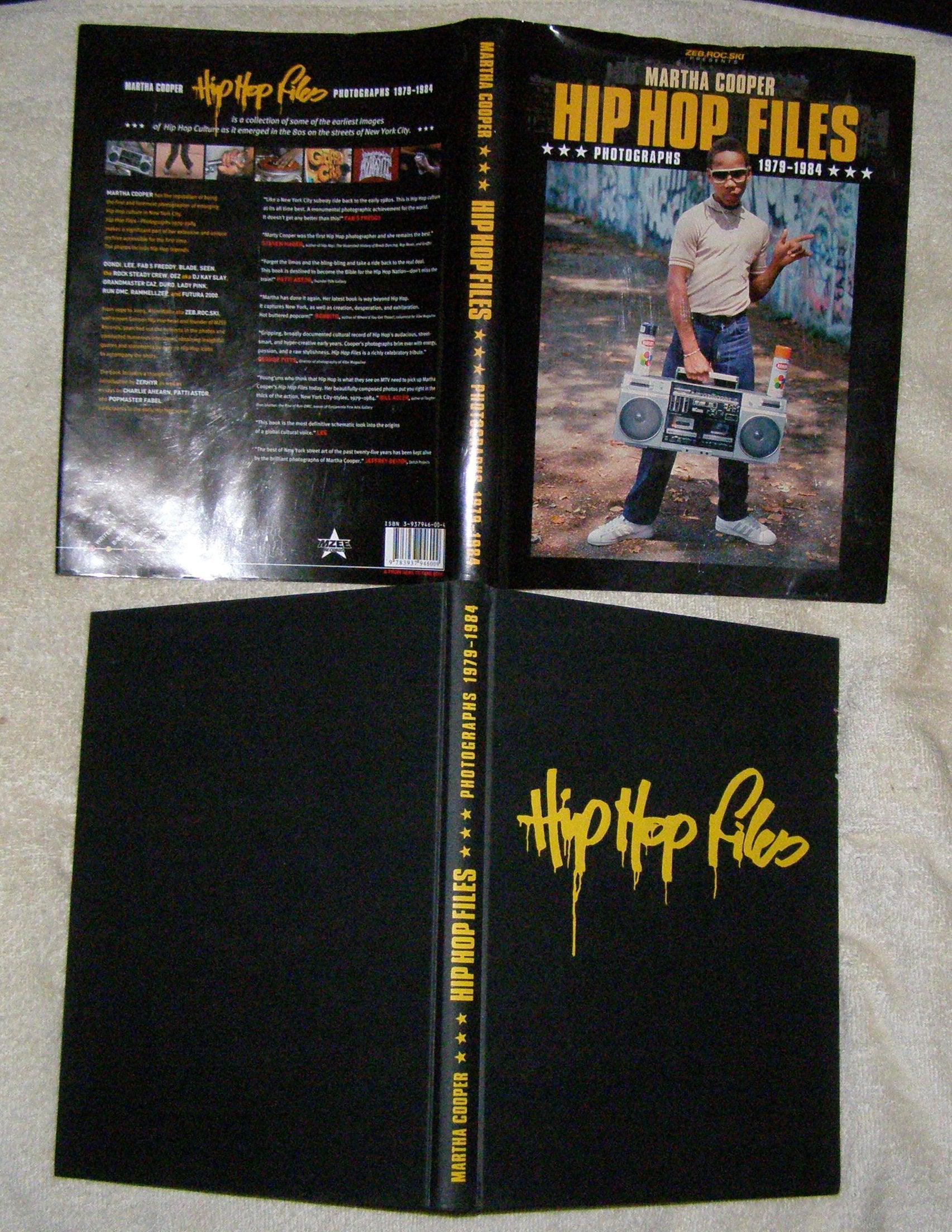
Title


Hip Hop Files: Photographs, 19791984
Sold by Ergodebooks, an authorized reseller.
Returns accepted within 30 days | support@ergodebooks.com
Shipping Information
- Free Standard Shipping — United States only
- Processing Time: 3–5 business days
- Estimated Delivery: 6–10 business days after dispatch
- Double-boxed, fully insured & discreetly packaged
- Tracking number sent via email once dispatched
Returns & Refund
Returns accepted within 30 days of delivery.
Damaged or Defective Item
Free return shipping + replacement or full refund
Wrong Item Received
Free return shipping + replacement or full refund
Change of Mind
Return shipping at customer's expense · 25% restocking fee applies
Payment Option

Hip Hop Culture Emerged From An Environment Of Extreme Deprivation And Decay In The South Bronx, New York City. The Concept Of Pure Inventionof Creating Something From Nothingwas In Full Effect At The End Of The 1970S As Graffiti (Borrowed Spray Paint), Breaking (Cardboard As Dance Floor), And Outdoor Jams (Electricity Source: The Base Of Street Lights) Captured The Attention Of Urban Youth, Coalescing Into New Forms Of Artistic Expression. Fortunately, Photographer Martha Cooper Was At The Right Place At The Right Time To Document The People That Created The Music, Dance, And Art That Became Known Worldwide. Cooper Followed People Who Would One Day Become Icons: The Rock Steady Crew, Fab 5 Freddy, Duro And Dondi, Lady Pink, And Afrika Bambaataa, To Name A Few. Now, Martha Cooper Has The Reputation Of Being The First And Foremost Photographer Of Hip Hop Culture In New York City. While The Publication Of Cooper'S Photographs In The Early 80S Disseminated The Culture Both At Home And Abroad, Her New Book, Hip Hop Files: Photographs 19791984, Makes A Significant Part Of Her Extensive And Unique Archive Accessible For The First Time. From 1999 To 2003, The German Hip Hop Head And Music Publisher Akim Walta Tracked Down The Subjects In Cooper'S Legendary Shots And Conducted Numerous Interviews Obtaining Insightful Quotes And Statements To Accompany And Add Voices To The Photographs. Other Members Of The Early Hip Hop Scene, Including Zephyr, Charlie Ahearn, Fabel, And Patti Astor, Contribute Text And Essays, Adding Fresh Data To The Growing Body Of Hip Hop History. Marty'S Pictures Capture The Exact Moment When Hip Hop Traveled From The Bronx Uptown, Downtown To The Manhattan Nightclub And Gallery Scene. The Photos And Movies Were Suddenly In The Works And (Through Her Pictures) Discovered By The Press And Then Seen By The Rest Of The World. (Charlie Ahearn)
⚠️ WARNING (California Proposition 65):
This product may contain chemicals known to the State of California to cause cancer, birth defects, or other reproductive harm.
For more information, please visit www.P65Warnings.ca.gov.
- Q: What is the size of the book? A: The book measures six inches in length, one inch in width, and nine point zero two inches in height. It is a compact paperback, making it easy to handle.
- Q: How many pages does 'Hip Hop Files: Photographs, 1979-1984' have? A: The book contains two hundred forty pages. This extensive content showcases a rich history of hip hop culture through photographs.
- Q: What type of binding does this book have? A: The book features a paperback binding. This makes it flexible and lightweight for easy reading.
- Q: Who is the author of this book? A: The author is Martha Cooper, a renowned photographer known for her work in hip hop culture. Her unique perspective captures significant moments in the evolution of this art form.
- Q: What kind of photography is featured in the book? A: The book showcases photographs that document the rise of hip hop culture from nineteen seventy-nine to nineteen eighty-four. These images highlight key figures and events in the genre's history.
- Q: How should I read this book? A: You can read this book at your leisure, as it is designed for anyone interested in hip hop culture. The images and accompanying texts provide an engaging experience.
- Q: Is this book suitable for children? A: Yes, the book can be suitable for older children with an interest in music and art. However, parental guidance is recommended due to historical context and themes.
- Q: Can I use this book for educational purposes? A: Yes, this book can be used for educational purposes. It offers insights into hip hop history and photography, making it a valuable resource for students and enthusiasts.
- Q: What is the best way to store this book? A: Store the book in a cool, dry place away from direct sunlight. Keeping it upright on a shelf will help maintain its shape and condition.
- Q: How do I keep the book in good condition? A: Avoid exposing the book to moisture or extreme temperatures. Handle it with clean hands to prevent dirt and oils from damaging the pages.
- Q: What if the book arrives damaged? A: If the book arrives damaged, you should contact the seller for a return or exchange. Keep the original packaging for a smoother return process.
- Q: Is there a warranty for this book? A: No, books typically do not come with a warranty. However, you can inquire about return policies to address any issues.
- Q: How can I learn more about the subjects in the photographs? A: The book includes interviews and essays from early hip hop scene members, providing context and additional information about the featured subjects.
- Q: What makes this book different from other photography books? A: This book uniquely focuses on the hip hop culture of the early eighties, combining photography with firsthand accounts, creating a richer historical narrative.
- Q: Is this book part of a series? A: No, 'Hip Hop Files: Photographs, 1979-1984' is a standalone publication. It showcases a specific period in hip hop history without being part of a series.