
Title
Hip Hop Movement,Used
Sold by Ergodebooks, an authorized reseller.
Returns accepted within 30 days | support@ergodebooks.com
Shipping Information
- Free Standard Shipping — United States only
- Processing Time: 3–5 business days
- Estimated Delivery: 6–10 business days after dispatch
- Double-boxed, fully insured & discreetly packaged
- Tracking number sent via email once dispatched
Returns & Refund
Returns accepted within 30 days of delivery.
Damaged or Defective Item
Free return shipping + replacement or full refund
Wrong Item Received
Free return shipping + replacement or full refund
Change of Mind
Return shipping at customer's expense · 25% restocking fee applies
Payment Option

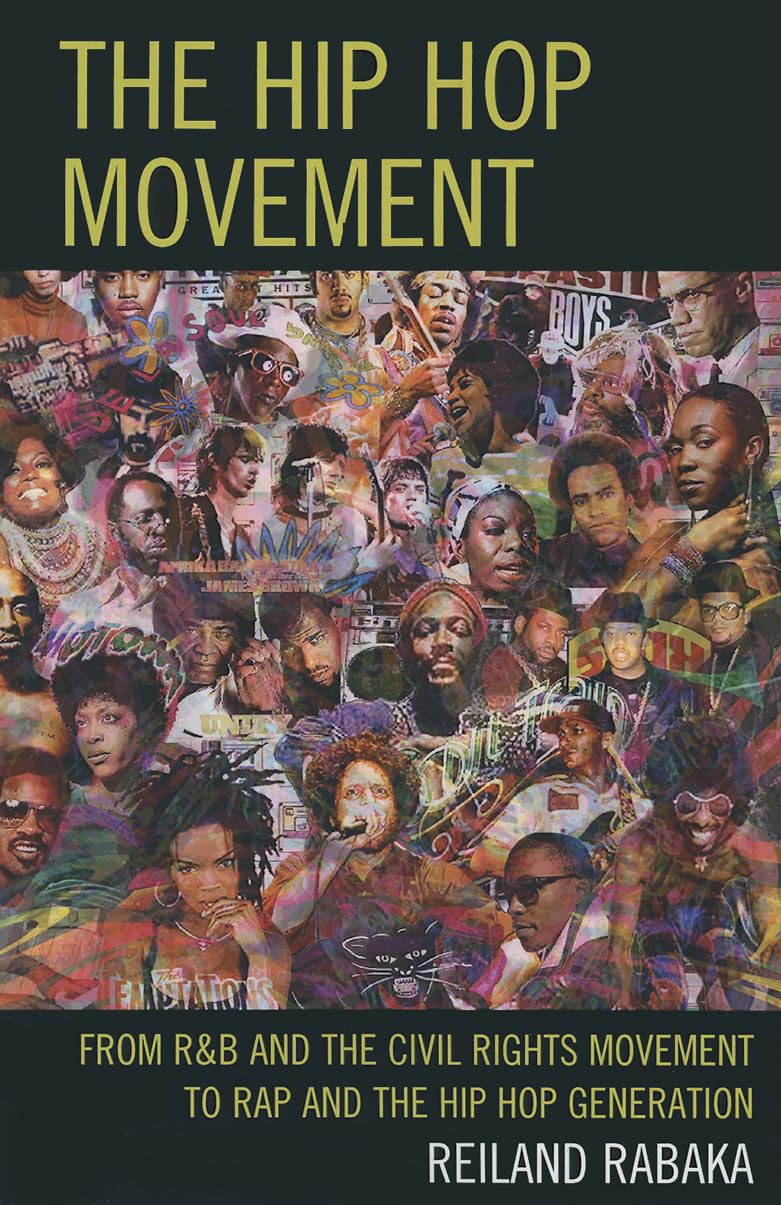
The Hip Hop Movement offers a critical theory and alternative history of rap music and hip hop culture by examining their roots in the popular musics and popular cultures of the Civil Rights Movement and Black Power Movement. Connecting classic rhythm & blues and rock & roll to the Civil Rights Movement, and classic soul and funk to the Black Power Movement, The Hip Hop Movement explores what each of these musics and movements contributed to rap, neosoul, hip hop culture, and the broader Hip Hop Movement. Ultimately, this books remixes (as opposed to chapters) reveal that black popular music and black popular culture have always been more than merely popular music and popular culture in the conventional sense and reflect a broader social, political, and cultural movement. With this in mind, sociologist and musicologist Reiland Rabaka critically reinterprets rap and neosoul as popular expressions of the politics, social visions, and cultural values of a contemporary multiissue movement: the Hip Hop Movement.Rabaka argues that rap music, hip hop culture, and the Hip Hop Movement are as deserving of critical scholarly inquiry as previous black popular musics, such as the spirituals, blues, ragtime, jazz, rhythm & blues, rock & roll, soul, and funk, and previous black popular movements, such as the Black Womens Club Movement, New Negro Movement, Harlem Renaissance, Civil Rights Movement, Black Power Movement, Black Arts Movement, and Black Womens Liberation Movement. This volume, equal parts alternative history of hip hop and critical theory of hip hop, challenges those scholars, critics, and fans of hip hop who lopsidedly overfocus on commercial rap, pop rap, and gangsta rap while failing to acknowledge that there are more than three dozen genres of rap music and many other socially and politically progressive forms of hip hop culture beyond DJing, MCing, rapping, beatmaking, breakdancing, and graffitiwriting.
⚠️ WARNING (California Proposition 65):
This product may contain chemicals known to the State of California to cause cancer, birth defects, or other reproductive harm.
For more information, please visit www.P65Warnings.ca.gov.
- Q: How many pages does the book have? A: This book has five hundred sixteen pages. It provides an in-depth exploration of the Hip Hop Movement and its cultural significance.
- Q: What is the binding type of this book? A: The binding type is paperback. This makes it lightweight and easy to handle for reading.
- Q: Who is the author of this book? A: The author is Reiland Rabaka. He is a sociologist and musicologist known for his critical analysis of hip hop culture.
- Q: What are the dimensions of the book? A: The book measures six point zero two inches in length, one point zero three inches in width, and nine point zero two inches in height. These dimensions make it portable for readers.
- Q: What genre does this book belong to? A: This book belongs to the History & Criticism genre. It critically examines the roots and impact of hip hop culture.
- Q: Is this book suitable for beginners in hip hop studies? A: Yes, this book is suitable for beginners. It provides foundational knowledge about the cultural and historical context of hip hop.
- Q: What themes are explored in this book? A: The book explores themes such as social movements, cultural expression, and the evolution of rap music. It connects these themes to historical contexts.
- Q: How does this book approach hip hop culture? A: This book critically reinterprets hip hop culture as part of broader social and political movements. It challenges traditional views of rap music.
- Q: What reading level is appropriate for this book? A: This book is appropriate for adult readers and those with an interest in music and cultural studies. It engages with complex theories.
- Q: Can this book be used as a textbook? A: Yes, this book can be used as a textbook for courses on music, culture, and social movements. It provides valuable insights for academic discussions.
- Q: How should I care for this paperback book? A: To care for this paperback book, keep it away from moisture and direct sunlight. Store it in a cool, dry place to prevent damage.
- Q: Is this book safe to read for all ages? A: While the book is generally safe for adult readers, it includes discussions on complex social issues. Parental discretion is advised for younger readers.
- Q: What if the book arrives damaged? A: If the book arrives damaged, you should contact the retailer for a return or exchange. Most retailers have policies in place for such issues.
- Q: What is the author's perspective on rap music? A: The author argues that rap music is a critical cultural expression deserving scholarly attention. He connects it to historical movements and political contexts.
- Q: Are there any notable references in this book? A: Yes, the book references significant cultural movements like the Civil Rights Movement and Black Power Movement. These connections enrich its analysis.
- Q: Where can I purchase this book? A: This book can be purchased through various retailers, including online bookstores. Check for availability at your preferred retailer.