If you have any questions, you are always welcome to contact us. We'll get back to you as soon as possible, withing 24 hours on weekdays.
Customer service
All questions about your order, return and delivery must be sent to our customer service team by e-mail at yourstore@yourdomain.com
Sale & Press
If you are interested in selling our products, need more information about our brand or wish to make a collaboration, please contact us at press@yourdomain.com
Help
If you have any questions, you are always welcome to contact us. We'll get back to you as soon as possible, withing 24 hours on weekdays.
Customer service
All questions about your order, return and delivery must be sent to our customer service team by e-mail at yourstore@yourdomain.com
Sale & Press
If you are interested in selling our products, need more information about our brand or wish to make a collaboration, please contact us at press@yourdomain.com
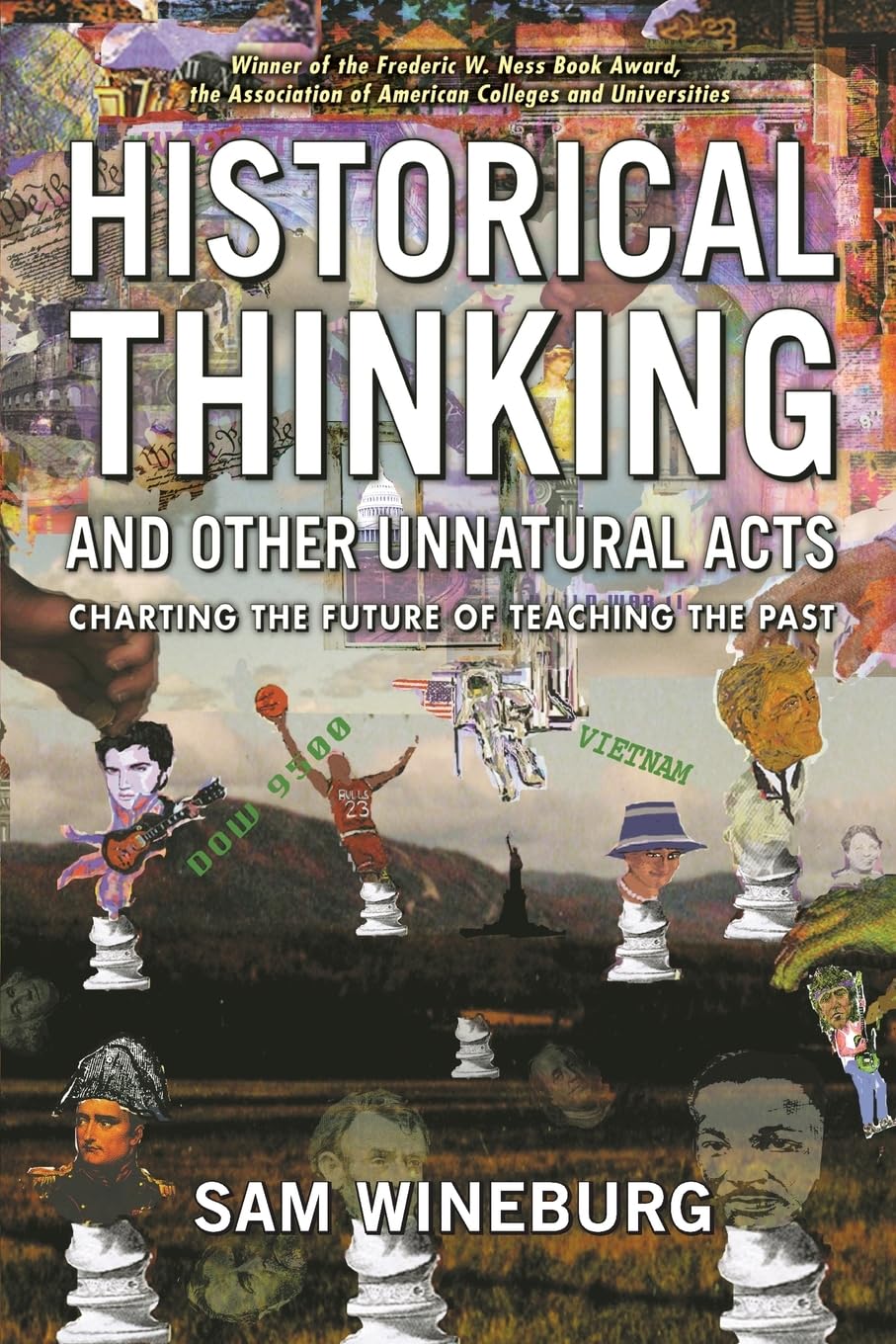
Since ancient times, the pundits have lamented young people's lack of historical knowledge and warned that ignorance of the past surely condemns humanity to repeating its mistakes. In the contemporary United States, this dire outlook drives a contentious debate about what key events, nations, and people are essential for history students. Sam Wineburg says that we are asking the wrong questions. This book demolishes the conventional notion that there is one true history and one best way to teach it.Although most of us think of history and learn it as a conglomeration of facts, dates, and key figures, for professional historians it is a way of knowing, a method for developing and understanding about the relationships of peoples and events in the past. A cognitive psychologist, Wineburg has been engaged in studying what is intrinsic to historical thinking, how it might be taught, and why most students still adhere to the 'one damned thing after another' concept of history.Whether he is comparing how students and historians interpret documentary evidence or analyzing children's drawings, Wineburg's essays offer 'rough maps of how ordinary people think about the past and use it to understand the present.' Arguing that we all absorb lessons about history in many settings in kitchen table conversations, at the movies, or on the worldwide web, for instance these essays acknowledge the role of collective memory in filtering what we learn in school and shaping our historical thinking.
⚠️ WARNING (California Proposition 65):
This product may contain chemicals known to the State of California to cause cancer,
birth defects, or other reproductive harm.
For MAP (Minimum Advertised Price) violations and Intellectual Property (IP) or Trademark concerns, please contact:
support@ergodebooks.com
⚠️ California Proposition 65 Warning: Some products sold on this website may expose you to chemicals known to the State of California to cause cancer, birth defects, or other reproductive harm. For more information, visit www.P65Warnings.ca.gov.