

Title
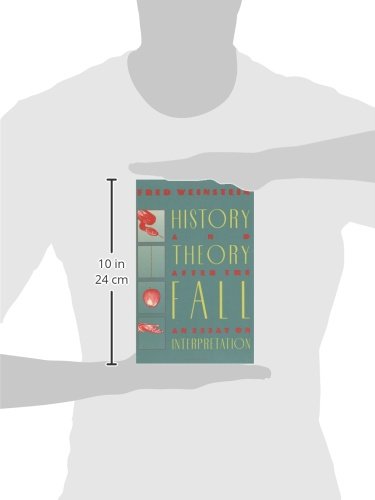
History and Theory after the Fall: An Essay on Interpretation,Used
Sold by Ergodebooks, an authorized reseller.
Returns accepted within 30 days | support@ergodebooks.com
Shipping Information
- Free Standard Shipping — United States only
- Processing Time: 3–5 business days
- Estimated Delivery: 6–10 business days after dispatch
- Double-boxed, fully insured & discreetly packaged
- Tracking number sent via email once dispatched
Returns & Refund
Returns accepted within 30 days of delivery.
Damaged or Defective Item
Free return shipping + replacement or full refund
Wrong Item Received
Free return shipping + replacement or full refund
Change of Mind
Return shipping at customer's expense · 25% restocking fee applies
Payment Option

In this ambitious work, Fred Weinstein confronts the obstacles that have increasingly frustrated our attempts to explain social and historical reality. Traditionally, we have relied on history and social theory to describe the ways people understand the world they live in. But the ordering explanations we have always usedderived from the classical social theories originally forged by Marx, Tocqueville, Weber, Durkheim, Freudhave collapsed.In the wake of this collapse or "fall," the rival claims of fiction, psychoanalysis, sociology, anthropology, and history have created the dilemma of radical relativism, the prospect of multiple interpretations of any complex historical event. The basic strategy of social theory and the social sciencesthe search for underlying unitiesproves so inherently contradictory and has provided so little in the way of reliable knowledge of social and historical relationships that to many critics it seems no longer worth pursuing.Weinstein enters the debate by rejecting any search for underlying structural unities, dynamic or social, through which historians have attempted to find continuity with the past. He looks instead to ideological processes, to the construction of successive and changing versions of reality that mediate between the power of fantasy on the one side and the power of the social world on the other. He argues further that the need to use ideological constructs in this way accounts for the heterogeneous and changing content of social movements and for the persistent need people have always had for authoritative leaders, even in democratized societies. He suggests that people have historically been able to take a step away from leaders only by substituting the possession of objects such as property or money. This book is a breakthrough in poststructuralist theory that is sure to stimulate considerable discussion, especially about the shape of the social sciences and the future of historical interpretation.
⚠️ WARNING (California Proposition 65):
This product may contain chemicals known to the State of California to cause cancer, birth defects, or other reproductive harm.
For more information, please visit www.P65Warnings.ca.gov.