
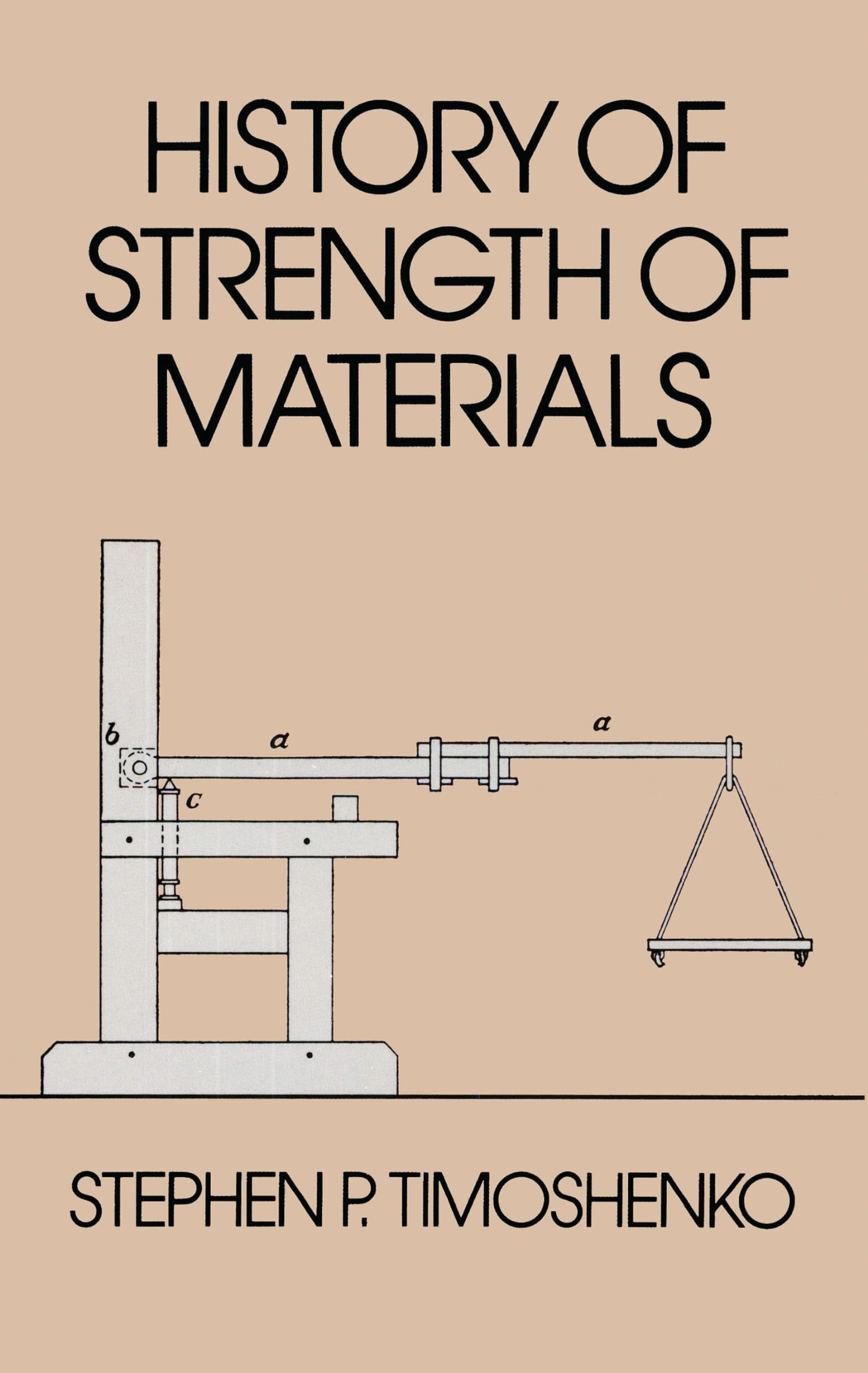
Title
History Of Strength Of Materials (Dover Civil And Mechanical Engineering),New
Sold by Ergodebooks, an authorized reseller.
Returns accepted within 30 days | support@ergodebooks.com
Shipping Information
- Free Standard Shipping — United States only
- Processing Time: 3–5 business days
- Estimated Delivery: 6–10 business days after dispatch
- Double-boxed, fully insured & discreetly packaged
- Tracking number sent via email once dispatched
Returns & Refund
Returns accepted within 30 days of delivery.
Damaged or Defective Item
Free return shipping + replacement or full refund
Wrong Item Received
Free return shipping + replacement or full refund
Change of Mind
Return shipping at customer's expense · 25% restocking fee applies
Payment Option

Strength Of Materials Is That Branch Of Engineering Concerned With The Deformation And Disruption Of Solids When Forces Other Than Changes In Position Or Equilibrium Are Acting Upon Them. The Development Of Our Understanding Of The Strength Of Materials Has Enabled Engineers To Establish The Forces Which Can Safely Be Imposed On Structure Or Components, Or To Choose Materials Appropriate To The Necessary Dimensions Of Structures And Components Which Have To Withstand Given Loads Without Suffering Effects Deleterious To Their Proper Functioning.This Excellent Historical Survey Of The Strength Of Materials With Many References To The Theories Of Elasticity And Structures Is Based On An Extensive Series Of Lectures Delivered By The Author At Stanford University, Palo Alto, California. Timoshenko Explores The Early Roots Of The Discipline From The Great Monuments And Pyramids Of Ancient Egypt Through The Temples, Roads, And Fortifications Of Ancient Greece And Rome. The Author Fixes The Formal Beginning Of The Modern Science Of The Strength Of Materials With The Publications Of Galileo'S Book, 'Two Sciences,' And Traces The Rise And Development As Well As Industrial And Commercial Applications Of The Fledgling Science From The Seventeenth Century Through The Twentieth Century.Timoshenko Fleshes Out The Bare Bones Of Mathematical Theory With Lucid Demonstrations Of Important Equations And Brief Biographies Of Highly Influential Mathematicians, Including: Euler, Lagrange, Navier, Thomas Young, Saintvenant, Franz Neumann, Maxwell, Kelvin, Rayleigh, Klein, Prandtl, And Many Others. These Theories, Equations, And Biographies Are Further Enhanced By Clear Discussions Of The Development Of Engineering And Engineering Education In Italy, France, Germany, England, And Elsewhere. 245 Figures.
⚠️ WARNING (California Proposition 65):
This product may contain chemicals known to the State of California to cause cancer, birth defects, or other reproductive harm.
For more information, please visit www.P65Warnings.ca.gov.
- Q: How many pages does the book have? A: This book has four hundred eighty pages. It provides an extensive exploration of the history and concepts surrounding the strength of materials.
- Q: What are the dimensions of the book? A: The book measures five point five one inches in length, one inch in width, and eight point seven five inches in height. These dimensions make it portable and easy to handle.
- Q: What type of binding does the book have? A: The book is paperback bound. This binding type is lightweight and flexible, ideal for easy reading and handling.
- Q: Who is the author of the book? A: The author is Stephen P. Timoshenko. He is a renowned figure in the field of engineering and materials science.
- Q: What is the main subject of this book? A: The book covers the subject of the strength of materials. It discusses the deformation and disruption of solids under various forces.
- Q: Is this book suitable for beginners in engineering? A: Yes, this book is suitable for beginners. It includes historical context and foundational theories that are accessible for those new to the subject.
- Q: What topics are covered in this book? A: The book covers topics such as elasticity, the history of materials science, and biographies of influential mathematicians. It provides a comprehensive overview of the field.
- Q: Can this book be used as a reference for engineering students? A: Yes, this book can be used as a reference. It serves as a historical survey and includes important equations and theories relevant to engineering.
- Q: Is the content of this book suitable for all ages? A: Yes, the content is suitable for all ages. However, it is primarily targeted toward students and professionals in engineering fields.
- Q: How should I store this book to keep it in good condition? A: Store the book in a cool, dry place away from direct sunlight. This will help preserve its condition and prevent fading.
- Q: Can I return the book if I am not satisfied? A: Yes, you can return the book if you are not satisfied, subject to the retailer's return policy. Make sure to check the specific terms before purchasing.
- Q: What if the book arrives damaged? A: If the book arrives damaged, you should contact the retailer immediately for a replacement or refund. Most retailers have customer service policies for such issues.
- Q: How can I best care for the pages of the book? A: To care for the pages, avoid bending or creasing them. Use a bookmark to prevent wear and tear on the edges.
- Q: Is this book part of a series? A: No, this book is not part of a series. It stands alone as a comprehensive survey of the strength of materials.
- Q: Will this book help with practical applications in engineering? A: Yes, the book discusses industrial and commercial applications of materials science. It is beneficial for understanding real-world engineering challenges.
- Q: Does the book include illustrations or figures? A: Yes, the book includes two hundred forty-five figures. These illustrations enhance understanding of the concepts discussed.