
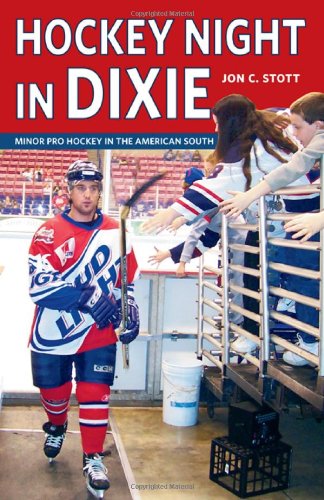
Title
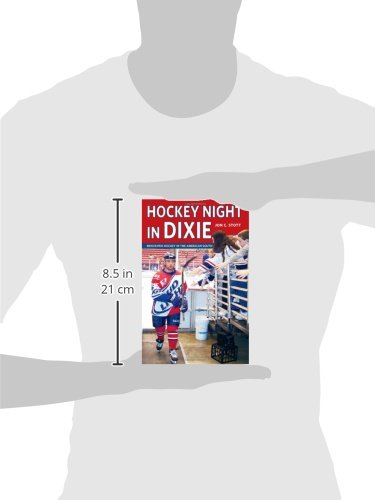
Hockey Night in Dixie: Minor Pro Hockey in the American South,New
Sold by Ergodebooks, an authorized reseller.
Returns accepted within 30 days | support@ergodebooks.com
Shipping Information
- Free Standard Shipping — United States only
- Processing Time: 3–5 business days
- Estimated Delivery: 6–10 business days after dispatch
- Double-boxed, fully insured & discreetly packaged
- Tracking number sent via email once dispatched
Returns & Refund
Returns accepted within 30 days of delivery.
Damaged or Defective Item
Free return shipping + replacement or full refund
Wrong Item Received
Free return shipping + replacement or full refund
Change of Mind
Return shipping at customer's expense · 25% restocking fee applies
Payment Option

During the 1980s, the geography of minorleague professional hockey changed radically, moving from its roots in the Canadian Maritime provinces, New England and the Midwestern states into the American south. In addition to cities like Dallas, Charlotte, Norfolk and Oklahoma City, which had long traditions of minorleague hockey, unlikely places such as Biloxi, Baton Rouge, Little Rock and Augusta hosted teams. Over an 18year period, minorleague hockey was played in 72 different southern cities, and at one point there were more minorleague teams in Texas than in all of Canada, making Texas the place where many players learned their hockey skills.Hockey Night in Dixie examines this phenomenon with an historical overview of the period, including interviews with people involved in the founding and early years of each of the 13 leagues. There are also indepth portraits of four teams, one from each of the four lower minor leagues that played during the 200506 season. These portraits feature interviews with owners, coaches, players, officials, fans and reporters.Amply illustrated with photographs, Hockey Night in Dixie paints a vivid picture of this extraordinary development in minorleague sports.
⚠️ WARNING (California Proposition 65):
This product may contain chemicals known to the State of California to cause cancer, birth defects, or other reproductive harm.
For more information, please visit www.P65Warnings.ca.gov.
- Q: What is the main theme of 'Hockey Night in Dixie'? A: 'Hockey Night in Dixie' explores the evolution of minor-league professional hockey in the American South during the 1980s, highlighting the transition from traditional hockey markets to southern cities.
- Q: Who is the author of 'Hockey Night in Dixie'? A: The book is authored by Jon C. Stott, who provides historical insights and interviews related to minor-league hockey.
- Q: How many pages does the book have? A: 'Hockey Night in Dixie' contains 240 pages, offering a comprehensive look at minor-league hockey in the South.
- Q: What type of binding does this book have? A: The book is available in paperback binding, making it lightweight and easy to handle.
- Q: Is 'Hockey Night in Dixie' suitable for hockey fans? A: Yes, the book is suitable for hockey fans, particularly those interested in the history and development of minor-league hockey in the southern United States.
- Q: What condition is the book in? A: 'Hockey Night in Dixie' is listed as a used book in good condition, ensuring that it is still a reliable resource for readers.
- Q: When was 'Hockey Night in Dixie' published? A: 'Hockey Night in Dixie' was published on January 1, 2006, providing historical context and interviews from that era.
- Q: Does the book include photographs? A: Yes, 'Hockey Night in Dixie' is amply illustrated with photographs, which enhance the narrative and provide visual context to the text.
- Q: What insights can readers expect from the book? A: Readers can expect in-depth portraits of four teams from lower minor leagues, including interviews with owners, coaches, players, and fans, offering a well-rounded perspective on minor-league hockey.
- Q: What is the significance of Texas in the context of this book? A: The book highlights Texas as a pivotal location for minor-league hockey, noting that at one point, there were more minor-league teams in Texas than in all of Canada.