If you have any questions, you are always welcome to contact us. We'll get back to you as soon as possible, withing 24 hours on weekdays.
Customer service
All questions about your order, return and delivery must be sent to our customer service team by e-mail at yourstore@yourdomain.com
Sale & Press
If you are interested in selling our products, need more information about our brand or wish to make a collaboration, please contact us at press@yourdomain.com
Help
If you have any questions, you are always welcome to contact us. We'll get back to you as soon as possible, withing 24 hours on weekdays.
Customer service
All questions about your order, return and delivery must be sent to our customer service team by e-mail at yourstore@yourdomain.com
Sale & Press
If you are interested in selling our products, need more information about our brand or wish to make a collaboration, please contact us at press@yourdomain.com
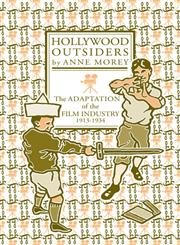
The 1910s and 1920s witnessed the inception of a particular brand of negotiation between filmdom and its public in the United States. Hollywood, its proponents, and its critics sought to establish new connections between audience and industry, suggesting means by which Hollywood outsiders could become insiders. Hollywood Outsiders looks at how four disparate entitiesthe Palmer Photoplay correspondence school of screenwriting, juvenile series fiction about youngsters involved in the film industry, film appreciation and character education programs for high school students, and Catholic and Protestant efforts to use and influence filmmakingconceived of these connections, and thus of the relationship of Hollywood to the individual and society. Anne Morey's exploration of the diverse discourses generated by these different conjunctions leads to a fresh and compelling interpretation of Hollywood's place in American cultural history.In its analysis of how four distinct groups, each addressing constituencies of various ages and degrees of social authority, defined their interest in the film industry, Hollywood Outsiders combines concrete discussions of cultural politics with a broader argument about how outsiders viewed the film industry as a vehicle of selfvalidation and of democratic ideals.Anne Morey is assistant professor of English and performance studies at Texas A&M University.
⚠️ WARNING (California Proposition 65):
This product may contain chemicals known to the State of California to cause cancer,
birth defects, or other reproductive harm.
For MAP (Minimum Advertised Price) violations and Intellectual Property (IP) or Trademark concerns, please contact:
support@ergodebooks.com
⚠️ California Proposition 65 Warning: Some products sold on this website may expose you to chemicals known to the State of California to cause cancer, birth defects, or other reproductive harm. For more information, visit www.P65Warnings.ca.gov.