
Title
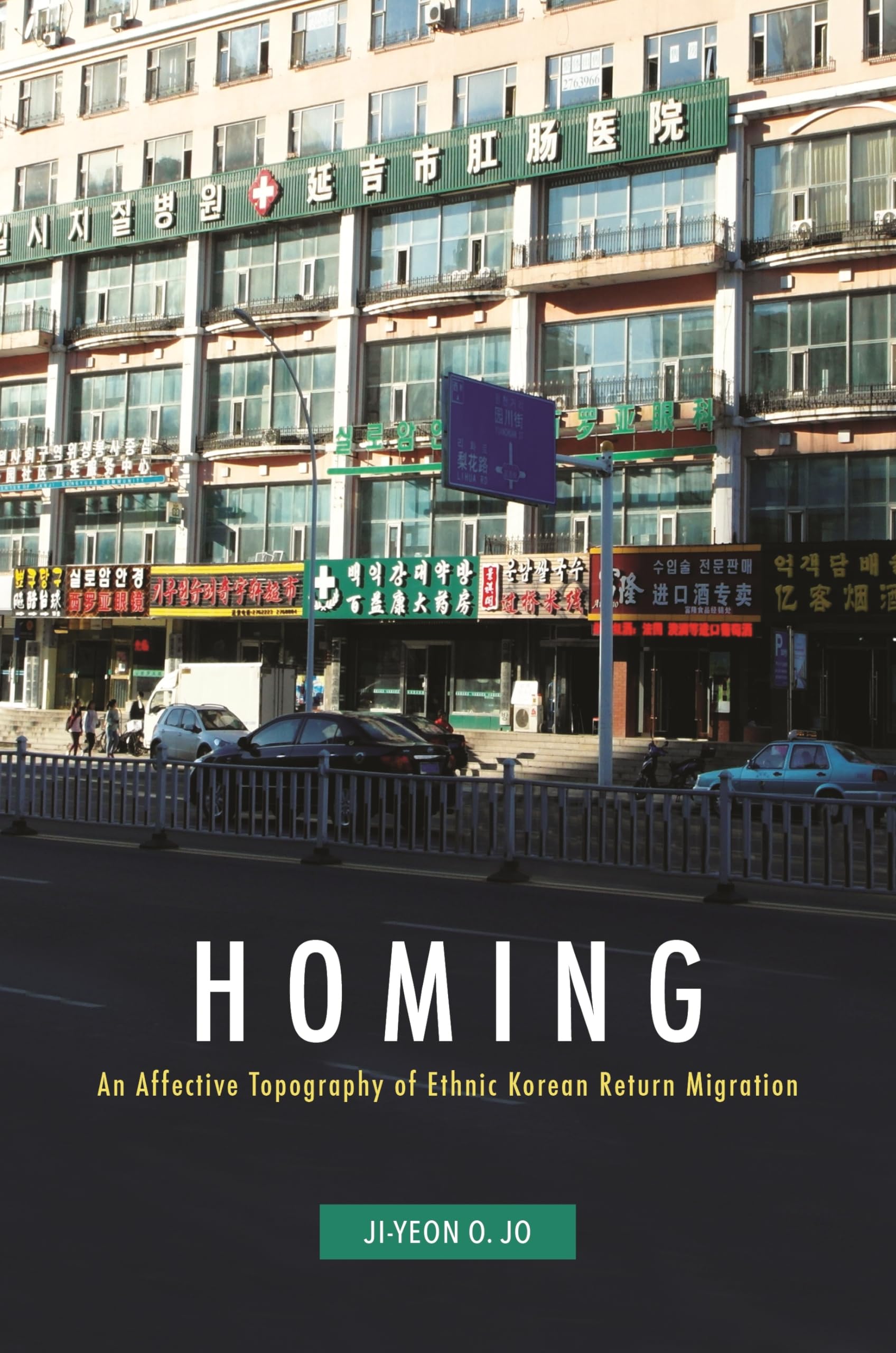
Homing: An Affective Topography of Ethnic Korean Return Migration,Used
Sold by Ergodebooks, an authorized reseller.
Returns accepted within 30 days | support@ergodebooks.com
Shipping Information
- Free Standard Shipping — United States only
- Processing Time: 3–5 business days
- Estimated Delivery: 6–10 business days after dispatch
- Double-boxed, fully insured & discreetly packaged
- Tracking number sent via email once dispatched
Returns & Refund
Returns accepted within 30 days of delivery.
Damaged or Defective Item
Free return shipping + replacement or full refund
Wrong Item Received
Free return shipping + replacement or full refund
Change of Mind
Return shipping at customer's expense · 25% restocking fee applies
Payment Option

Millions of ethnic Koreans have been driven from the Korean Peninsula over the course of the regions modern history. Emigration was often the personal choice of migrants hoping to escape economic and political hardship, but it was also enforced or encouraged by governmental relocation and migration projects in both colonial and postcolonial times. The turning point in South Koreas overall migration trajectory occurred in the late 1980s and early 1990s, when the nations increased economic prosperity and global visibility, along with shifting geopolitical relationships between the First World and Second World, precipitated a migration flow to South Korea. Since the early 1990s, South Koreas foreignresident population has soared more than 3,000 percent.Homing investigates the experiences of legacy migrantslatergeneration diaspora Koreans who return to South Koreafrom China, the Commonwealth of Independent States, and the United States. Unlike their parents or grandparents, they have no firsthand experience of their ancestral homeland. They inherited an imagined homeland through memories, stories, pictures, and traditions passed down by family and community, or through images disseminated by the media. When diaspora Koreans migrate to South Korea, they confront far more than a new living situation: they must navigate their own shifting emotions as their expectations for their new homelandand its expectations of themconfront reality. Everyday experiences and social encounterswhether welcoming or humiliatingall contribute to their sense of belonging in the South.Homing addresses some of the most vexing and pressing issues of contemporary transnational migrationcitizenship, cultural belonging, language, and family relationshipsand highlights their affective dimensions. Using accounts gleaned through interviews, author JiYeon Jo situates migrant experiences within the historical context of each diaspora. Her book is the first to analyze comparatively the migration experiences of ethnic Koreans from three diverse diaspora, whose presence in South Korea and ongoing relationships with diaspora homelands have challenged and destabilized existing understandings of Korean peoplehood.
⚠️ WARNING (California Proposition 65):
This product may contain chemicals known to the State of California to cause cancer, birth defects, or other reproductive harm.
For more information, please visit www.P65Warnings.ca.gov.