
Title
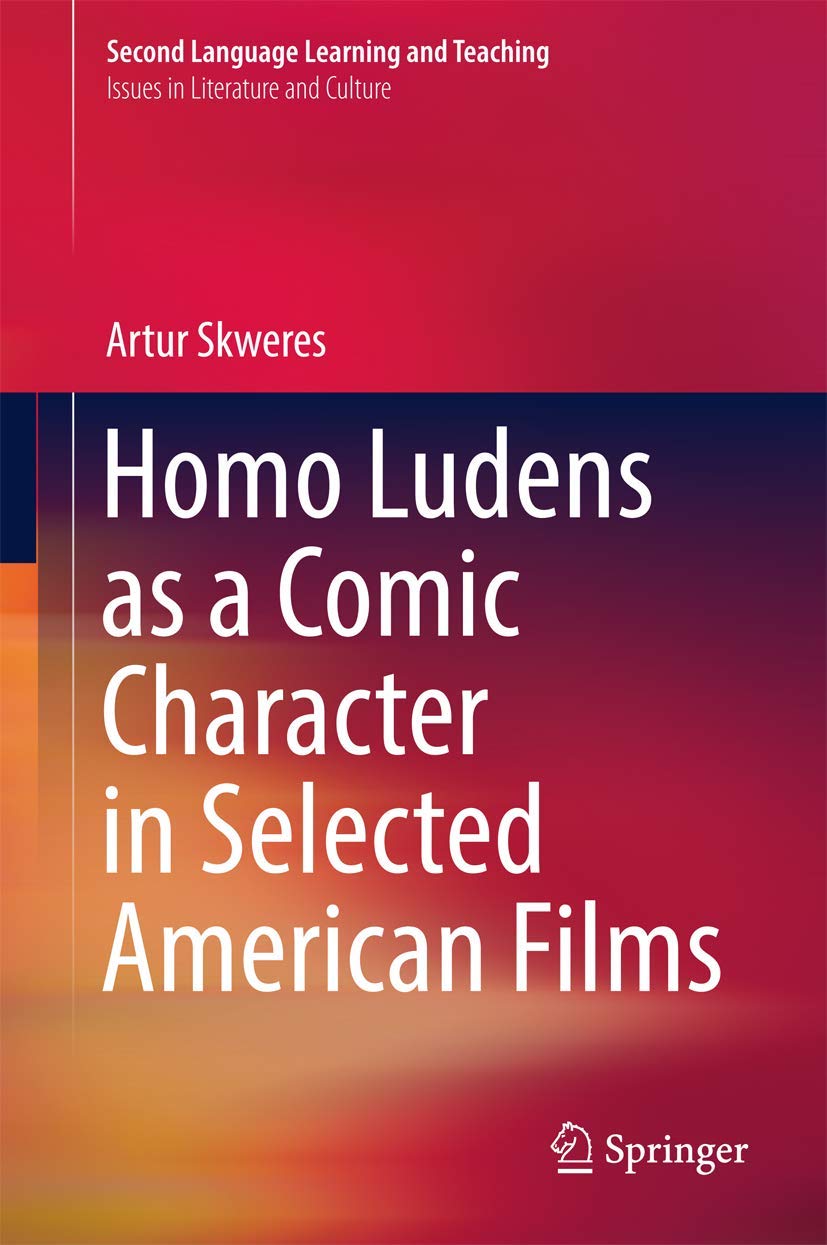
Homo Ludens as a Comic Character in Selected American Films (Second Language Learning and Teaching),Used
Sold by Ergodebooks, an authorized reseller.
Returns accepted within 30 days | support@ergodebooks.com
Shipping Information
- Free Standard Shipping — United States only
- Processing Time: 3–5 business days
- Estimated Delivery: 6–10 business days after dispatch
- Double-boxed, fully insured & discreetly packaged
- Tracking number sent via email once dispatched
Returns & Refund
Returns accepted within 30 days of delivery.
Damaged or Defective Item
Free return shipping + replacement or full refund
Wrong Item Received
Free return shipping + replacement or full refund
Change of Mind
Return shipping at customer's expense · 25% restocking fee applies
Payment Option

This book reveals the hitherto critically disregarded ludic elements in popular American comedy films, building on and expanding the theories developed by Johan Huizinga in his classic study Homo Ludens (1938) and Roger Caillois in Les jeux et les hommes (1958). To address the lack of attention paid to the play principle in film comedy studies, this book focuses exclusively on the elements typical of play that can be found in movies. It introduces two new categories describing play: neiros and pragma, which allow analysis of how play in comedies is influenced by the relations between the player and nonplayers. The text is supplemented by the use of the authors drawings, which, because of their analytical and selective nature, are used as a tool for visual study.The play principle has a long tradition in American humor and the films examined here were chosen for their popularity and wide appeal, often acting as vehicles for Hollywood stars (e.g. Chevy Chase,Dan Aykroyd, Bill Murray, Steve Martin, Eddie Murphy, Goldie Hawn, Mike Myers, Jackie Chan or Chris Tucker). The actors status allowed the filmmakers to construct situations in which the protagonists distanced themselves from the fictional situation. It is argued that the playful detachment from reality, typifying many of the fictional characters portrayed by actors with star status, is characteristic of the play principle in film. Another major consideration is the hotly debated notion of the accomplishment of goals in playful activities, and the book strongly supports the position that in narratives, play can (but does not have to) yield important results. The introduction of the categories of neiros and pragma in play serves to highlight the complex relation between playfulness and practicality in the films discussed. Building on a comprehensive analysis of the ludic elements in selected popular American comedies, the book makes an important contribution to film studies, providing a unique perspective through its focus on the concept of homo ludens as a comic hero.
⚠️ WARNING (California Proposition 65):
This product may contain chemicals known to the State of California to cause cancer, birth defects, or other reproductive harm.
For more information, please visit www.P65Warnings.ca.gov.