
Title
Honor and Slavery,Used
Sold by Ergodebooks, an authorized reseller.
Returns accepted within 30 days | support@ergodebooks.com
Shipping Information
- Free Standard Shipping — United States only
- Processing Time: 3–5 business days
- Estimated Delivery: 6–10 business days after dispatch
- Double-boxed, fully insured & discreetly packaged
- Tracking number sent via email once dispatched
Returns & Refund
Returns accepted within 30 days of delivery.
Damaged or Defective Item
Free return shipping + replacement or full refund
Wrong Item Received
Free return shipping + replacement or full refund
Change of Mind
Return shipping at customer's expense · 25% restocking fee applies
Payment Option

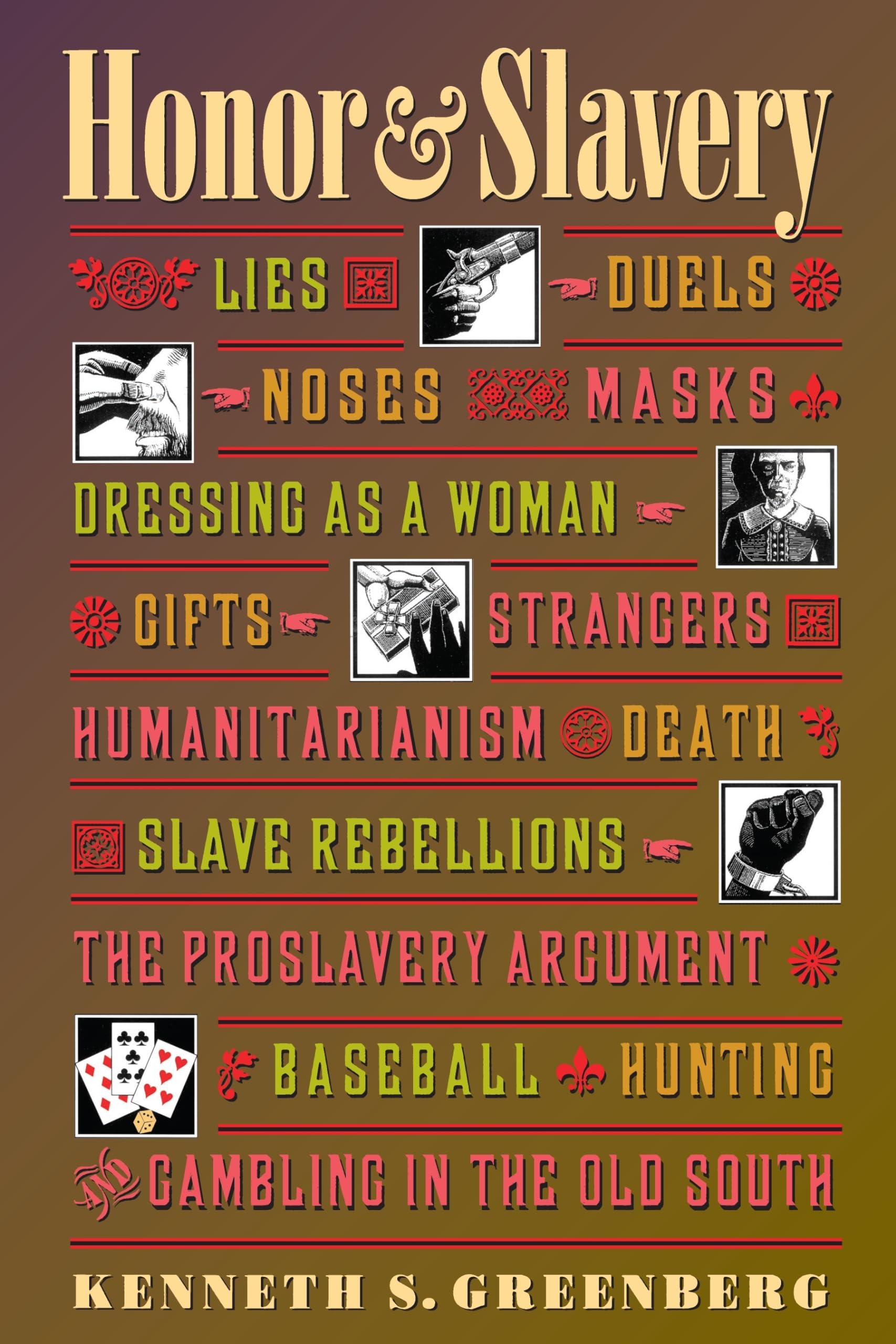
The 'honorable men' who ruled the Old South had a language all their own, one comprised of many apparently outlandish features yet revealing much about the lives of masters and the nature of slavery. When we examine Jefferson Davis's explanation as to why he was wearing women's clothing when caught by Union soldiers, or when we consider the story of Virginian statesman John Randolph, who stood on his doorstep declaring to an unwanted dinner guest that he was 'not at home,' we see that conveying empirical truths was not the goal of their speech. Kenneth Greenberg so skillfully demonstrates, the language of honor embraced a complex system of phrases, gestures, and behaviors that centered on deeprooted values: asserting authority and maintaining respect. How these values were encoded in such acts as nosepulling, outright lying, dueling, and giftgiving is a matter that Greenberg takes up in a fascinating and original way.The author looks at a range of situations when the words and gestures of honor came into play, and he recreates the contexts and associations that once made them comprehensible. We understand, for example, the insult a navy lieutenant leveled at President Andrew Jackson when he pulls his nose, once we understand how a gentleman valued his face, especially his nose, as the symbol of his public image. Greenberg probes the lieutenant's motivations by explaining what it meant to perceive oneself as dishonored and how such a perception seemed comparable to being treated as a slave. When John Randolph lavished gifts on his friends and enemies as he calmly faced the prospect of death in a duel with Secretary of State Henry Clay, his generosity had a paternalistic meaning echoed by the masterslave relationship and reflected in the proslavery argument. These acts, together with the way a gentleman chose to lend money, drink with strangers, go hunting, and die, all formed a language of control, a vision of what it meant to live as a courageous free man. In reconstructing the language of honor in the Old South, Greenberg reconstructs the world.
⚠️ WARNING (California Proposition 65):
This product may contain chemicals known to the State of California to cause cancer, birth defects, or other reproductive harm.
For more information, please visit www.P65Warnings.ca.gov.