If you have any questions, you are always welcome to contact us. We'll get back to you as soon as possible, withing 24 hours on weekdays.
Customer service
All questions about your order, return and delivery must be sent to our customer service team by e-mail at yourstore@yourdomain.com
Sale & Press
If you are interested in selling our products, need more information about our brand or wish to make a collaboration, please contact us at press@yourdomain.com
Help
If you have any questions, you are always welcome to contact us. We'll get back to you as soon as possible, withing 24 hours on weekdays.
Customer service
All questions about your order, return and delivery must be sent to our customer service team by e-mail at yourstore@yourdomain.com
Sale & Press
If you are interested in selling our products, need more information about our brand or wish to make a collaboration, please contact us at press@yourdomain.com
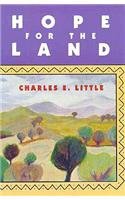
"A perceptive work. Charles Little's love for the American landscape shines through on every page.Stewart L. Udall, author and former Secretary of the InteriorAmericans will travel thousands of miles across the country to see Yellowstone or the Grand Canyon, yet ignore the despoliation of the land along the way. We treasure our national parks, yet allow the forests around them to be cut over. We take pride in feeding the world, but let thousands of family farms die from drought and debt. We trade off wetlands for parking lots. Is there hope for our land?Charles E. Little says: Yes, there is hopebut only if we understand that the land is the basis of community. He takes us to the ravaged cropland of the high plains of the Texas panhandle, the coastal village of Bolinas in California, the Palouse country in Washington State, the prairie towns of Colorado, New Jersey's Pine Barrens, the Delta region of Arkansas, the inner city neighborhoods of Atlanta, Los Angeles, and MinneapolisSt. Paul, rural Vermont, and the farms of Indiana. In these eloquent reports, Little introduces us to ordinary people who value the land they live with. They know that, when the land is destroyed, their communities are lost, their lives diminished.The United States, unlike virtually every other industrial democracy, has no national landuse policy (though Little spent years in Washington working for such legislation). Without one, Little argues, hope for the land lies in finding effective local strategies for saving both the grand, wild views and the small, intimate corners of earth we cherish. In this book, Little takes Aldo Leopold's land ethic to heart and shows us how to make it work.
⚠️ WARNING (California Proposition 65):
This product may contain chemicals known to the State of California to cause cancer,
birth defects, or other reproductive harm.
For MAP (Minimum Advertised Price) violations and Intellectual Property (IP) or Trademark concerns, please contact:
support@ergodebooks.com
⚠️ California Proposition 65 Warning: Some products sold on this website may expose you to chemicals known to the State of California to cause cancer, birth defects, or other reproductive harm. For more information, visit www.P65Warnings.ca.gov.