
Title
House, But No Garden: Apartment Living In Bombay'S Suburbs, 18981964,Used
Sold by Ergodebooks, an authorized reseller.
Returns accepted within 30 days | support@ergodebooks.com
Shipping Information
- Free Standard Shipping — United States only
- Processing Time: 3–5 business days
- Estimated Delivery: 6–10 business days after dispatch
- Double-boxed, fully insured & discreetly packaged
- Tracking number sent via email once dispatched
Returns & Refund
Returns accepted within 30 days of delivery.
Damaged or Defective Item
Free return shipping + replacement or full refund
Wrong Item Received
Free return shipping + replacement or full refund
Change of Mind
Return shipping at customer's expense · 25% restocking fee applies
Payment Option

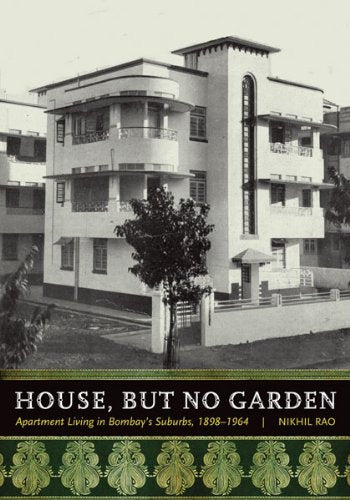
Between The Welldocumented Development Of Colonial Bombay And Sprawling Contemporary Mumbai, A Profound Shift In The Citys Fabric Occurred: The Emergence Of The First Suburbs And Their Distinctive Pattern Of Apartment Living. In House, But No Garden Nikhil Rao Considers This Phenomenon And Its Significance For South Asian Urban Life. It Is The First Book To Explore An Organization Of The Middleclass Neighborhood That Became Ubiquitous In The Midtwentiethcentury City And That Has Spread Throughout The Subcontinent.Rao Examines How The Challenge Of Converting Lands From Agrarian To Urban Use Created New Relations Between The State, Landholders, And Other Residents Of The City. At The Level Of Dwellings, Apartment Living In Selfcontained Flats Represented A Novel Form Of Urban Life, One That Expressed A Compromise Between The Caste And Class Identities Of Suburban Residents Who Are Upper Caste But Belong To The Lowermiddle Or Middle Class. Living In Such A Built Environment, Under The Often Conflicting Imperatives Of Maintaining The Exclusivity Of Caste And Subcaste While Assembling Residential Groupings Large Enough To Be Economically Viable, Led Suburban Residents To Combine Caste With Class, Type Of Work, And Residence To Forge New Metacaste Practices Of Community Identity.As It Links The Colonial And Postcolonial Cityboth Visually And Analyticallyraos Work Traces The Appearance Of New Spatial And Cultural Configurations In The Middle Decades Of The Twentieth Century In Bombay. In Doing So, It Expands Our Understanding Of How Built Environments And Urban Identities Are Constitutive Of One Another.
⚠️ WARNING (California Proposition 65):
This product may contain chemicals known to the State of California to cause cancer, birth defects, or other reproductive harm.
For more information, please visit www.P65Warnings.ca.gov.