
Title
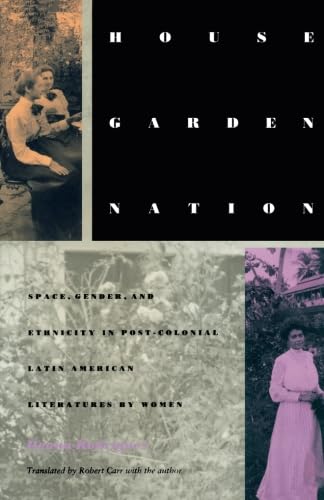
House/Garden/Nation: Space, Gender, And Ethnicity In Postcolonial Latin American Literatures By Women (Postcontemporary Interv,Used
Sold by Ergodebooks, an authorized reseller.
Returns accepted within 30 days | support@ergodebooks.com
Shipping Information
- Free Standard Shipping — United States only
- Processing Time: 3–5 business days
- Estimated Delivery: 6–10 business days after dispatch
- Double-boxed, fully insured & discreetly packaged
- Tracking number sent via email once dispatched
Returns & Refund
Returns accepted within 30 days of delivery.
Damaged or Defective Item
Free return shipping + replacement or full refund
Wrong Item Received
Free return shipping + replacement or full refund
Change of Mind
Return shipping at customer's expense · 25% restocking fee applies
Payment Option

How ironic, the author thought on learning of the Sandinistas electoral defeat, that at its death the Revolutionary State left Woman, Violeta Chamorro, located at the center. The election signaled the end of one transition and the beginning of another, with Woman somewhere on the border between the neoliberal and marxist projects. It is such transitions that Ileana Rodrguez takes up here, unraveling their weave of gender, ethnicity, and nation as it is revealed in literature written by women.In House/Garden/Nation the narratives of five CentroCaribbean writers illustrate these times of transition: Dulce Mara Loynz, from colonial rule to independence in Cuba; Jean Rhys, from colony to commonwealth in Dominica; Simone SchwarzBart, from slave to free labor in Guadeloupe; Gioconda Belli, from oligarchic capitalism to social democratic socialism in Nicaragua; and Teresa de la Parra, from independence to modernity in Venezuela. Focusing on the nation as garden, hacienda, or plantation, Rodrguez shows us these writers debating the predicament of women under nation formation from within the confines of marriage and home.In reading these postcolonial literatures by women facing the crisis of transition, this study highlights urgent questions of destitution, migration, exile, and inexperience, but also networks of value allotted to women: beauty, clothing, love. As a counterpoint on issues of legality, policy, and marriage, Rodriguez includes a chapter on male writers: Jos Eustacio Rivera, Omar Cabezas, and Romulo Gallegos. Her work presents a sobering picture of women at a crossroads, continually circumscribed by history and culture, writing their way.
⚠️ WARNING (California Proposition 65):
This product may contain chemicals known to the State of California to cause cancer, birth defects, or other reproductive harm.
For more information, please visit www.P65Warnings.ca.gov.